For spontaneous frozen yoghurt makers
You have chilled yoghurt and peaches ready, but don’t want to freeze an ice cream bowl in advance. In that case, the cooling system matters more than an additional yoghurt-maker function.


If you want to make peach and yoghurt mixture using chilled ingredients without pre-freezing the machine’s bowl, a self-cooling ice cream maker is the right type of appliance. A model with a freezer bowl is also an option if you’re planning to make small batches, provided you allow time to prepare it and have enough space in your freezer. Compare the permitted fill level, counter space and cleaning requirements rather than assuming the bowl’s capacity is the same as the amount of mixture you can use.
You have chilled yoghurt and peaches ready, but don’t want to freeze an ice cream bowl in advance. In that case, the cooling system matters more than an additional yoghurt-maker function.
You make a small batch occasionally and can freeze a bowl in advance. Be sure to check the actual fill capacity.
You want to make more than a small batch, or several batches, and are comparing fill capacity, counter space and cleaning effort.
First decide whether you want to get started without preparing a bowl in advance. Then check that the amount you want to make is within the stated fill capacity, and look at the cleaning requirements.
The figures relate to consumers choosing an ice cream maker for peach frozen yoghurt made with chilled ingredients. Each figure represents the most important buying priority for this particular use.
| Buying criterion | What to check before you buy | Who is this important for? |
|---|---|---|
| Start without pre-freezing | Check the model description specifically for a compressor or self-cooling function, and make sure it’s suitable for frozen yoghurt. | If I want to make a chilled mixture without freezing the appliance’s bowl first, being able to start straight away matters to me. Around 36 % of consumers put this spontaneity first. |
| Planned small batches | Check the space in your freezer, the preparation time stated in the instructions and the permitted fill capacity of the specific model. | I can plan ahead and freeze the bowl for an occasional small batch if that means I don’t need a compressor. Around 29 % of consumers prioritise making a small batch in this way. |
| Making enough for several people | Check the maximum fill capacity for unfrozen mixture and the possible number of batches separately from the bowl’s capacity. | If I’m entertaining several people, I want to know how much mixture will actually fit in one batch. Around 21 % of consumers prioritise making a larger recipe quantity. |
| Cleaning and adapting the recipe | Check which parts can be removed and the specific cleaning instructions for each one. | With fruit and yoghurt, I pay attention to cleaning the parts that come into contact with food, and I want to choose a recipe that gives me the consistency I’m after. Around 14 % of consumers put this first. |
For the Rommelsbacher IM 12, Rommelsbacher lists a bowl capacity of 1.5 litres, but a fill quantity of 500 ml per batch. These figures therefore don’t refer to the same amount of mixture. For a creamier consistency, the German Federal Centre for Nutrition describes Greek yoghurt as a creamier option because of its higher fat content.
A machine with a freezer bowl needs the bowl to be prepared in advance. Chilled yoghurt and peaches don’t change that.
If you don’t want to plan ahead, check specifically whether the model is self-cooling. Otherwise, prepare it in advance as instructed.
Pre-freezing takes time and freezer space.
For the IM 12, Rommelsbacher lists a bowl capacity of 1.5 litres and a fill quantity of 500 ml. If you focus only on the larger capacity, you could overestimate how much you can make in one batch.
Compare the stated fill quantity with the amount of mixture in your recipe.
You may need to make an extra batch if you want to prepare a larger quantity overall.
Unold gives a preparation time of around 30 minutes specifically for cream ice cream made with pre-chilled ingredients. You can’t assume peach frozen yoghurt will take the same amount of time.
Treat preparation times as conditional manufacturer claims, and follow the instructions for achieving your desired consistency.
A separate yoghurt programme serves a different purpose from freezing and churning yoghurt you’ve already bought.
Only make this additional function a buying criterion if you also want to make yoghurt yourself.
An extra setting you won’t use may not be necessary for your needs.
The Mini Gelateria 2-in-1, item no. 42901, is a self-cooling 1-litre ice cream maker with an additional yoghurt programme.
The IM 12 Kurt uses a pre-frozen bowl and could be a good option if you’re planning to make batches of frozen yoghurt.
The EZ 7405 combines self-cooling ice cream making with a separate yoghurt programme and an ice cream bowl that Severin says holds 2 litres.
The KÜCHENminis 3-in-1 ice cream maker is designed for small, planned batches and has a 300-ml freezer bowl.
According to Unold, the self-cooling Gusto 48845 has an ice cream bowl that holds approximately 2 litres and is designed for larger batches.
The appliances below cover both self-cooling and pre-freezing options. If you’re using a chilled mixture, the key question is whether the machine cools it itself or whether you need to freeze a bowl or container in advance.
 No image available
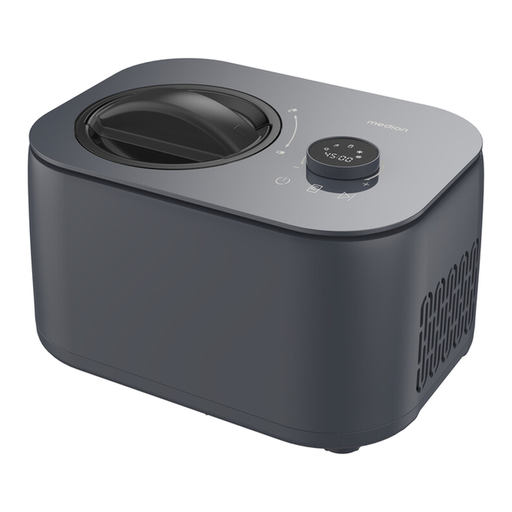
Designed for use with chilled ingredients without pre-cooling the appliance; the product title lists frozen yoghurt as one of its uses.
The stated capacity is 1 l; the product title also lists 100 W. Check the permitted fill quantity for your recipe.
 No image available
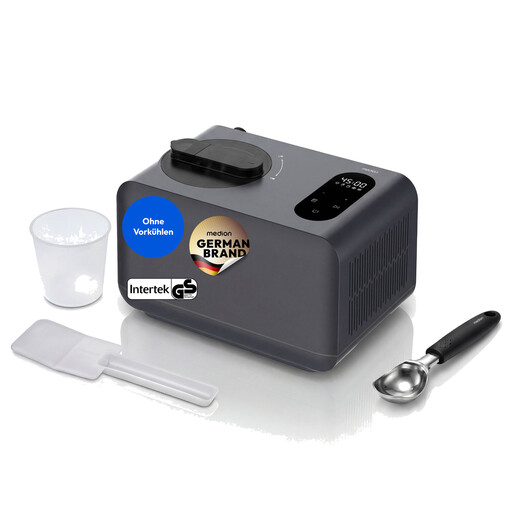
Designed for use with chilled ingredients without pre-cooling the appliance; the product title lists frozen yoghurt as one of its uses.
The stated capacity is 1,5 l; the product title also lists 150 W. According to the product information, the compressor needs adequate ventilation during use. Check the permitted fill quantity.
 No image available
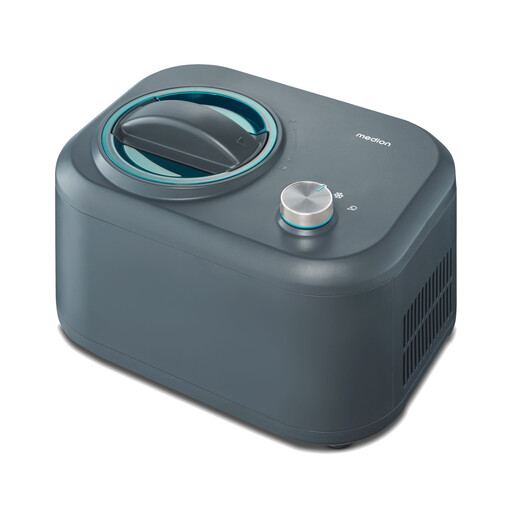
The product title lists self-cooling and frozen yoghurt. This means you don’t need to pre-freeze the appliance’s bowl when using a chilled mixture.
The product title lists 100 W and an aluminium bowl. For this model, MEDION states that 600 ml of ingredients makes up to 1 l of ice cream; these figures differ from the capacity given in the product title.
 No image available
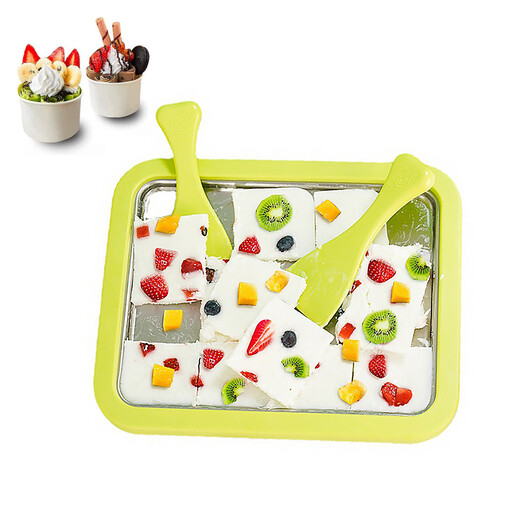
For small batches planned in advance: the product information says to pour the mixture onto a pre-chilled plate.
According to the product information, the freezing plate needs to be pre-chilled for at least 12 hours at −18 °C or colder. This isn’t a self-cooling option for making a spontaneous batch with chilled ingredients.
 No image available
The product title lists a frozen yoghurt function and two Pints. The filled containers need to be frozen before processing, so the appliance won’t process a chilled mixture straight away.
The title lists ten functions and a 2-in-1 option for different flavours. Before buying, check whether the required pre-freezing fits your schedule.
Only if you’re using a machine with a freezer bowl that needs to be frozen in advance. According to the manufacturers, the self-cooling Gastroback Mini Gelateria 2-in-1 and Severin EZ 7405 don’t need their bowls pre-frozen. You should also follow the recipe and the appliance instructions.
No. You don’t need a separate yoghurt programme to make frozen yoghurt with shop-bought yoghurt. What matters is that the appliance can process the mixture for frozen yoghurt; the German Federal Centre for Nutrition also describes frozen yoghurt made using yoghurt you already have.
Clean the parts that come into contact with food according to the instructions for your specific model, and keep your hands, work surfaces and utensils clean. The Verbraucherzentrale recommends careful kitchen hygiene. A claim that the ice cream bowl is dishwasher-safe doesn’t automatically apply to the motor or other parts; Gastroback specifically says this about the removable bowl of the Mini Gelateria 2-in-1.
Your statutory rights are a claim against the seller and are separate from any voluntary guarantee. If a product is faulty, the first step may be repair or replacement. The Verbraucherzentrale explains that the seller covers the costs of transport, labour and materials.
Electrical appliances covered by the relevant harmonised EU regulations must carry the required CE marking; this isn’t an official quality mark. The Bundesnetzagentur also lists product identity, manufacturer details and German-language instructions among the criteria it checks in sample inspections. These general points don’t confirm that a specific listing is compliant.