
Lieferung heute & morgen

Qualitätsgarantie

Willkommens-Angebote freischalten: KOSTENLOSE Lieferung | Bis zu 80 % RABATT | Kostenlose 30-Tage-JoyPlus-Testphase
App herunterladen
An ice machine can perform very different tasks depending on its design: making ice cubes for drinks, crushed ice for cocktails, slushies for parties or homemade ice cream. However, many disappointing purchases happen because product names and marketing claims do not clearly distinguish what a device actually prepares.
An ice cube maker produces frozen water in a short time. An ice cream maker, on the other hand, processes a prepared mixture of milk, cream, fruit or other ingredients. A slush maker is designed for semi-frozen drinks. A single appliance therefore cannot automatically perform all three tasks.
Before buying, be clear about the following:
Figures such as “kilograms per 24 hours” describe a theoretical daily output under specific conditions. The actual quantity depends, among other things, on room temperature, water temperature, the pauses between cycles and ventilation.
The cycle time should also be put into context. A stated time of six or nine minutes usually refers to a single cycle, not to keeping the ice basket permanently full. With appliances that produce connected ice cubes, manual separation may also be necessary.
A self-cleaning ice machine may offer an automatic rinsing or cleaning cycle. This makes maintenance easier, but it does not necessarily remove all residue from the water tank, ice compartment, drain and seals. After use, removable parts should be cleaned as instructed and dried completely.
For a home ice cube maker, the combination of water tank, ice compartment and cycle duration is crucial. Compact models also fit in small kitchens, offices or motorhomes. As well as checking the external dimensions, make sure there is enough clearance for air circulation.
An ice machine with a compressor works without pre-freezing the container and is suitable for making ice cream or frozen yoghurt. Appliances with thermoelectric cooling are often lighter and more compact, but may have different preparation times and capacities.
The tank size determines how often the water needs to be topped up. A larger tank is practical for families and entertaining, but requires more worktop space. With ice cream makers, you should distinguish between the container’s volume and the actual quantity of ingredients it can process. The “Max” marking must not be exceeded, as mixtures can expand when they freeze.
You should also look for:
Noise levels matter in open-plan kitchens, offices or at parties. A figure of around 45 dB or below 50 dB is a useful guide where stated in the product specifications, but it does not replace considering how the appliance sounds when operating in your particular room.
Safety cut-outs, a lockable lid and a stable base are important for blenders and ice crushers. Blades should only be cleaned when the appliance is switched off and unplugged. The motor housing, plug and power cable must not be immersed in water.
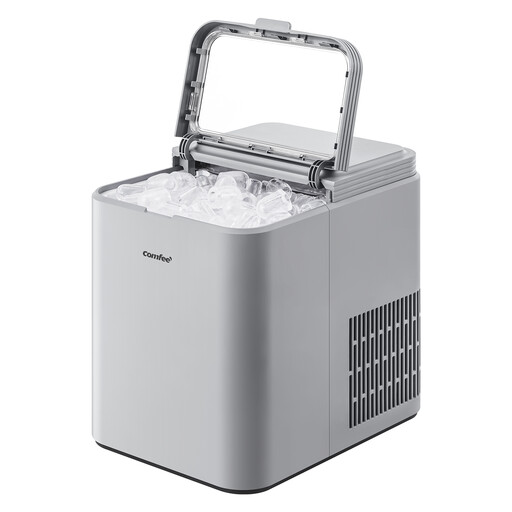
Why this product suits the profile: According to the product specifications, this compact ice cube maker has a 1.3-litre water tank, two ice cube sizes and a stated output of up to 12 kg per 24 hours. This makes it an appealing option for the kitchen, office or motorhome.
The cycle time of around six minutes is stated alongside the tank size and daily output. The self-cleaning function also points to added convenience when it comes to maintenance, but does not replace manual drying.
Two ice cube sizes, 1.3-litre water tank, removable basket and ice scoop; dimensions of approximately 29.6 × 21.3 × 29.5 cm.
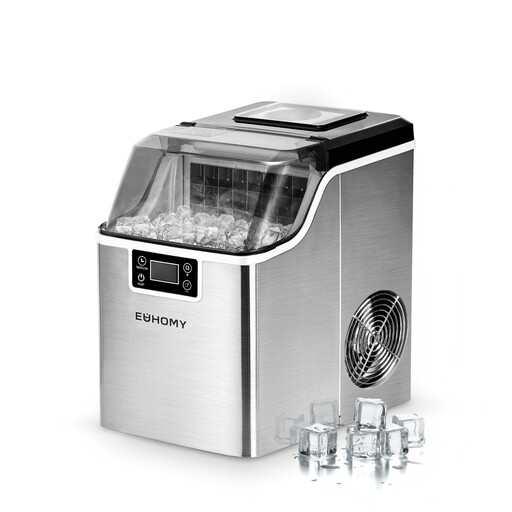
Why this product suits the profile: For a regular supply of ice for drinks at home, parties or in the office, the model offers a 3.2-litre tank, a stated output of up to 20.5 kg per 24 hours and an LCD control panel, according to the manufacturer’s specifications.
The product description states a variable cycle duration of around 13 to 25 minutes and notes that the cubes from one cycle may be connected. This makes the practical limitations clear.
3.2-litre water tank, timer of up to eight hours, 20-minute cleaning programme, adjustable ice thickness and a stated noise level of around 45 dB.
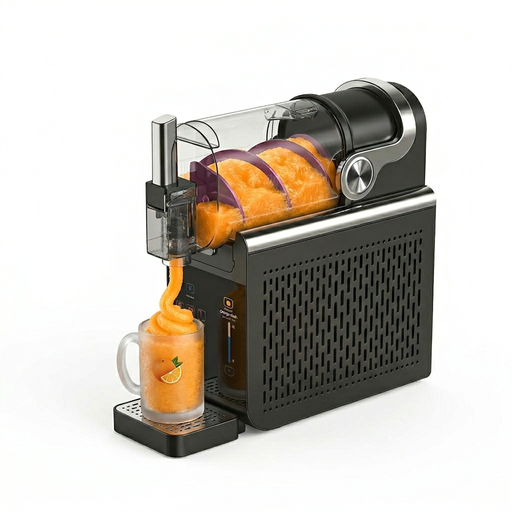
Why this product suits the profile: This slush maker is aimed at users who want to prepare frozen drinks, frappés, smoothies and shakes. According to the product description, it works without adding ice and features one-touch operation.
The appliance is not presented as an ordinary ice cube maker, but according to its intended use for preparing drinks. The stated self-cleaning function should nevertheless be supplemented as instructed in the manual.
Stainless steel shaft, dual gearing according to the product specifications, continuous dispensing and operation via one button or a touch panel.
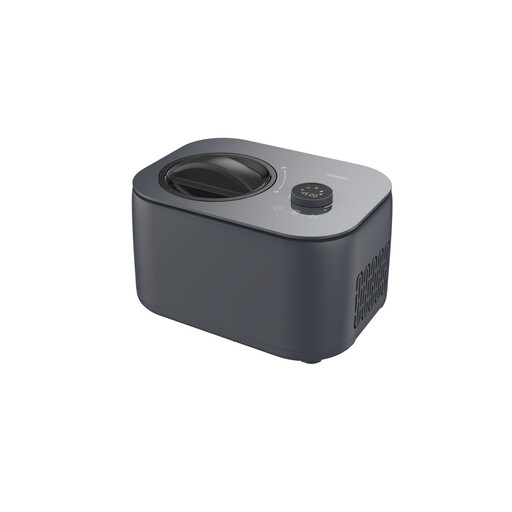
Why this product suits the profile: According to the product specifications, this 1-litre ice cream maker with an integrated compressor is designed for ice cream, frozen yoghurt and slush. The container does not need to be chilled beforehand.
The cooling technology is clearly identified as a compressor design. This distinguishes the model from appliances whose containers need to be pre-chilled in the freezer for many hours.
1-litre container, stated power output of 100 watts, aluminium container, plus a measuring cup and ice scoop included.
If you do not need dedicated cooling for ice cream, a smoothie blender with an ice-crush function can cover several drink-making needs. According to the product specifications, the Clatronic UM 3845 offers 500 watts, four speed settings, a 1.5-litre BPA-free container and removable stainless steel blades. The Cecotec Power Black Titanium features 1,300 watts, a 1.5-litre capacity and an ice-crush function.
An ice crusher processes existing ice cubes into crushed ice, but does not make ice cubes itself. According to the product data, the Ariete model 76 has 30 watts, stainless steel blades, a transparent lid with a safety feature and removable components. You can find more models in the Ice Crusher Machine category.
We have put together a complete, regularly updated list of products that fully meet these strict selection criteria and the safety regulations applicable in the EU.
Consumption depends on the power rating, operating time and cooling technology. A 100-watt appliance uses 0.1 kWh for one hour of operation in theoretical terms. However, the compressor in an ice cube maker does not necessarily run continuously at full power. Actual operating time and your electricity tariff are therefore the key factors affecting running costs.
Yes. Removable parts should be cleaned according to the instructions before first use. With ice cube makers, it is also advisable to run a cleaning cycle if one is available. The motor housing must not be immersed in water. After cleaning, empty the water tank and dry the appliance thoroughly.
There is no single answer for the service life of an ice machine. It is affected by how often it is used, water quality, cleaning, ventilation and compliance with the manufacturer’s instructions. Limescale and stagnant water can make maintenance more difficult. Regularly emptying and descaling the appliance, and not operating it beyond its intended capacity, helps reduce typical everyday strain.