
Lieferung heute & morgen

Qualitätsgarantie

Willkommens-Angebote freischalten: KOSTENLOSE Lieferung | Bis zu 80 % RABATT | Kostenlose 30-Tage-JoyPlus-Testphase
App herunterladen
Imagine this: you're hosting guests, the mood is great, but the drinks are slowly getting warm. A look in the freezer reveals the worst: the ice cube trays are empty, or the ice isn't frozen yet. A home ice maker solves this problem by providing a continuous and rapid supply of fresh ice.
However, the sheer number of available devices can be overwhelming. Models differ in capacity, speed, and features. This guide is designed to help you understand the technical features and make an informed decision that perfectly suits your needs. As your Joybuy Product Recommendation Officer, I've compiled objective criteria to simplify your choice.
Before you decide on a model, it's helpful to consider a few key parameters. These will determine how well the ice maker fits into your daily life.
The performance of an ice maker is usually specified in kilograms of ice per 24 hours (kg/24h).
Also, pay attention to the cycle time—the time it takes to produce one batch of ice cubes. Faster devices can deliver the first ice cubes in as little as 6 to 8 minutes.
The available space is a crucial factor. Measure the intended location on your kitchen countertop, in the office, or in your RV.
Modern ice makers offer convenience features that simplify use and maintenance.
Here is a selection of models that cover a range of different needs. The descriptions are based on the product data provided by the manufacturer.

Why It Stands Out: This model is distinguished by its high production capacity and flexible water supply. It can either be filled manually with up to 3.2 litres of water or operated with a top-mounted water bottle.
Pros:
Who It's For: Ideal for households that frequently entertain guests, small office teams, or anyone who has a consistently high demand for ice cubes and values a large capacity.
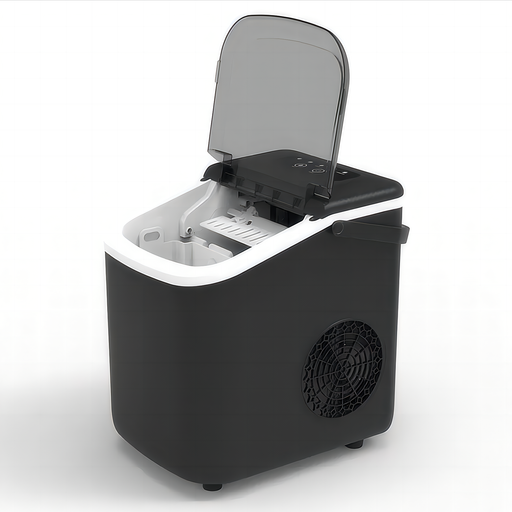
Why It Stands Out: The Cuisync machine combines very fast ice production with a compact and mobile design. The integrated carrying handle makes it a practical portable ice maker.
Pros:
Who It's For: Perfect for users who need ice quickly for individual drinks or small gatherings. Its mobility makes it a great choice for campers, RV owners, and for flexible use in different rooms.
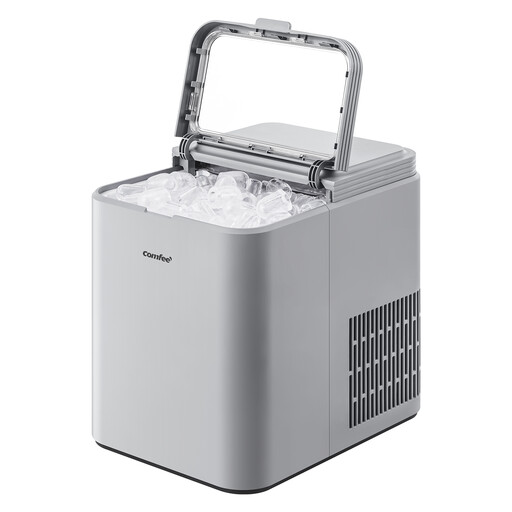
Why It Stands Out: This model from Comfee' is particularly compact and will find a spot even in kitchens with limited space. Despite its small size, it offers fast ice production.
Pros:
Who It's For: An excellent option for individuals, couples, or small families with limited kitchen space. It is also well-suited for a home office or student dorms.
The models presented here already cover a broad spectrum of needs. However, the market offers an even greater variety of devices with different designs, capacities, and special features. If you would like to compare more alternatives, you can find a larger selection in our comprehensive category.
? Discover more ice maker models here
A home ice maker works autonomously without a direct water line connection. You fill water into the designated tank. A pump directs the water to cooled metal rods. The water freezes onto these rods in layers. Once the ice cubes have reached the desired size, the rods are briefly heated, causing the ice cubes to fall into the collection basket. Sensors stop production when the basket is full and resume it once ice is removed.
The cleaning frequency depends on usage and water hardness. With daily use, cleaning every 2 to 4 weeks is recommended to prevent limescale buildup and bacteria growth. Many models feature a self-cleaning function, which greatly simplifies this process. Additionally, the water reservoir and ice basket should be cleaned regularly by hand with a mild detergent.
It is strongly advised against using other liquids such as juice, soda, or alcoholic beverages. These liquids contain sugar, acids, and other ingredients that can clog and permanently damage the device's pump, lines, and cooling unit. Use only clean, clear water to ensure the longevity and proper functioning of your machine.