
Lieferung heute & morgen

Qualitätsgarantie
App herunterladen
Kategorien
A constant supply of ice cubes is essential for chilled drinks, cocktails, or entertaining guests. Traditional ice cube trays in the freezer often fall short in capacity and are slow to produce. A countertop ice maker offers an efficient, on-demand solution. These appliances produce ice continuously without tying up space in your freezer.
Choosing the right model depends on specific technical parameters and your intended use. The following criteria will help you make an informed decision.
An ice maker's performance is measured by two key metrics: its 24-hour production volume (in kg) and the length of a single production cycle (in minutes). Models for home use typically offer a capacity of 10 to 15 kg per 24 hours. A single cycle, which produces one batch of ice cubes (usually 8-9 pieces), generally takes between 6 and 10 minutes. For occasional use or small households, a lower capacity is sufficient, whereas a more powerful unit is advantageous for parties or larger families.
Most compact ice makers produce hollow, bullet-shaped ice (bullet ice). This shape has the advantage of a large surface area, which chills drinks quickly. Many machines offer a choice between two sizes:
The water tank's capacity determines how often you need to refill it. Typical sizes range from 1.1 to 1.5 litres. A larger tank offers greater convenience. The ice basket collects the finished ice cubes. Its capacity (often around 0.4 kg) is important, as most compact units do not have an active cooling function for the basket. This means the ice cubes must be removed and used or transferred to a freezer after production, as they will otherwise slowly melt.
A self-cleaning ice maker enhances hygiene and reduces maintenance. At the touch of a button, a rinse cycle is initiated to clean the machine's interior. This is a key feature for ensuring long-term hygienic ice production. Operation should be intuitive. Modern appliances feature simple control panels with indicators for:
For use as a small ice maker in kitchens with limited space, compact dimensions are crucial. A portable ice maker is characterised by its low weight (often under 8 kg) and, ideally, an integrated carrying handle. Such models are particularly suitable for camping, RVs, or garden parties.
Quiet operation is especially important in open-plan kitchens or offices. Manufacturers sometimes specify the noise level in decibels (dB). Levels below 50 dB are considered relatively quiet and are barely noticeable in daily life.
Based on the technical criteria mentioned, we have curated a selection of models that cater to different needs.
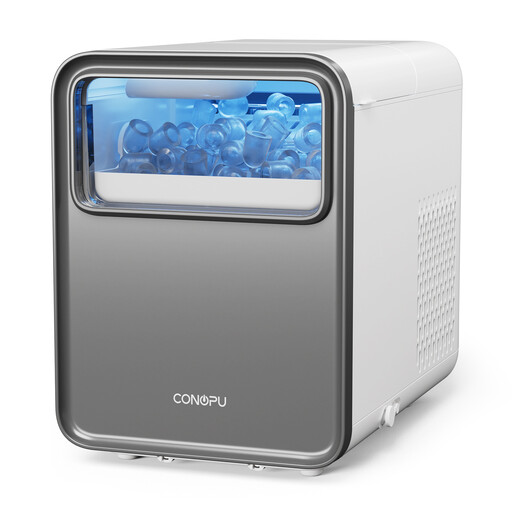
Why We Recommend This Product: This model combines high production speed with practical design features. The transparent viewing window with blue ambient lighting allows you to watch the ice-making process, which is both functional and aesthetically pleasing.
Pros:
Best For: Users looking for an efficient and quiet machine for their home kitchen who appreciate being able to visually monitor the process.
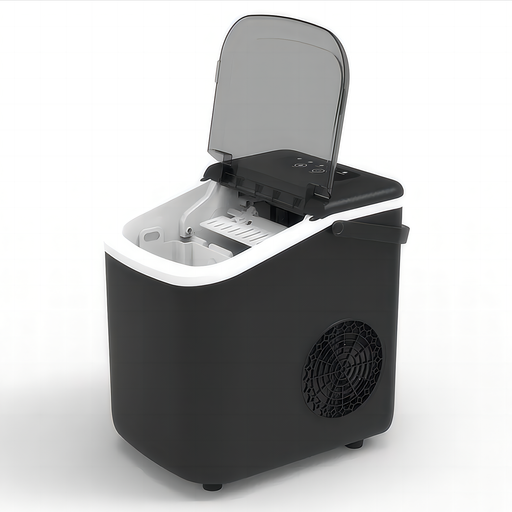
Why We Recommend This Product: The Cuisync machine is designed with portability in mind. Its integrated carrying handle and compact build make it an excellent portable ice maker for versatile applications.
Pros:
Best For: Individuals who need a flexible solution for home, the office, camping trips, or an RV and will be transporting the unit frequently.
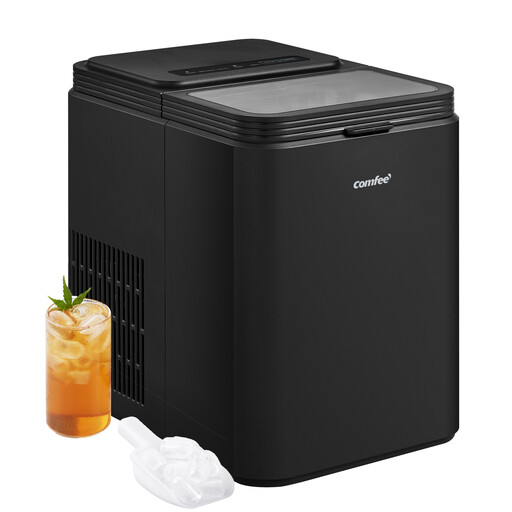
Why We Recommend This Product: This model from COMFEE stands out for its exceptionally compact dimensions without compromising on performance. It's a great choice for environments with limited countertop space.
Pros:
Best For: Users in small kitchens, dorm rooms, or offices who are looking for a space-saving yet powerful machine.
For users whose primary need for ice is tied to travel and outdoor activities, mobile infrastructure also plays a role. A well-equipped family car can serve as the ideal base for camping trips, providing the necessary storage space and often the power outlets for portable appliances like an ice maker.
1. How does a self-cleaning ice maker work? The self-cleaning function flushes the machine's internal water circuit with fresh water. To do this, you typically fill the water tank and select the corresponding program on the control panel. The process usually takes about 30 minutes and helps remove scale buildup and bacteria to ensure hygienic ice production.
2. How long does it take for an ice maker to produce ice? Most home ice makers produce the first batch of ice cubes within 6 to 10 minutes of being turned on. The exact time can vary depending on the model and the ambient temperature.
3. Can you leave water in an ice maker? It is recommended to change the water in the tank regularly, ideally daily, to prevent germ buildup and ensure the freshness of the ice cubes. If the machine will not be used for an extended period, the remaining water should be completely drained using the designated drain plug on the bottom or side of the unit.