
Lieferung heute & morgen

Qualitätsgarantie

Willkommens-Angebote freischalten: KOSTENLOSE Lieferung | Bis zu 80 % RABATT | Kostenlose 30-Tage-JoyPlus-Testphase
App herunterladen
An ice maker can provide fresh ice for drinks, buffets and parties with minimal effort. However, appliances vary considerably in terms of ice shape, production capacity, noise levels and cleaning requirements. If you only look at claims such as “fast” or “compact”, you may end up buying a model that does not suit your everyday needs.
This buying guide from the Joybuy Product Recommendation Officer explains which specifications matter before you buy and which appliances are suited to different usage profiles.
A claim such as “9 ice cubes in 6 minutes” usually describes a single production cycle. It does not mean that this quantity will always be available in the basket. You should also consider the daily output in kilograms and the size of the ice basket.
For occasional drinks, a compact home ice maker with an output of around 9 to 12 kilograms per day is sufficient. For regular parties, offices or bars, a higher capacity may be more suitable.
Marketing terms such as “whisper-quiet” are not very meaningful without a measurement. A rating of around 45 to 50 dB provides a better indication for use in the kitchen, office or motorhome. However, the perceived noise level also depends on the surface it stands on, the room acoustics and the operating condition.
A self-cleaning ice maker can make the cleaning cycle easier. Nevertheless, the water tank, ice basket and drain should still be checked regularly and cleaned according to the instructions. Use clean drinking water only and drain any remaining water after use.
An ice maker with a compressor produces ice without first freezing freezer packs or containers. This is useful when you need ice at short notice. Make sure the ventilation openings are clear, the appliance is placed on a stable, level surface and there is sufficient distance from heat sources.
For camping and motorhome use, weight, a carry handle, dimensions and the available power supply are also important. A portable ice maker is suitable for use on the move, but should not automatically be considered a permanent outdoor appliance. Moisture, direct sunlight and high ambient temperatures can affect operation.
Many compact appliances produce bullet ice cubes, which are hollow and rounded. This shape can often be produced quickly and works well with soft drinks, juices and cocktails. Two selectable sizes allow you to adapt the ice to different drinks or chilled foods.
If you are looking for particularly slow-melting ice cubes for specific drinks, check the design and the manufacturer’s information on how the appliance is intended to be used. An ice maker will not necessarily produce ice of the same quality as a freezer with an ice cube tray.
Indicators for low water and a full ice basket are useful features. They help prevent unnecessary interruptions and make the appliance easier to use. Depending on the model, the automatic cleaning cycle takes around 20 to 30 minutes.
You should also check whether the water container can be removed, whether a drain is provided and whether accessories such as an ice scoop and basket are included. These details have a greater impact on everyday use than decorative lighting or an especially modern control panel.
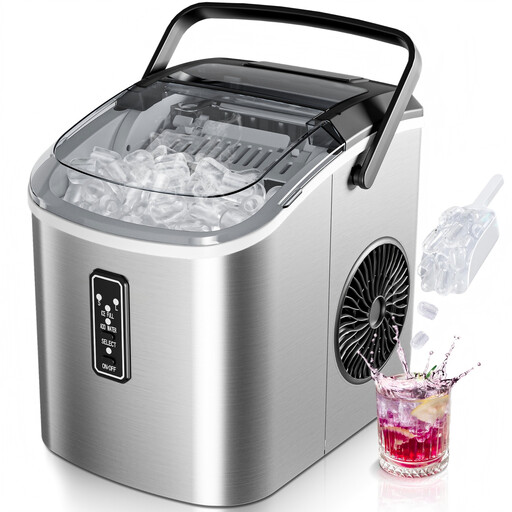
Why this product suits the profile: Its compact design, carry handle and straightforward controls make it suitable for the kitchen, office, parties or occasional camping trips.
The product specifications mention compressor cooling, low-water and full-basket indicators, as well as an automatic cleaning mode. The stated output is around 12 kg per day.
Two bullet ice cube sizes, around 6 to 12 minutes per cycle, operating noise of approximately 45 dB and a weight of around 6.3 kg.
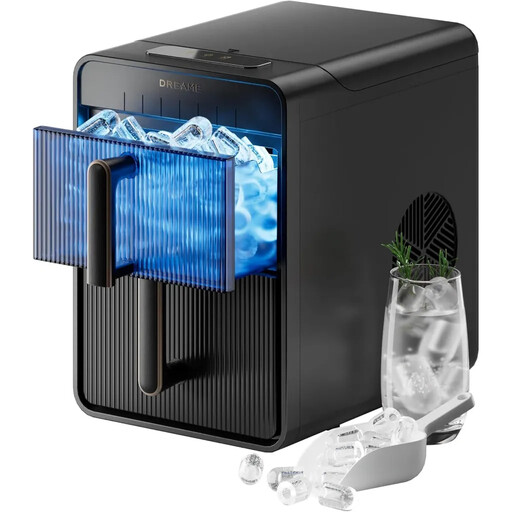
Why this product suits the profile: The touchscreen, sensors and compact black design are ideal for households where convenience and a tidy kitchen aesthetic are important.
The specifications provide specific figures rather than relying solely on general marketing claims: the first cycle takes around 6 minutes, with two ice sizes, sensors and a 30-minute cleaning programme.
Up to 15 kg of ice per 24 hours, a 2-litre water tank, a 1-kg ice container and hollow bullet ice cubes.
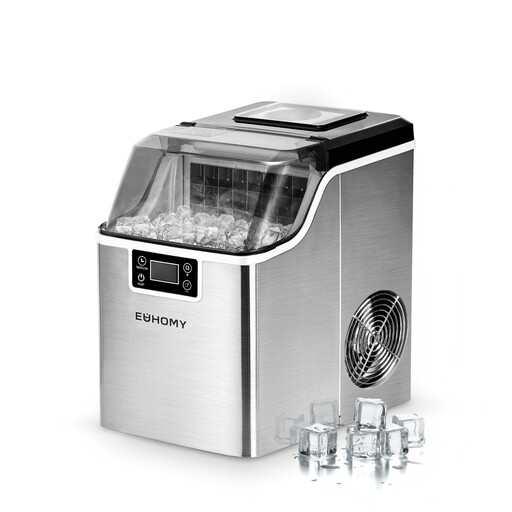
Why this product suits the profile: Its higher capacity is aimed at families, hosts, offices and small bars or cafés with a regular need for ice.
The product description explicitly states that the 24 ice cubes produced in one cycle may be joined together and need to be separated before serving.
Up to 24 cubes in around 13 minutes, a 3.2-litre water capacity, a timer function of up to 8 hours and automatic cleaning.
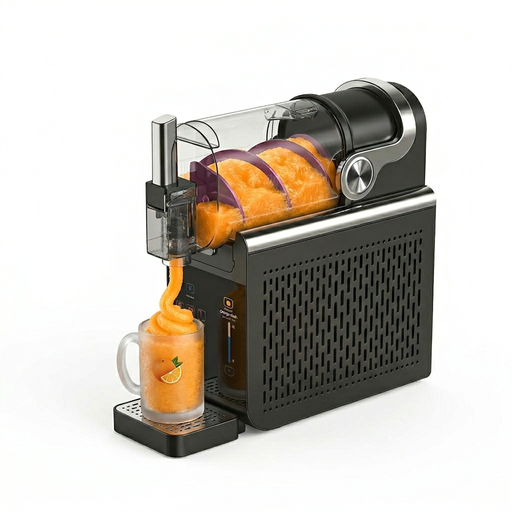
Why this product suits the profile: This appliance is not a conventional ice maker, but a slush machine for frozen drinks, frappés, smoothies and shakes.
The clear product category prevents false expectations: this model is designed for continuous frozen drinks, not conventional bullet ice cubes in an ice basket.
One-touch controls, a self-cleaning function, plus a stainless-steel shaft and dual-gear transmission according to the product description.
We have put together a complete, regularly updated list of products that fully meet these strict selection criteria and the safety regulations applicable in the EU.
An ice maker is designed for chilled drinks and food. An ice cream maker, on the other hand, works with a liquid mixture of milk, cream, yoghurt or fruit. Models with an integrated compressor do not require the container to be pre-frozen.
According to the product description, the MEDION MD10169 has a 1-litre container and is designed for ice cream, sorbet and frozen yoghurt. The Camry CR 4481 has a capacity of 0.7 litres and a stated preparation time of around 30 minutes. Both appliances are therefore better suited as additions for making desserts rather than as replacements for an ice maker.
The service life depends on how intensively it is used, cleaning, ventilation and correct operation. Place the appliance on a level surface, do not block the ventilation openings and use drinking water. An automatic cleaning programme reduces the maintenance required, but does not replace manual cleaning in accordance with the manufacturer’s instructions.
Running costs include electricity, water and, where applicable, cleaning products. Actual electricity consumption depends on compressor output, ambient temperature, production volume and operating time. For comparison, consider the stated wattage and how long you plan to use the appliance. A higher daily output is not automatically more economical if the appliance is only switched on occasionally.
A level, dry and well-ventilated surface is suitable. Keep the appliance away from cookers, radiators and direct sunlight. When using it in a motorhome or while camping, make sure that the power supply, stability and ambient temperature meet the requirements specified in the operating instructions.