
Lieferung heute & morgen

Qualitätsgarantie

Willkommens-Angebote freischalten: KOSTENLOSE Lieferung | Bis zu 80 % RABATT | Kostenlose 30-Tage-JoyPlus-Testphase
App herunterladen
An ice maker can quickly chill drinks at home, in the office, in a motorhome or while camping. However, compact models vary considerably in tank capacity, output, noise levels and cleaning requirements. If you only look at claims such as ‘ice in 6 minutes’ or ‘12 kg per day’, you could miss some important details.
These three common buying misconceptions are especially easy to fall for:
A portable ice maker for home use usually produces a small batch per cycle. Depending on the model, manufacturers may quote around six to twelve minutes to make nine ice cubes. The actual time depends on room temperature, water temperature, ice cube size and ventilation.
The stated 12 kg per day for an ice maker should therefore be treated as a guide, not a guaranteed output in every situation. If you regularly prepare drinks in large quantities, check the size of the ice basket and how easy it is to top up as well.
Many compact machines work as bullet ice makers. Their hollow, elongated ice cubes are quick to make and fit in a wide range of glasses. Having two or three sizes to choose from is useful if you want to chill both soft drinks and larger drinking vessels.
An ice maker with two ice cube sizes usually offers a good choice for everyday use. More sizes may be useful if your drinks, serving needs and cooling requirements often vary. However, these cubes aren’t the same as traditional solid cubes made in a freezer.
For an ice maker for home use, the water tank should suit the way you plan to use it. A capacity of around two litres means less frequent refilling, but often makes the machine larger overall. Before you buy, check:
A portable ice maker with a carry handle is handy if you plan to move it between locations. If you use it outdoors, follow the manufacturer’s instructions: keep the machine dry and stable, and away from direct heat. Use clean drinking water only.
An ice maker with a self-cleaning function makes basic care easier. On many machines, you can start the cleaning mode with a button or by pressing and holding it. Let the programme run to completion, then empty and dry the tank and ice basket.
It’s also important to:
The selection below groups machines by different usage needs. The details are based on the individual product descriptions.
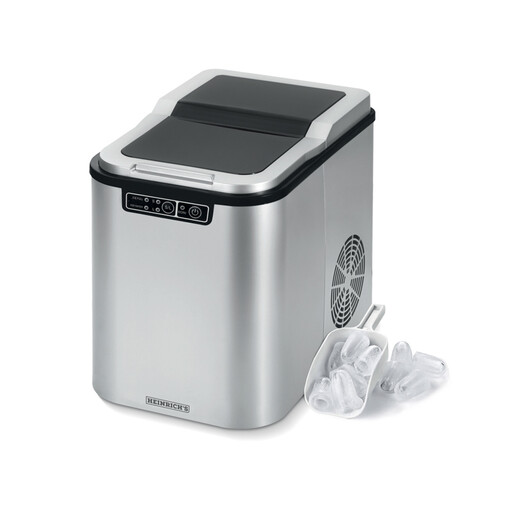
Why this product suits this profile: Its compact design is aimed at households that regularly need smaller quantities of ice for drinks and value straightforward operation.
The product description lists a self-cleaning function, as well as indicators for a full ice basket and an empty water tank. This makes it easy to see important operating conditions.
Two ice cube sizes, a stated output of around 10 to 15 kg per 24 hours and a compact design.
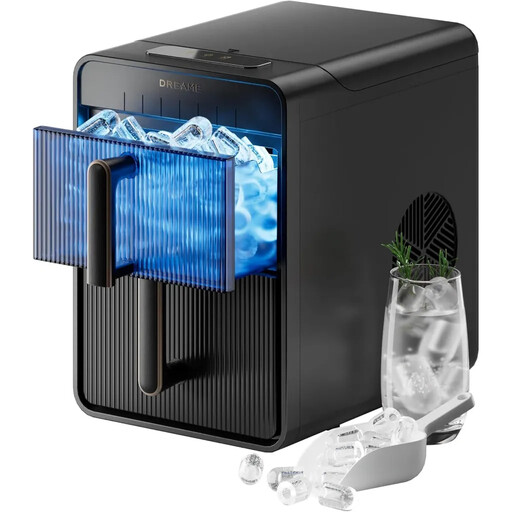
Why this product suits this profile: Touch controls, sensors and a cleaning programme will appeal if you value convenience and a well-managed process.
The description gives the time for the first batch of ice as around six minutes, and the regular cycle as around seven to nine minutes. This distinction helps you plan realistically.
Two ice cube sizes, a stated ice basket capacity of 1 kg, a full-basket sensor and an automatic cleaning programme. The product name states 12 kg per day; the technical description specifies up to 15 kg per 24 hours.
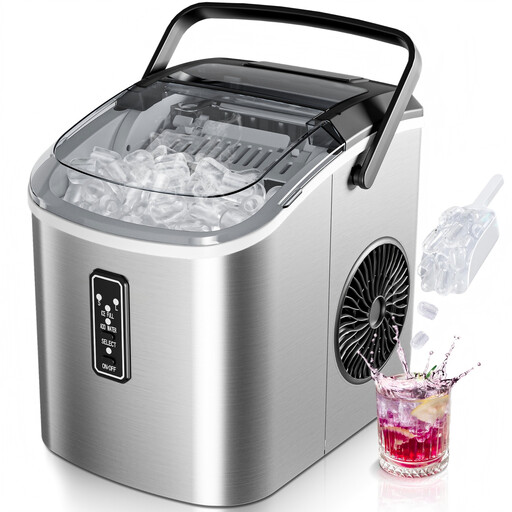
Why this product suits this profile: A carry handle, compact dimensions and a weight of 6.3 kg make this machine an appealing choice for the kitchen, office, motorhome, camping trips and parties.
The description specifies noise levels below 45 dB, warning indicators for low water and a full ice basket, and an activatable self-cleaning function. The ventilation openings still need to be kept clear.
Two bullet ice cube sizes, a stated output of around 12 kg per day, a carry handle and a self-cleaning function.
We’ve put together a complete, regularly updated list of products that meet these strict selection criteria and fully comply with the safety regulations in force in the EU.
Place the machine on a flat, dry and stable surface. Leave the distances from walls specified in the instructions so heat can escape. After transporting the machine, you may need to let it stand before plugging it in, depending on the manufacturer’s instructions. Use an earthed socket and don’t cover the ventilation openings.
Its lifespan depends on how often you use it, how well you clean it, water quality and ventilation. Regularly emptying and drying the machine, keeping ventilation areas clear and using drinking water can help keep it in good working order. Remove limescale and residue as instructed in the manual. A self-cleaning function is helpful, but it doesn’t replace regular care.
Running costs mainly include electricity and water, as well as descaling or cleaning products if needed. To get a realistic estimate, compare the power consumption listed on the rating plate or in the product data sheet with how long you expect to use the machine each day. A machine with a high daily output won’t necessarily be cheaper if you only need a few ice cubes now and then.