For instructors serving lots of drinks
If several participants will be having drinks at the same time, you’ll need to plan production, the available ice supply and when to take ice out of the machine.


For a cookery class serving several types of drink, plan your ice supply before the class starts and match the basket capacity to ongoing production, rather than relying on daily output alone. If you’ll need to top up during the class, batch time, tank capacity and available worktop space matter too. Published performance figures come from manufacturers; they’re not a guarantee that a machine will meet your class’s actual needs. For example, CASO quotes around 500 g per hour and 6–13 minutes per batch for the IceMaster Pro 3301 – two figures that answer different questions.
If several participants will be having drinks at the same time, you’ll need to plan production, the available ice supply and when to take ice out of the machine.
If you want the first drinks ready early, a preparation plan is essential. A short time per batch doesn’t tell you on its own when you’ll have enough ice to serve.
If worktop space is limited, check the machine’s dimensions and make sure you can access the tank and ice basket. Remember to allow time for changing the water and cleaning.
For a weekend cookery class, start with your main priority: having enough ice ready to serve, producing it in time, finding a suitable spot for the machine or planning an easy-to-manage clean.
| Priority | What to check when buying | Who is this important to? |
|---|---|---|
| Ice ready to serve | Work out how many drinks you’ll serve and how much ice each glass needs; distinguish basket capacity from daily output. | If I’m serving several fruit drinks at once, I want enough ice in the basket and don’t want to rely on a high daily output alone. Around 36% of consumers put the amount available to serve first. |
| First batch ready in time | Distinguish batch time from ongoing production; use a trial run to plan how far in advance to start. | If I want the first drinks ready as soon as the class begins, I need to know when ice will actually be available. Around 29% of consumers prioritise having the first batch ready on time. |
| Space and refilling | Check the machine’s dimensions against the space available; make sure you can access the tank and a power socket. | If worktop space is limited, I want to check that the tank and machine dimensions leave room for refilling without blocking the preparation area. Around 21% of consumers prioritise this combination of size and ease of use. |
| Water and cleaning | Read the instructions on changing the water and cleaning; plan for hygienic ice removal and use of suitable water. | If the ice is going straight into drinks, I want to be able to plan water changes, hygienic removal and the necessary cleaning steps. Around 14% of consumers prioritise straightforward, hygienic handling. |
A figure in kilograms per 24 hours doesn’t tell you how much ice will be in the basket at a particular serving time. Gastroback quotes a basket capacity of around 1.5 kg and a daily output of around 12–15 kg for the Bartender Pro 41143.
Work out the amount you’ll need for your planned serving time separately, and plan when to remove the ice and build up a supply before the class starts.
For the IceMaster Pro 3301, CASO’s quoted 6–13 minutes per batch doesn’t answer the same question as its output of around 500 g per hour. A short first batch alone doesn’t show whether the machine can keep producing enough ice for several drinks.
Compare the batch time and output with your serving schedule, and run a trial in good time.
The Unold Freeze 48935 has a rinse programme for the water circuit and a drain for residual water. This doesn’t mean you can skip all the other cleaning and handling steps.
Check the instructions for the specific model and allow time to empty it and complete the cleaning steps described.
For Klamer’s 120 W model, the manufacturer says to leave at least 20 cm of clearance around the machine and keep the ventilation openings unobstructed. The width alone won’t tell you whether it will fit in the available space.
Check the chosen model’s full installation guidance against the space you plan to use.
The Bartender Pro 41143 is an option for ongoing ice production if you have enough worktop space to set it up and take ice out.
The IceMaster Pro 3301 is designed for ongoing production on a worktop. Check how much ice you’ll need ready before serving drinks.
The Freeze 48935 could be worth considering for smaller quantities if a residual-water drain and rinse programme would make it easier to use.
The 120 W model is another option for ongoing ice production. Check that you can maintain the required clearances at your class workspace.
The following Joybuy products are countertop ice makers for drinks. For your class, compare basket capacity, stated output, tank size and the worktop space required.
 No image available
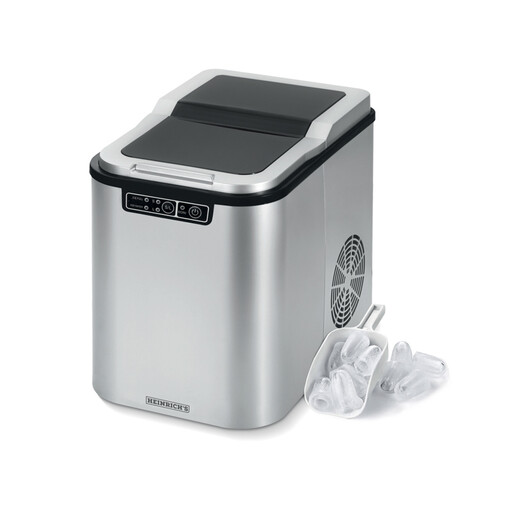
The stated batch time, tank size and daily output can help you plan ice production and how far in advance to start.
According to the product information: 9 ice cubes in 9 minutes, up to 12 kg in 24 hours and a 2.2-l water tank. Two ice sizes and a self-cleaning function are also listed.
The product description also gives dimensions of 36.0 × 24.9 × 32.7 cm and mentions alerts for low water levels and a full basket.
 No image available
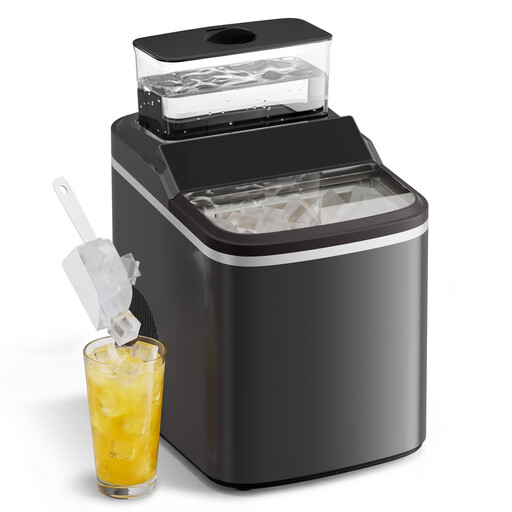
An external tank and stated basket capacity can help you plan refills and serving.
According to the product information: 12 ice cubes in 8–15 minutes, up to 18 kg in 24 hours, an external 1.5-l water tank and a 0.75-kg ice basket. An automatic cleaning function and a preselection feature are also listed.
 No image available
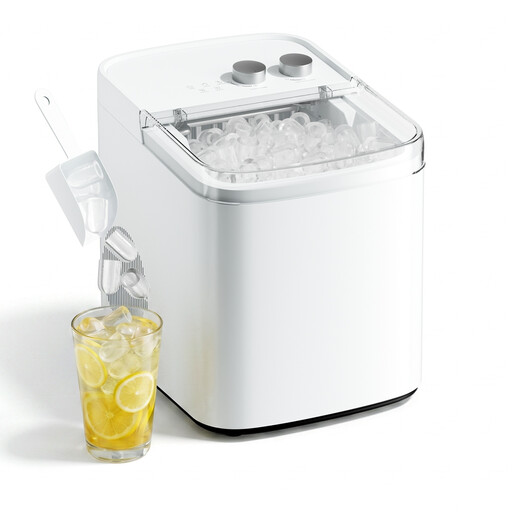
The stated basket capacity and output can help you estimate how often you’ll need to take ice out during the class.
According to the product information: 9 round ice cubes in 6–10 minutes, up to 14 kg in 24 hours, a 1.2-l water tank and a 0.5-kg ice basket. Two ice sizes and an automatic cleaning function are also listed.
 No image available
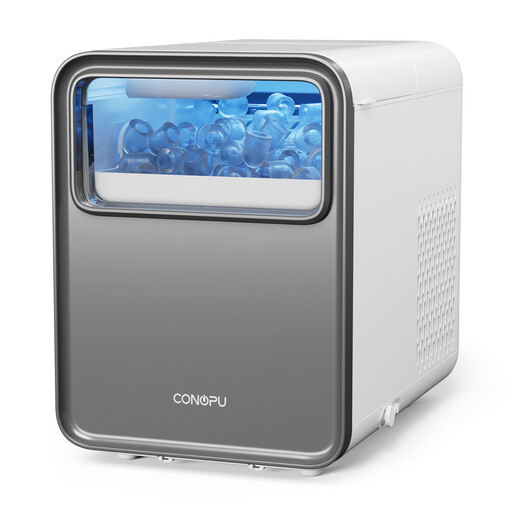
The stated dimensions and tank capacity are useful when planning for a limited amount of workspace.
According to the product information: 9 ice cubes in 6 minutes and a daily output of 12.02 kg. The product description gives a 1.5-l tank and dimensions of 35 × 23 × 30 cm.
Two ice sizes and a self-cleaning function are listed.
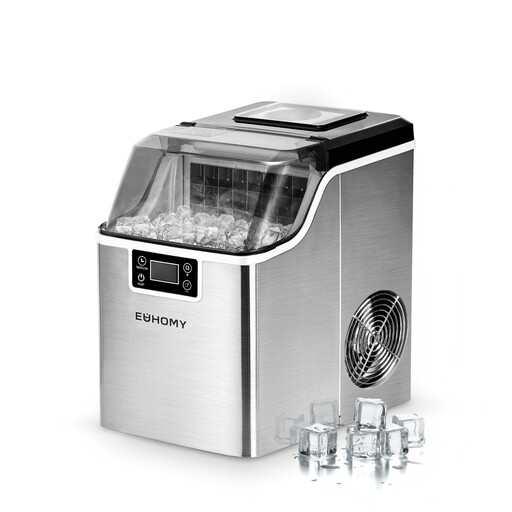 No image available
The stated tank capacity and output may be useful when planning for larger quantities of ice. Also bear in mind the extra step needed to prepare the cubes.
According to the product information: 24 ice cubes in 13 minutes, up to 24 kg in 24 hours and a 3.2-l water tank. An ice basket and scoop are also listed.
The 24 ice cubes stick together and need to be separated by hand before use.
First, work out the total amount you’ll need for the planned number of glasses, then start making ice in good time. Compare the amount you need ready to serve with the ice basket’s capacity: a figure in kilograms per 24 hours doesn’t tell you how much ice will be in the basket at a particular time.
No. A rinse or cleaning function doesn’t mean you can skip all the cleaning steps. Follow the instructions for the specific machine when changing the water, emptying it and carrying out any other cleaning. The Unold Freeze 48935 has a rinse programme and a residual-water drain.
If the class is run as a food business, you must follow the applicable food hygiene requirements. Under Regulation (EC) No 852/2004, ice that comes into contact with food must generally be made from potable water. The regulation excludes domestic preparation, handling and storage for private domestic consumption. Whether this applies to a particular class depends on how it is organised.
For electrical appliances covered by the relevant requirements, the manufacturer uses the CE marking to declare that the product conforms to the applicable EU requirements. The European Commission notes that CE is not an independent quality mark. You should also follow the manufacturer’s information and the instructions for use.
Do not put an old electrical appliance in your household rubbish. The Verbraucherzentrale lists local collection points as a free disposal option. Retailers have take-back obligations in certain circumstances, depending, among other things, on their sales, storage and shipping areas and the size of the appliance.