Spontaneous hosts
When friends drop by at short notice, the time to the first batch and the ability to make more ice during their visit both matter. Arendo says its 2-l model takes around nine minutes to make nine large ice cubes.


For occasional visits and just a few drinks, ice cube trays in your existing freezer may be enough. If you want to top up the ice spontaneously or more than once, a countertop ice maker could be more practical. Compare the time to the first batch, usable storage capacity, space needed and cleaning requirements. The stated daily output alone won’t tell you how much ice will be ready when your guests arrive.
When friends drop by at short notice, the time to the first batch and the ability to make more ice during their visit both matter. Arendo says its 2-l model takes around nine minutes to make nine large ice cubes.
If you’ll only use the machine occasionally, first check that it fits on your worktop and can be put away between visits. For the CASO IceChef Compact, the manufacturer gives dimensions of 220 × 265 × 280 mm and a 1-l water tank.
When you’ll need to top up the ice more than once, consider the water tank and ice basket separately. Gastroback says the Bartender Pro has a 2.8-l water tank and an ice basket with a capacity of 1.5 kg.
A good fit if: visits are planned, you’re serving just a few drinks and you already have space in the freezer.
The trade-off: You’ll need to prepare enough ice in advance for several guests, and there won’t automatically be more ready straight away if you run short. The F.A.Z. Kaufkompass describes ice cube trays as a possible solution for the occasional drink.
A good fit if: you want to make more ice at short notice and need a machine that takes up little space between visits.
The trade-off: A small tank may need refilling more often. CASO gives the IceChef Compact a 1-l tank; daily output doesn’t tell you how much ice will be ready at any particular time.
A good fit if: you need a larger water supply and a separate ice basket for serving several rounds of drinks.
The trade-off: According to the manufacturer, the Gastroback Bartender Pro has a 2.8-l tank and a 1.5-kg ice basket. At around 11.2 kg and 400 × 240 × 430 mm, it needs a fair amount of space.
| What to consider | What to look for | Who it matters most to |
|---|---|---|
| First batch and replenishment | Compare cycle time and the number of ice cubes per cycle separately from daily output. | If guests arrive at short notice, I want to be able to serve the first round promptly. Around 36% of consumers prioritise a quick first batch and a steady supply of ice. |
| Footprint and tank | Check the external dimensions, weight and tank capacity; don’t confuse the water tank with the ice basket. | In a small kitchen, I want to be able to put the machine away after a visit and avoid having to refill the water too often. Around 29% of consumers prioritise footprint and tank capacity. |
| Cleaning | Check the cleaning function and the care and draining steps in the instructions. | After occasional use, I want to know what care the machine needs before I put it away. Around 21% of consumers particularly value low-maintenance appliances. |
| Ice shape | Check which sizes or types of ice the specific model makes; treat claims about how quickly the ice melts as manufacturer information. | If a particular shape of ice matters for my drinks, I’ll compare the available options carefully. Around 14% of consumers choose mainly according to their preferred ice shape. |
Daily output and the time it takes to make one batch are different measures. For your first round, check how long a cycle takes and how many ice cubes it produces.
Compare the cycle time and number of cubes for your first round of drinks, then factor in the tank and ice basket for subsequent rounds.
For the Gastroback Bartender Pro, the manufacturer gives a water tank capacity of 2.8 l and a separate ice basket capacity of 1.5 kg. These are different measures.
Check both figures separately and consider whether you’ll need to refill the water during several rounds of drinks.
A cleaning function alone doesn’t cover every step needed for care and storage. If you only use the machine occasionally, cleaning and drying it after a visit may take extra time.
Before you buy, read the instructions for the specific model, particularly the guidance on cleaning, draining and storage.
The 2-l ice maker is worth considering if you want to compare the time to the first batch and how easily you can make more. The F.A.Z. Kaufkompass recommended the tested 2-l machine for home use; this assessment doesn’t apply to every Arendo model.
The range caters to different priorities: a small footprint with the IceChef Compact, a larger tank with the IceMaster Pro, or a choice of clear or cloudy ice with the Clear Ice Advanced.
The Bartender Pro is worth considering if tank and ice basket capacity matter more than keeping the machine lightweight when you’re serving several rounds of drinks.
This selection features countertop machines for a quick first round, making more ice as you go and different tank capacities.
 No image available
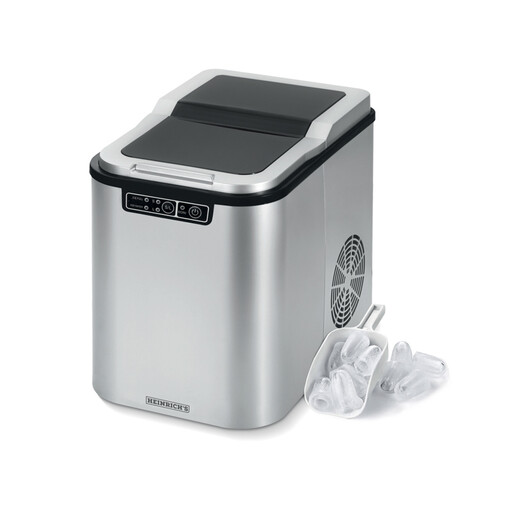
Worth considering for a spontaneous first round if the stated cycle time and two ice cube sizes suit the drinks you have planned.
Specifications include 9 ice cubes in 9 minutes, two sizes, a 2.2-l water tank, a self-cleaning function and 12 kg per 24 hours.
 No image available
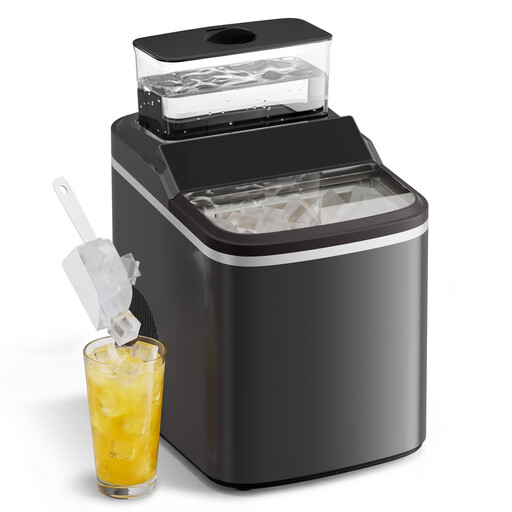
Worth considering for several rounds of drinks if a separate water tank and ice basket are important to you.
Specifications include 12 ice cubes per cycle in 8 to 15 minutes, an external 1.5-l water tank, a 0.75-kg ice basket, a timer and automatic cleaning. Daily output is stated as 18 kg per 24 hours.
 No image available
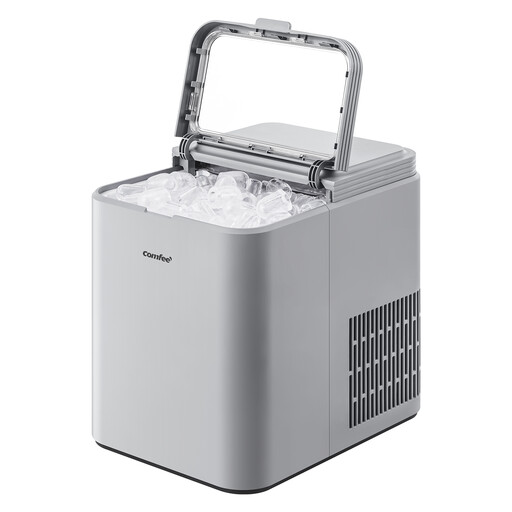
Worth considering for ice-cold drinks at short notice if a short stated cycle time and a choice of ice sizes matter to you.
Specifications include 8 ice cubes in 6 minutes, a 1.3-l water tank, two sizes and a self-cleaning function. Daily output is stated as 12 kg per 24 hours; an ice scoop and basket are also listed.
 No image available
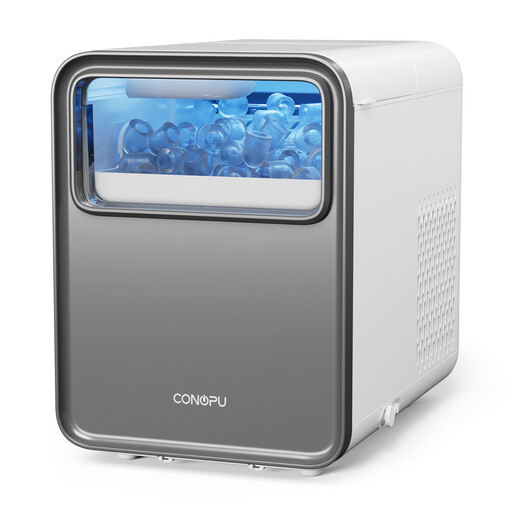
Worth considering for a quick first round if two ice sizes and a cleaning function match your priorities.
Specifications include 9 ice cubes in 6 minutes, two sizes, a self-cleaning function, an ice basket and a scoop. Daily output is stated as 12.02 kg.
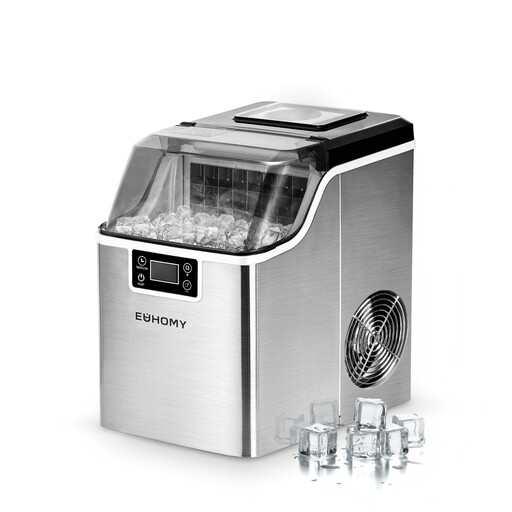 No image available
Worth considering for several guests if a large number of ice cubes per cycle and a bigger tank are important to you.
Specifications include 24 ice cubes in 13 minutes, a 3.2-l water tank, a self-cleaning function and 24 kg per 24 hours. An ice scoop and basket are listed; the ice cubes need to be separated by hand before use.
For the occasional drink, ice cube trays in your existing freezer may be enough. If you might run short when entertaining several guests, or want to make more ice at short notice, compare countertop machines by the time to the first batch and their storage capacity.
The tank-powered machines described here have a water tank. This includes the CASO IceChef Compact, the Arendo 2-l ice maker and the Gastroback Bartender Pro; check the instructions for the specific version you’re considering.
Use fresh water that’s safe to drink. The German Environment Agency advises against using water that has been standing in household plumbing for more than four hours. An advertised self-cleaning function doesn’t automatically replace the other steps in the care instructions.
No. Your statutory rights are rights against the seller if a product is faulty. A guarantee is an additional voluntary promise; its scope depends on the relevant guarantee terms and conditions.
When food-contact materials are placed on the EU market, they must meet the relevant requirements of Regulation (EC) No 1935/2004, as explained by the European Commission. CE marking is only required when EU harmonisation legislation requires it for the relevant product group. In Germany, old appliances must not go in household waste; the German Environment Agency lists recycling centres and retailers as free return options.