If you only start making ice after your weekly shop, compare the time to the first batch and the number of cubes per cycle. The daily output alone won’t tell you how much ice will be ready when your friends arrive. For several drinks, you’ll also need to factor in emptying the basket and, if necessary, making room in the freezer. If worktop space is limited, tank capacity and the appliance’s dimensions matter more. Manufacturer output figures are not based on independent testing.
Who is an ice maker suitable for?
Spontaneous hosts
You’ve just got back from the shops and want the first batch of ice ready before your friends arrive. The time to the first batch and starting the machine in good time are key; CASO Design and Klarstein publish cycle times for specific appliances.
Hosts of larger gatherings
If you’re serving several drinks one after another, you’ll need repeated batches and to empty the basket in good time. MEDION points out that larger amounts of ice can’t all be stored inside the machine.
Hosts with limited kitchen space
You need an appliance that fits on a small worktop, so you’ll be weighing compact dimensions against tank capacity and the need to refill more often. CASO Design lists the IceChef Compact’s specific dimensions and 1-l tank.
What to look for when buying
If you’re expecting guests after the weekly shop, the first thing to consider is when the first batch will be ready. For several drinks, you’ll also need to think about ongoing replenishment and the basket. The space it takes up and how it’s cleaned will affect how well the machine fits into your kitchen routine.
| Consideration |
What to look for when buying |
Who it matters most to |
| Having the first batch ready in time |
Check the time to the first batch alongside the number of cubes per cycle; water and room temperature can affect how the machine performs. |
If I want to serve my first iced drinks soon after getting back from the shops, the start-up time and first batch matter. Around 33% of consumers say this is their main consideration. |
| Keeping the ice coming during a visit |
Consider cycle capacity, tank size and basket capacity separately; if you’re making batches in advance, allow for freezer space too. |
If I’m serving several drinks one after another, I need a steady supply of ice rather than a high daily output figure. Around 27% of consumers say this matters most to them. |
| Worktop space and refilling |
Compare the dimensions and tank capacity of the specific model; CASO Design lists the IceChef Compact as measuring 220 × 265 × 280 mm, with a 1-l tank. |
If worktop space is limited, the appliance needs to fit with enough room to operate it and remove the ice. Around 20% of consumers say this is their main consideration. |
| Cleaning between uses |
Check how easy it is to access the tank, basket and drain, as well as the care instructions for the specific model. |
If I want to get the appliance ready for next time without a complicated clean-up after guests leave, I look for accessible parts and clear cleaning instructions. Around 20% of consumers say this is their main consideration. |
Common misconceptions
-
Confusing 12 kg per day with ice that’s ready to use straight away
A figure in kg/24 h describes production over a longer period, not how much ice the basket holds. MEDION points out that larger amounts of ice can’t be stored inside the machine.
When planning for guests, think about the first batch and the basket’s capacity, not the daily output. If you prepare several batches, remove them in good time.
Removing several batches takes time and may mean you need extra freezer space.
-
Comparing only the length of a production cycle
A short cycle alone doesn’t tell you how many drinks you can serve with ice at once. The number of cubes per batch and the available basket capacity matter too.
Compare cycle time, number of cubes, tank capacity and how easy it is to remove the ice.
More frequent refilling or repeated pauses can make serving drinks more difficult.
-
Assuming self-cleaning means no other care is needed
A cleaning programme doesn’t prove that all parts in contact with water will stay clean without further care.
Check whether the tank and basket are easy to access, and what the instructions say to do after use.
After your guests leave, you’ll need to empty any remaining water and clean the parts specified by the manufacturer.
Brands and specific models to consider
CASO
The IceChef Compact and IceMaster Pro offer different balances between worktop space and tank capacity.
- CASO Design states that both specific models produce around 500 g of ice per hour. The IceChef Compact has a 1-l tank and a self-cleaning function; the IceMaster Pro has a 2.2-l tank.
- These are the manufacturer’s figures for these models, not an independent comparison of the brand’s performance. The stated output doesn’t tell you how much ice will be in the basket when guests arrive.
Klarstein
The Caldwell is an option for making small batches of bullet ice when you have guests occasionally.
- For the 1.3-l version, Klarstein states that it makes nine pieces of ice per cycle in around 6–12 minutes.
- Figures for this specific version don’t show how other Klarstein models perform, or whether the basket will be full when guests arrive.
H.Koenig
The KB14 may suit buyers considering a larger tank and the option to programme production in advance.
- The German manufacturer’s website lists a 2.1-l tank, a daily output of 12 kg and 10–13 minutes per cycle.
- Manufacturer documentation gives different cycle times and numbers of ice sizes. Before deciding, check exactly which version of the appliance is being offered.
MEDION
Information about the brand’s ice makers illustrates the difference between ongoing production and having ice ready to use.
- MEDION itself points out that larger amounts of ice can’t be stored inside the machine.
- So the daily output alone doesn’t tell you how much ice will be ready in the basket at any one time.
Joybuy products
This selection includes countertop appliances for a steady supply of ice, as well as models that dispense small batches at a time. For each specific model, check the documentation covering EU requirements for electrical appliances and parts that come into contact with water or ice. The German Federal Network Agency covers CE marking as part of its market surveillance work; CE marking is not an independent safety or performance test.
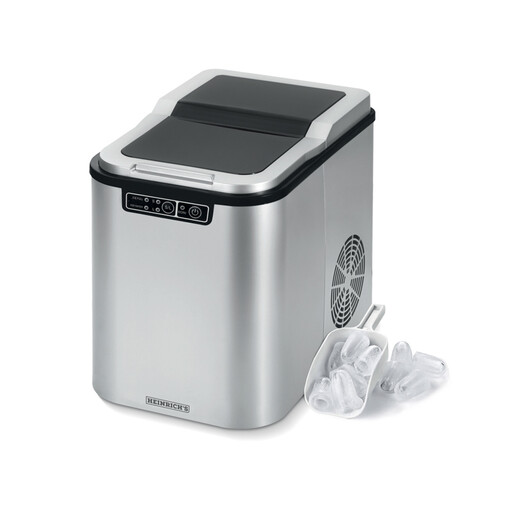 No image available
120 W ice maker with 2.2-l tank
For a steady supply of ice for several drinks, if a larger water tank suits the way you plan to use it.
As stated in the product name: 9 ice cubes in 9 minutes, two ice cube sizes, a 2.2-l water tank, a self-cleaning function and 12 kg of ice in 24 hours.
View at Joybuy
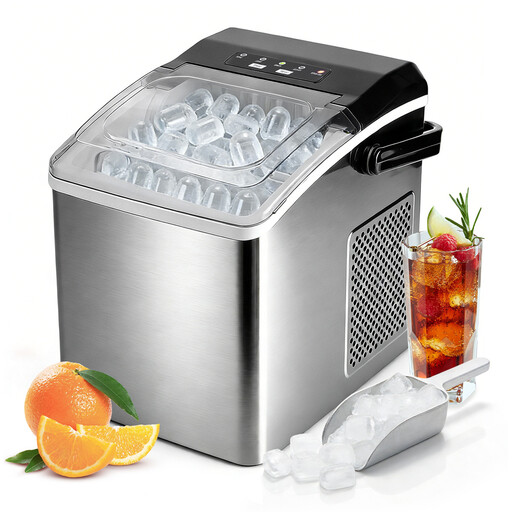 No image available
Ice maker with 1.3-l tank and two sizes
For making ice in batches, if you’d like to remove each batch as it’s ready and keep an eye on the water level.
As stated in the product name: 9 ice cubes in 6 minutes, a 1.3-l water tank, two ice cube sizes, a self-cleaning mode and 12 kg in 24 hours.
View at Joybuy
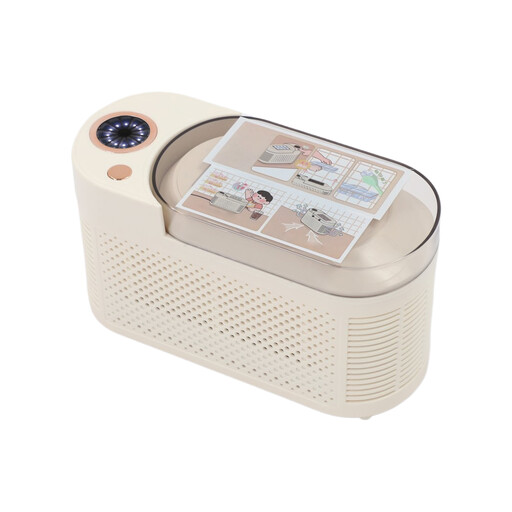 No image available
Portable countertop ice maker, 120 W, white
For making ice in batches, if a portable countertop ice maker suits the way you plan to use it.
The product name specifies 120 W and the colour white.
View at Joybuy
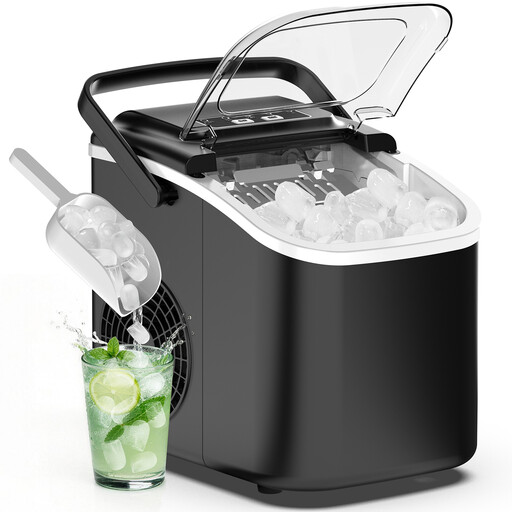 No image available
Ice maker with 8 cubes in 6 minutes
For making smaller batches that you can remove as you serve drinks.
As stated in the product name: 8 ice cubes in 6 minutes, two ice cube sizes, a self-cleaning function and an ice scoop; plus 12 kg in 24 hours.
View at Joybuy
 No image available
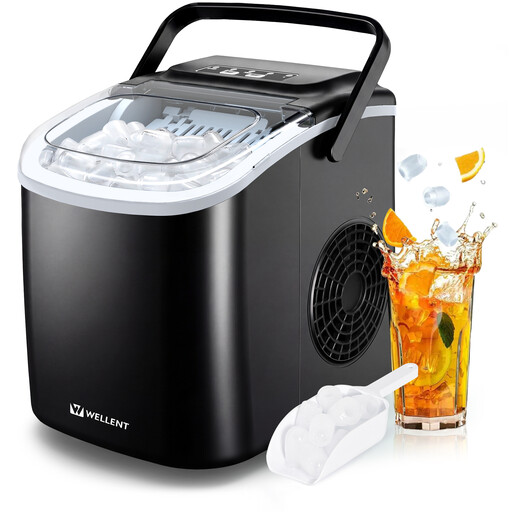
Black portable ice maker with handle
For making small batches repeatedly, if you’re looking for a portable appliance with a handle.
As stated in the product name: 12 kg of ice in 24 hours and a self-cleaning function.
View at Joybuy
Frequently asked questions
Can I treat the stated daily output as a ready-made supply of ice?
No. A figure in kg/24 h describes production over a longer period, not how much ice the basket holds. If you prepare larger quantities before guests arrive, remove the batches and use a freezer if necessary; MEDION points out that larger amounts of ice can’t be stored inside the machine.
What should I bear in mind when cleaning the machine after a visit?
Empty and clean parts that come into contact with water or ice, following the instructions for the specific appliance. A self-cleaning function is an extra programme, not a proven replacement for all other care and cleaning. The German Federal Institute for Risk Assessment points out that surfaces that look clean aren’t automatically clean from a microbiological perspective.
What requirements apply to an ice maker in Germany?
Mains-powered appliances must meet the relevant EU requirements for electrical equipment; the German Federal Network Agency explains CE marking in connection with market surveillance. Parts intended to come into contact with water or ice must also comply with EU rules on food-contact materials, as explained by the European Commission. Check the documentation for the specific model: the CE mark alone is not an independent safety or performance test.
What are my rights if I buy a new appliance that turns out to be faulty?
When buying from a retailer in Germany, it’s important to distinguish between your statutory rights and a voluntary guarantee. The consumer advice centre explains that, if a product is faulty, the seller is your first point of contact for a remedy; check the specific terms of any additional guarantee separately.
How should I dispose of an old ice maker?
Electrical waste must be collected separately and not put in household rubbish. The German Environment Agency lists a recycling centre as one option for dropping it off; additional conditions apply if you return it to a retailer.


