Hosts serving several iced coffees
If you’re serving several glasses at once, consider how quickly the first batch will be ready and whether you can make more while you get everything prepared.


If you’re serving several iced coffees at once, a countertop ice maker is a good fit when its cycle time and the number of cubes per cycle suit how far in advance you can prepare. Daily output alone doesn’t tell you how much ice will be ready to serve. For further rounds, consider the water tank and ice basket. If space is limited or you’ll only use it occasionally, a compact model or ice cube trays in your existing freezer may make more sense. Cycle and capacity figures are provided by manufacturers and can vary depending on the model and where it’s set up. The F.A.Z. buying guide notes that ice cube trays may be enough for occasional use.
If you’re serving several glasses at once, consider how quickly the first batch will be ready and whether you can make more while you get everything prepared.
If you’re planning to make ice for an evening with friends, check the machine’s dimensions, the space needed to remove the ice and the tank size against the spot you have in mind.
If you’ll only use a machine now and then, weigh up the cleaning involved and the storage space it needs against using ice cube trays you already have in the freezer.
Compare the first batch of ice, the supply for further glasses and the space available separately. Under EUR-Lex, materials intended to come into contact with water or ice are subject to the relevant requirements for food-contact materials.
| What to consider | What to check | Who it matters most to |
|---|---|---|
| First round | Compare the cycle time and number of cubes per cycle; allow time for several cycles. | If I’m serving the first round to several guests at once, I plan around the first batch rather than the daily output figure. Around 36% of consumers put having the first round ready on time above all else. |
| More ice | Check the water tank and ice basket separately; don’t assume the daily output is the same as the amount of ice available at once. | When serving more drinks, I don’t want to be constantly refilling the water or removing ice. Around 29% of consumers prioritise a reliable supply of more ice. |
| Cleaning and drinking water | Read the model-specific instructions for water, draining and cleaning; check that the tank and ice basket are easy to access. | If the machine regularly makes ice for drinks, I want to be able to reach and carry out the recommended care steps easily. Around 21% of consumers care most about practical, hygienic cleaning. |
| Space | Check the machine’s dimensions and the space needed to remove the ice against the place where you plan to put it. | With a small worktop, I want to be able to fit the machine without having to set aside more space than necessary. Around 14% of consumers prioritise a machine that’s the right size. |
A figure in kilograms per 24 hours doesn’t tell you how much ice will already be ready for the first round. Manufacturers also provide cycle times and basket capacities.
Plan around the number of cubes per cycle and the number of glasses you need to fill. If you’re hosting several guests, start making ice in good time.
KLAMER lists different tank sizes and numbers of cubes per batch for its standard 120-watt model and its compact model.
Compare the full model or product number and the specifications for the exact version.
A built-in cleaning function doesn’t automatically include every care step needed for that particular machine.
Read the instructions for the specific model and check that the tank and ice basket are easy to reach.
The 2-l model is a compact option for planned iced coffee get-togethers.
The Bartender Pro is a larger countertop option for serving several rounds of drinks.
The range includes machines in different sizes, including the IceMaster Pro 3301 and IceChef Compact 3401.
The standard 120-watt model and the compact model differ in tank size and the number of ice cubes they make.
This selection at Joybuy includes countertop ice makers for planned iced coffee get-togethers, with details on cycle time, number of cubes and, in some cases, tank size.
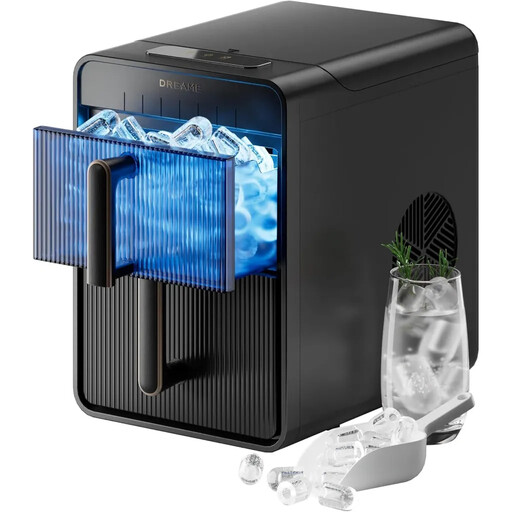 No image available
An option if you want to plan ahead for the first round and choose between different ice cube sizes.
The product title lists 6–8 minutes per cycle, a daily output of up to 12 kg, a 900-ml water tank, two types of bullet ice and a self-cleaning function. These are product specifications, not measurements taken where you’ll use the machine.
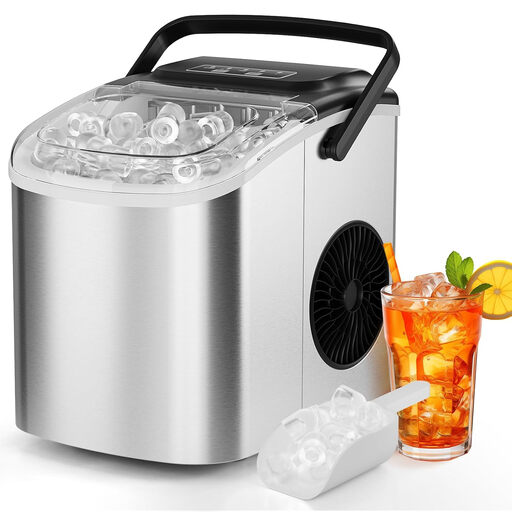 No image available
The stated number of cubes per cycle can help you plan the first round of iced coffees.
The product title lists nine cubes in six minutes, two ice sizes and self-cleaning. The product description lists a 1.2-l water tank, an ice basket and a carry handle.
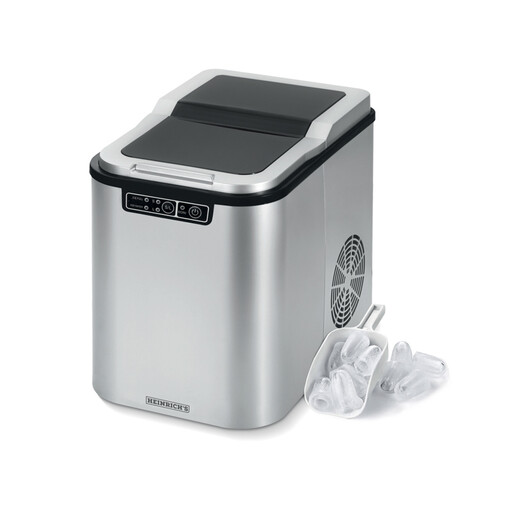 No image available
An option if, as well as the first round, you need a larger water tank for serving more glasses.
The product title lists nine cubes in nine minutes, two ice sizes, a 2.2-l water tank, self-cleaning and up to 12 kg of ice per 24 hours. Daily output isn’t the same as the amount of ice available straight away.
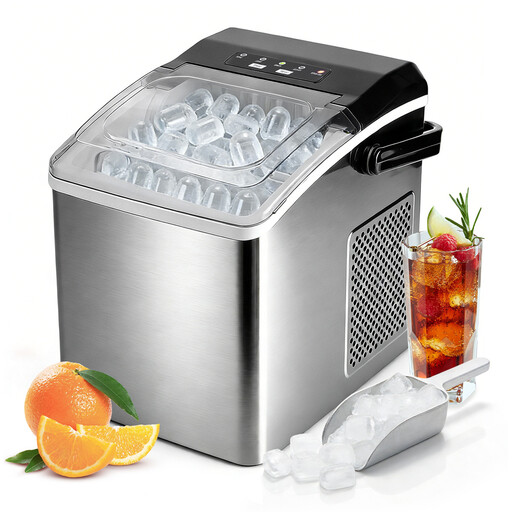 No image available
The stated cycle details can help you plan the first round when you’re serving several glasses.
The product title lists nine cubes in six minutes, two ice sizes, a 1.3-l water tank and a self-cleaning function. Daily output is listed as 12 kg; this doesn’t tell you how much ice will be ready at a particular serving time.
 No image available
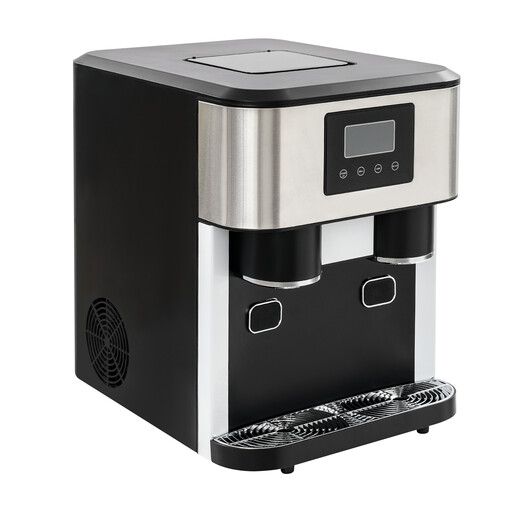
An option if you’re interested in crushed ice or chilled water for drinks as well as bullet ice.
The product description lists these three functions and 16 ice cubes per batch in 7–9 minutes.
No. It describes how much ice the machine makes over a whole day, not how much is ready to use straight away. Also check the cycle time, number of cubes per cycle and ice basket, and start earlier if you’re making several glasses.
The instructions for the CASO IceChef Compact specify drinking water, not other liquids. Follow the instructions for the model you actually buy when cleaning and draining it. General advice from the German Federal Institute for Risk Assessment explains why looking clean isn’t a substitute for hygienic care.
No. Statutory rights for faulty goods are generally claims against the seller; a guarantee is an additional voluntary promise with its own terms. The German consumer advice centre recommends checking who provides the guarantee and what it covers.
Materials intended to come into contact with water or ice must meet the relevant EU requirements for food-contact materials. Mains-powered appliances must also comply with the applicable electrical safety regulations. A CE mark is not an independent quality mark and, on its own, doesn’t prove that a specific model is suitable for food contact.