For a drink you prepare on a weekday, an ice maker makes most sense if you regularly need ice at short notice. Look at the time to the first batch, the amount you can actually remove and the cleaning involved, rather than focusing only on daily output. You’ll also need a suitable way to keep it cool or store it until your lunch break. In warm weather, the German Consumer Advice Centre recommends using a cool bag with cold ice packs. If you only need ice occasionally and have room in your freezer, ice cube trays may be the simpler option.
Who is an ice maker suitable for?
Preparing lunch on a weekday
If you prepare a drink in the morning, making ice at home and keeping it cool while you’re out are two separate considerations. MEDION points out that ice made continuously needs to be removed and, if necessary, transferred elsewhere for storage.
Short on time in the morning
If you only make ice shortly before leaving, the time to the first batch and the space available on your worktop often matter more than an estimated daily output. CASO and KLAMER give ice-making times for their respective models; check these alongside the batch size.
Preparing several drinks
If you need ice for several drinks or plan to use the machine at home too, the tank, ice basket and space required are important things to consider. GASTROBACK lists a 2.8-l tank and a 1.5-kg ice basket for the Bartender Pro 41143.
What should you look for when buying?
Compact machine for a morning serving
A good fit if: You regularly make ice shortly before leaving and need the first batch to be ready in time. CASO says the IceMaster Pro 3301 makes its first ice after 6–13 minutes.
Consider: A short preparation time doesn’t tell you how much ice will be available at once or how long it will stay frozen while you’re out.
Larger tank for several servings
A good fit if: You prepare several drinks in the morning or use the machine for other occasions too. GASTROBACK lists a 2.8-l tank and a 1.5-kg ice basket for the Bartender Pro 41143.
Consider: Its stated dimensions of around 400 × 240 × 430 mm mean it needs a corresponding amount of space. Daily output doesn’t indicate how much ice can be stored at once.
Ice cube trays in the freezer
A good fit if: You only need ice occasionally, have freezer space and can plan ahead.
Consider: The cubes need time to freeze, while a countertop machine is designed to make ice at short notice.
| What matters when buying |
What to look for |
Who it matters most to |
| Keeping drinks cool until lunch |
Check your drink container and how you’ll keep it cool while you’re out; remember to remove the ice from the machine’s basket. |
If you prepare your drink in the morning, you’ll need to plan separately for keeping it cool on the way. Around 33% of consumers focus on keeping ice usable until it’s time to drink. |
| Having the first serving ready in time |
Compare the time to the first batch and the number of cubes with the time you have in the morning. |
If you’re short on time in the morning, the first usable serving needs to be ready before you leave. Around 27% of consumers prioritise having the first serving ready in time. |
| Cleaning and handling water |
Check how leftover water is drained, which parts can be removed, whether there’s a cleaning function and what the care instructions say for the specific model. |
If you use the machine regularly, you’ll want to know how to change the water and clean accessible parts. Around 20% of consumers focus on everyday maintenance. |
| Space needed and the freezer alternative |
Measure the available worktop space and height, allowing room to open the lid. Consider how often you need ice at short notice. |
If you have limited space in your kitchen, an extra appliance needs to justify its place compared with ice cube trays in the freezer. Around 20% of consumers focus on space requirements and the freezer option they already have. |
Common buying misconceptions
-
Confusing daily output with the amount of ice stored in the machine
A figure in kilograms per day doesn’t tell you how much ice is ready in a single batch or how much can be stored in the machine. MEDION notes that ice made continuously needs to be removed and, if necessary, transferred elsewhere for storage.
Compare the time and quantity of the first batch with what you need, then plan separately for storage.
-
Assuming a rinse function means no maintenance is needed
On the UNOLD Freeze, the cleaning function rinses the water circuit. It doesn’t automatically replace changing the water or cleaning other accessible parts.
Before buying, check the drain, removable parts and care instructions for the specific model. If you use it regularly, follow the hygiene steps in the manual.
-
Choosing a larger machine just because it has a bigger tank
A larger tank can be useful for making several servings, but the tank alone doesn’t necessarily mean the machine takes up more room. According to the manufacturer, the GASTROBACK Bartender Pro 41143 measures around 400 × 240 × 430 mm.
Measure the space you have, including room to open the lid, and consider whether you need several servings at once.
Brands to consider
CASO Design
The IceMaster Pro 3301 is a countertop machine with two ice sizes that may suit you if you want to plan a morning serving.
- CASO says the first ice is ready in 6–13 minutes and the machine has a 2.2-l tank.
- Its stated output of 12 kg per 24 hours isn’t the amount of ice available at once. Check the dimensions too, and make sure there’s room to open the lid.
GASTROBACK
The Bartender Pro 41143 is more suited to households that need several servings or ice for occasions beyond lunch drinks.
- GASTROBACK says the machine has a 2.8-l tank, a 1.5-kg ice basket and a cleaning function.
- Its stated dimensions of around 400 × 240 × 430 mm mean it takes up worktop space. The tank capacity and ice basket capacity are separate specifications.
KLAMER
An ice maker with a timer and two ice sizes may appeal if you’d like to plan when more ice is made.
- For the 120-watt model described, KLAMER lists 10 ice cubes per batch and up to 15 kg per day.
- A stated noise level of 60 dB doesn’t, on its own, prove that the machine is quiet. Daily output doesn’t mean that amount will remain in the basket until your lunch break.
UNOLD
The Freeze is an option if you want to consider a drain for leftover water and a water-circuit rinse when using the machine regularly.
- UNOLD lists a tank capacity of around 1.6 l, an ice basket holding around 700 g and a rinse function.
- The rinse function doesn’t automatically replace the other cleaning steps in the instructions.
MEDION
The manufacturer’s guidance on ice makers highlights the difference between ongoing ice production and storing ice in a freezer.
- MEDION explains that ice made continuously needs to be removed and, if necessary, transferred elsewhere for storage.
- This general explanation isn’t a specification for every individual MEDION model.
Joybuy product selection
This selection includes countertop ice makers for making servings at short notice at home. Check the batch size separately from how you’ll keep the ice cool on the way to your lunch break.
 No image available
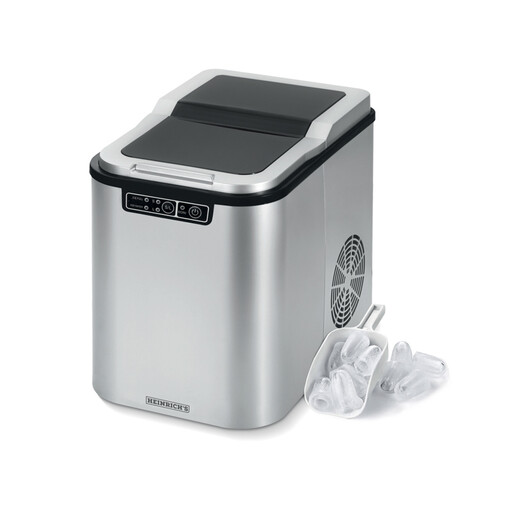
120-watt ice maker with two ice cube sizes
For a morning serving, the product title states that it makes 9 ice cubes in 9 minutes. That’s a batch size, not a supply for the rest of the day.
Features listed include two ice cube sizes, a 2.2-l water tank, a self-cleaning function and an output of 12 kg per 24 hours.
View at Joybuy
 No image available
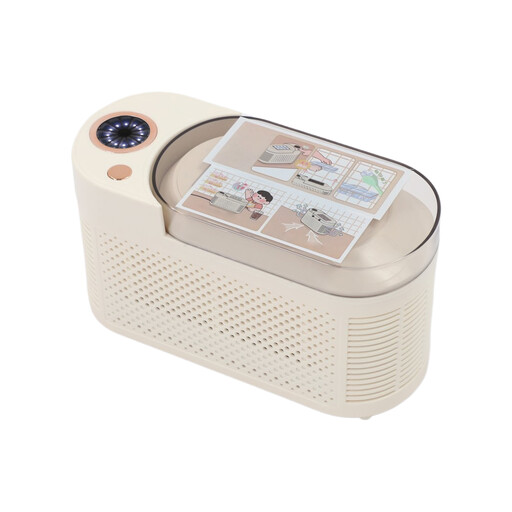
Portable 120-watt countertop ice maker
The description says the machine can be used at home or on the go. Check that the power supply is suitable for where you plan to use it.
It’s listed as making 8 square ice cubes per cycle, with power supplied by a mains adapter or 12 V car cable. The description says it has a transparent lid.
View at Joybuy
 No image available
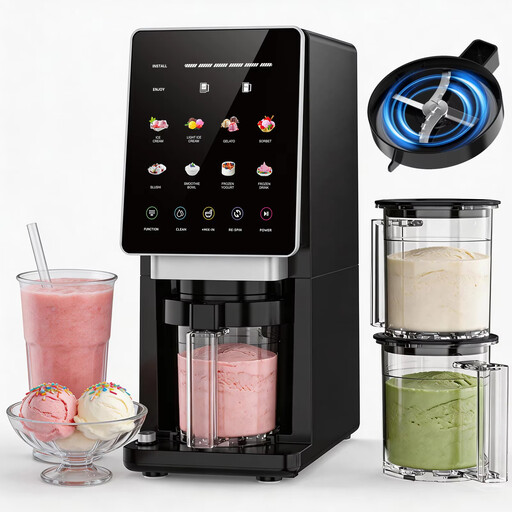
Teendow KF-2501U1 countertop ice maker
The details in the product title may appeal if you’re looking for a countertop model with preset programmes and a cleaning function.
The title lists 8 preset programmes, as well as self-cleaning, mixing and restart functions.
View at Joybuy
 No image available
Ice maker with self-cleaning function and two ice sizes
For a serving at short notice, the description says it makes 8 ice cubes in 6 minutes. Check whether that batch size suits your needs in the morning.
Features listed include two ice cube sizes, a 0.8-l water tank, a 0.45-kg ice basket and a self-cleaning function. Daily output is stated as 12 kg per 24 hours; an ice scoop is also included.
View at Joybuy
 No image available
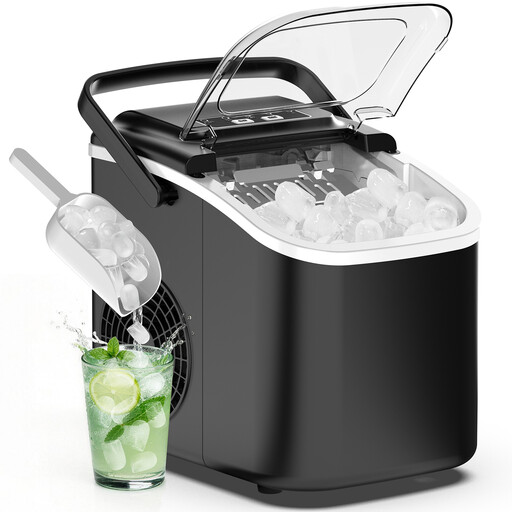
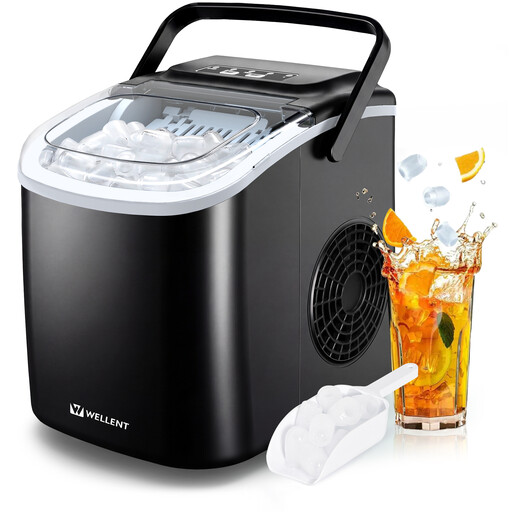
Black ice maker with carry handle and two ice sizes
The description says the first batch is ready after 6 minutes. For your plans, the quantity per batch and how you’ll store the ice afterwards matter too.
Specifications include a 0.8-l water tank, a 0.45-kg ice basket, two ice cube sizes and a self-cleaning function. Output is stated as 12 kg per 24 hours; dimensions: 20.2 × 28.1 × 26.4 cm, weight: 5.35 kg.
View at Joybuy
Frequently asked questions
Is 12 kg of ice a day enough for my lunchtime drink?
No. This figure describes potential output over 24 hours, not the first batch or the amount stored in the machine. For your morning routine, compare the time and number of cubes in the first batch, then plan separately for storage.
How can I keep the ice cold until my lunch break?
Remove the serving you need before you set off, as a countertop machine isn’t a freezer for storing ice all day. Choose a drink container or cooling solution to suit your journey and the time until you’ll be drinking it; the machine’s specifications don’t tell you how long the ice will stay frozen while you’re out. In warm weather, the German Consumer Advice Centre recommends using a cool bag with cold ice packs.
Does a self-cleaning function mean I don’t need to do any other maintenance?
No. For the UNOLD Freeze, the manufacturer describes the function as rinsing the water circuit. Follow the instructions for your chosen model when changing the water and cleaning accessible parts.
Which marking is relevant for a mains-powered ice maker?
For electrical equipment covered by the EU Low Voltage Directive, including equipment with a rated voltage of 50 to 1,000 V AC, CE marking is one of the requirements for placing it on the market. EUR-Lex sets out the scope of the directive. For a specific appliance, check whether it falls within that scope and how it is marked. CE is not an independent quality mark.


