What to look for when buying
If storage space is limited, weigh up the room needed for the appliance and your ice supply against how much ice you’ll need during the party.
Compact countertop appliance
A good fit if: you need smaller batches repeatedly and want to put the appliance away after the party.
The trade-off: A smaller tank may need refilling more often; the stated dimensions for the CASO IceChef Compact are inconsistent.
Countertop appliance with a larger tank
A good fit if: you want to keep making ice over several hours and have enough worktop and storage space.
The trade-off: A larger tank may mean fewer refills, but it doesn’t automatically make the appliance easy to store in a cupboard.
Ice cube trays or a prepared supply
A good fit if: you only need ice occasionally and can make and store it in advance.
The trade-off: A prepared supply takes up freezer space; if you’re serving lots of drinks, you may run short.
| What matters to you |
What to check before buying |
Who should pay particular attention |
| Keeping up with demand during the party |
Compare the first batch, cycle time, stated hourly output and basket capacity separately. |
If I’m serving drinks throughout the party, a steady supply matters just as much as having a basket that can hold enough for the next round. Around 36% of consumers say a continuous supply of ice is their main concern. |
| Worktop and storage space |
Check the dimensions of the specific model against your worktop and cupboard space, and take the operating and set-up instructions into account. |
In a small kitchen, the appliance needs to fit on the worktop and be easy to store after the party. Around 29% of consumers put available space first. |
| First batch |
Distinguish the time and number of cubes in the first batch from the hourly or daily output. |
If guests ask for ice unexpectedly, I want to know when the first batch will be ready – not just what the machine claims it can make in a day. Around 21% of consumers prioritise a quick start. |
| Cleaning and water |
Check how accessible the tank and basket are, along with the care instructions for the specific model. |
If you want cleaning to be as straightforward as possible after the party, look for easy-to-access parts and clear care instructions. Around 14% of consumers say cleaning is their main buying concern. |
Joybuy products
The following Joybuy products are countertop ice makers for parties where you’ll need ice repeatedly. Compare tank capacity, basket size, dimensions and first-batch details with your available space and the amount of ice you plan to have ready.
For new mains-powered appliances in Germany, check the CE marking on the specific model on offer if it falls within the scope of the relevant EU legislation.
 No image available
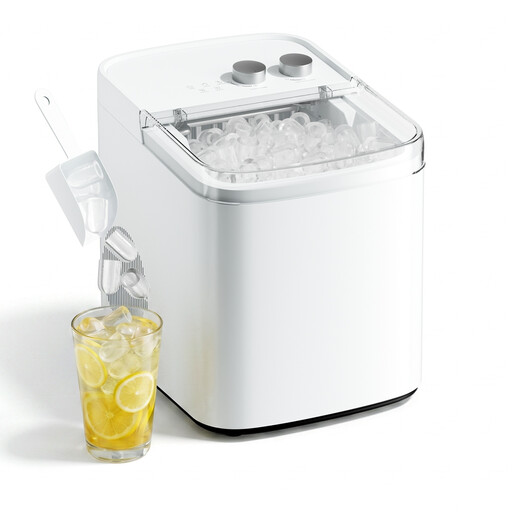
Countertop ice maker with a 1.2-l tank
For a steady supply of ice at parties; product details state that it makes nine round ice cubes in 6–10 minutes.
Water tank: 1.2 l. Ice basket: 0.5 kg. Choose from two ice sizes. Stated daily output: up to 14 kg/24 h.
Joybuy
 No image available
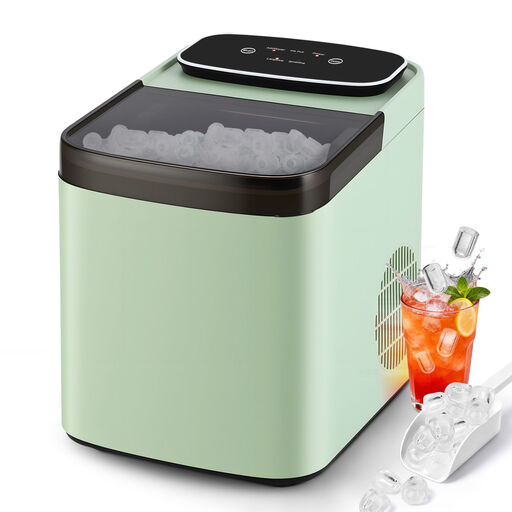
Compact mint-green ice maker
For making repeated batches at a party; the product description states that it makes nine ice cubes per cycle.
Water tank: 1.3 l. Ice basket: 0.5 kg. Dimensions given in the description: 23.5 × 30.5 × 30.2 cm. Two ice sizes.
Joybuy
 No image available
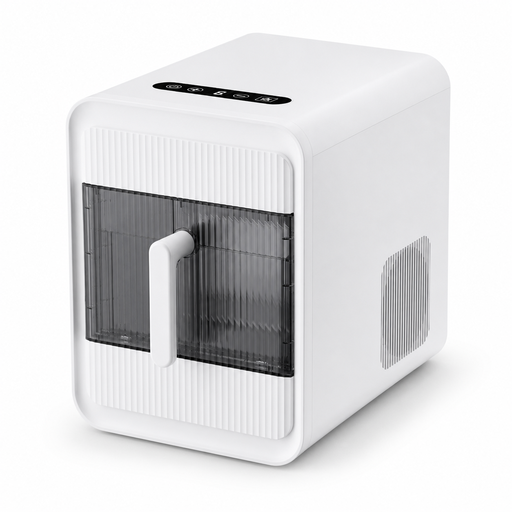
Countertop ice maker with a removable drawer
For impromptu get-togethers; the product description states that the first batch of square ice cubes is ready in 8–12 minutes.
Water tank: 1.5 l. Dimensions: 230 × 292 × 300 mm. Removable ice drawer.
Joybuy
 No image available
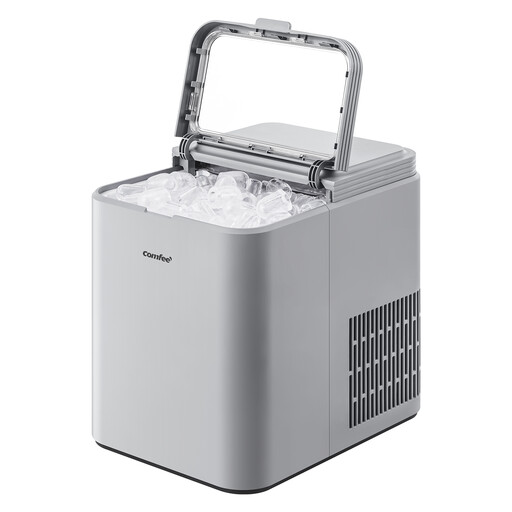
Comfee’ RCI12GY1EU(E)
For serving ice to guests; product details state that it makes eight ice cubes in six minutes.
Water tank: 1.3 l. Ice basket: 0.4 kg. Dimensions: 295.7 × 213 × 295 mm. Stated daily output: up to 12 kg/24 h.
Joybuy
 No image available
CONOPU countertop ice maker
For a steady supply of ice at a party; product details state that it makes nine bullet-shaped ice cubes in six minutes.
Stated daily output: 12.02 kg. Two ice sizes. Dimensions given in the description: 35 × 23 × 30 cm. Basket and scoop.
Joybuy
Frequently asked questions
How can I plan my ice supply without confusing daily output with the amount ready to use?
Plan for the first batch, ongoing production and the supply you’ll have ready separately. CASO gives the IceMaster Pro an output of around 500 g per hour; GASTROBACK lists a 1.5-kg basket for the Bartender Pro. Without knowing how many guests you’ll have, these figures can’t guarantee how much ice your party will need.
Can I leave the finished ice in the basket until the party?
Don’t assume an ice maker’s basket works like a freezer. GE Appliances describes a non-refrigerated storage bin on a different standalone ice maker. Read the instructions for your specific model, and allow for separate freezer space if you want to prepare ice in advance.
Is the self-cleaning function enough after the party?
Not necessarily: a cleaning function doesn’t mean you can skip all care and drying steps. Germany’s Federal Institute for Risk Assessment explains the microbial risks associated with handling water at home. Clean, empty and dry your chosen appliance according to its instructions.
Is the CE mark an independent quality seal?
No. For new mains-powered ice makers sold in Germany that fall under the Low Voltage Directive 2014/35/EU, the CE marking is the manufacturer’s declaration of conformity, not an independent quality seal. The Directive covers electrical equipment with a voltage rating of 50 to 1,000 V AC; the consolidated version is dated 30 May 2026. The European Commission explains what the marking means; check it on the specific model on offer.
Is it worth buying an ice maker for a one-off summer party?
Not necessarily: if you only need a few batches and have enough freezer space, prepared ice cube trays may be enough. The F.A.Z. Kaufkompass considers ice cube trays sufficient for the occasional drink; if you’ll need ice repeatedly during the party, a countertop appliance may be more convenient, provided you have the space and are happy to look after it.


