Hosts serving several drinks at once
If you’re serving several drinks, the time to the first batch and the ongoing hourly output are useful figures to consider. CASO and ProfiCook publish different production figures for their respective models.


For a family meal, the stated daily output isn’t the only thing that matters. Check the time to the first batch, ongoing output and ice basket capacity separately. A larger water tank doesn’t automatically mean you’ll have more ice ready to serve. If clear cubes matter to you, also check the stated production rate for the specific model.
If you’re serving several drinks, the time to the first batch and the ongoing hourly output are useful figures to consider. CASO and ProfiCook publish different production figures for their respective models.
If you’d like to avoid having to refill or empty the machine too often during a meal, check the water tank and ice basket separately. CASO and Klarstein provide details on both for their respective models.
If you only make ice occasionally and space is limited, consider the machine’s dimensions, filling and cleaning requirements together. CASO and Unold publish dimensions for selected models.
Start by comparing the time to the first batch and the ongoing output, then check the tank and ice basket, along with the space required and care instructions. Production and capacity figures are provided by the respective manufacturers and shouldn’t be treated as a standardised comparison.
| What matters | What to check | Who should pay particular attention |
|---|---|---|
| Ice ready in time, with more to follow | Consider the time to the first batch, hourly output and basket size separately. CASO states that the IceChef Pro produces around 500 g/h; ProfiCook says the PC-EWB 1253 makes ice in around 10 minutes. | If I need to have several drinks ready when it’s time to serve, both the first batch and ongoing output matter to me. Around 29% of consumers prioritise having ice ready in time. |
| Fewer interruptions | Check the tank and basket separately: CASO states that the IceChef Pro has a 2.2-l tank and a removable 1.3-l ice basket; Klarstein states that the Ice Volcano 2G has a 2-l tank and a 0.6-kg storage basket. | If the meal lasts a while, I don’t want to keep refilling the water or removing finished ice. Around 23% of consumers prioritise running the machine with as few interruptions as possible. |
| Cleaning and water | Look for easy-to-reach parts and check the care instructions. ProfiCook lists a cleaning programme; Unold states that the Edel 48955 has a residual-water drain. | If I use the machine regularly for drinks, I want to be able to clean the basket and water-contact parts thoroughly. Around 18% of consumers prioritise easy care. |
| The right ice shape | Check the ice shape made by the specific model. CASO states that the Clear Ice Advanced makes clear or cloudy cubes at 320–350 g/h; this manufacturer figure isn’t directly comparable with every other model. | If the look of the ice in my glass matters more to me than maximum output, I focus on the ice shape on offer. Around 18% of consumers prioritise their preferred ice shape. |
| Space and ease of use | Check the machine’s dimensions and allow room to fill it and remove the ice. CASO states that the IceChef Pro measures 250 × 325 × 370 mm (W × H × D); Unold states that the Edel 48955 measures 35 × 29,5 × 29 cm (L × W × H). | If my worktop space is limited, I want to know whether the machine will fit and be easy to use. Around 12% of consumers prioritise the space available. |
A figure for daily output doesn’t tell you how much ice will be ready when your meal begins. Manufacturers list the time to the first batch, ongoing production rates and basket sizes separately.
Plan for the first batch based on the cycle time, then compare hourly output and ice basket capacity separately for your ongoing needs.
The tank holds water; the ice basket holds cubes that have already been made. The figures may therefore refer to different quantities and units.
Compare the tank and ice basket separately, and don’t equate litres of water with kilograms of finished ice.
CASO states that the Clear Ice Advanced produces 320–350 g/h, while the IceChef Pro produces around 500 g/h. These are manufacturer figures for different models, not an independently measured comparison.
Before you buy, decide whether the look of the ice or ongoing output matters more to you, then check the production figure for your chosen model.
The IceChef Pro and Clear Ice Advanced offer different features: ongoing output or the option of clear cubes.
The PC-EWB 1253 is described as operating with an integrated water tank.
The Ice Volcano 2G is described as dispensing bullet ice directly into your glass.
The Edel 48955 may appeal to buyers who want to consider a specified ice basket and a residual-water drain.
The LIFE Nugget MD 11960 is an option for buyers specifically looking for nugget ice rather than standard bullet cubes.
The following Joybuy products are countertop ice makers, including models that make bullet ice and offer different cycle times, water tank capacities and features.
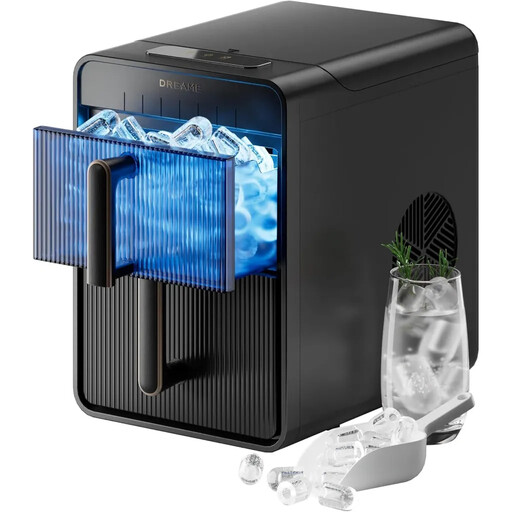 No image available
The stated cycle time may be useful when you need ice ready for serving.
The title lists a 6–8-minute ice cycle, 12 kg daily output, a 900-ml water tank, two bullet ice sizes and a self-cleaning function. The description states that it can store 1 kg of ice.
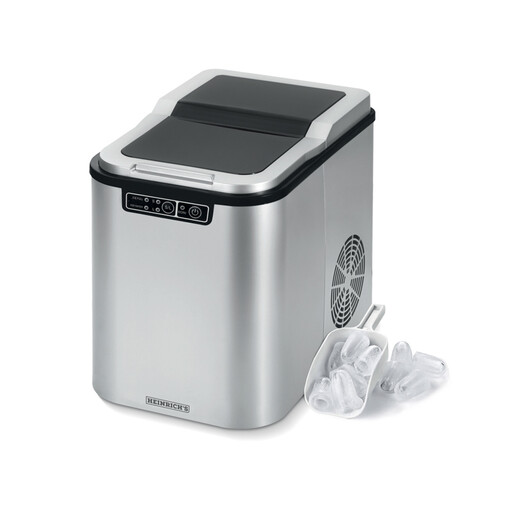 No image available
The stated time to the first batch may be useful if you need drinks ready for serving.
The title lists 120 W, nine ice cubes in nine minutes, a daily output of 12 kg, a 2.2-l water tank, two ice sizes and a self-cleaning function.
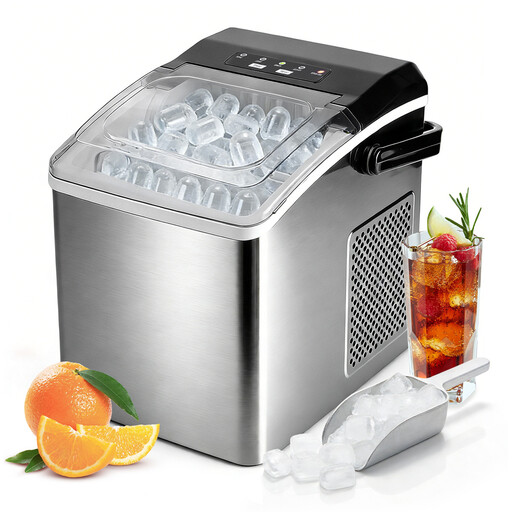 No image available
The short cycle time stated may be useful if you need ice ready for serving.
The product description lists nine ice cubes in six minutes, a daily output of 12 kg, a 1.3-l water tank, two ice sizes and a self-cleaning mode.
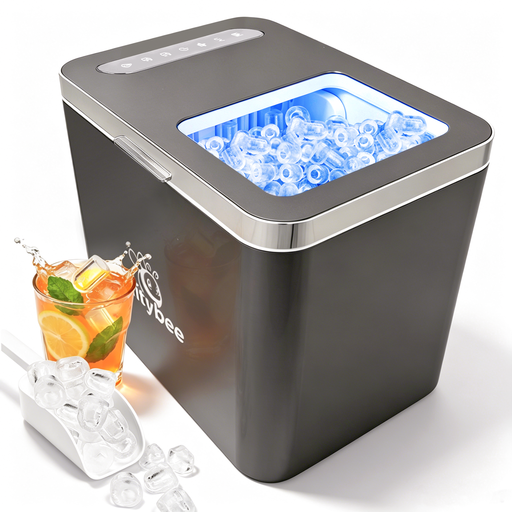 No image available
This machine is described as suitable for buyers who want to make ice without a permanent water supply.
The product description lists a 1.2-l water tank, around nine ice cubes in six minutes, up to 14 kg of ice per day and a self-cleaning programme. According to the description, a permanent water supply isn’t required.
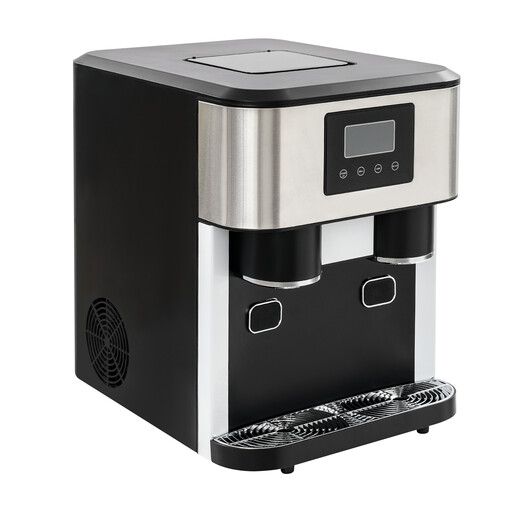 No image available
The ability to dispense several types of refreshment may suit households with different preferences.
The product description lists bullet ice, crushed ice and chilled water, as well as 16 bullet ice cubes per batch in 7–9 minutes. According to the description, this cycle time applies at ambient temperatures below 77°F.
No. For serving time, the time to the first batch, hourly output and basket size are more useful figures. CASO states that the IceChef Pro produces around 500 g/h; ProfiCook says the PC-EWB 1253 makes its first batch in around 10 minutes and produces 8–12 kg per 24 hours. These are figures provided by the respective manufacturers.
Not every model needs a separate water supply. ProfiCook describes the PC-EWB 1253 as having an integrated 1.5-l tank; check this feature for the specific model you’re considering.
No. A cleaning programme doesn’t replace hygienic handling of hands and kitchen utensils. The Verbraucherzentrale recommends keeping kitchen utensils clean and washing your hands before and between tasks. Also follow the care instructions for the basket and water-contact parts of the specific machine.
Appliances within the scope of the EU Low Voltage Directive for 50–1.000 V AC must meet conformity requirements, including CE marking. The Bundesnetzagentur also lists product identification and correct manufacturer details as points to check. A CE claim in a product description alone doesn’t confirm that the specific product listing is compliant.
The seller is responsible for the statutory guarantee; a manufacturer’s warranty is a separate, voluntary service. If a product is faulty, the first remedy may be repair or replacement.