Commuters in a hurry for iced coffee
If you pack your coffee in the morning, what matters is when you’ll have a usable portion of ice ready – not just the stated daily output.


A countertop ice maker can be worthwhile if you need ice at short notice on many weekdays and don’t want to prepare a supply in your freezer. Focus on the time it takes to make the first batch, how much space it needs and how easy it is to drain after use. For occasional use, ice cube trays may be enough, as the F.A.Z. Kaufkompass notes. An ice maker won’t keep ingredients that need chilling cold in your lunch: the German Federal Institute for Risk Assessment recommends keeping perishable foods as cold as possible until they’re eaten.
If you pack your coffee in the morning, what matters is when you’ll have a usable portion of ice ready – not just the stated daily output.
If you use it frequently on a small worktop, the appliance’s dimensions and how easy it is to drain and clean are important factors to consider.
If you take iced coffee and possibly ingredients that need chilling with you, you’ll need to plan separately for making ice at home and keeping food chilled while you’re out.
A good fit if: you want to make ice in the morning on many weekdays and the time it takes to make the first batch fits your schedule.
The trade-off: The appliance needs worktop space and electricity. Refilling the water and cleaning it are also part of using it.
A good fit if: you only need ice occasionally or can prepare it the night before.
The trade-off: You’ll need to make room in the freezer and prepare a supply of ice in advance.
The German Federal Institute for Risk Assessment recommends keeping perishable foods as cold as possible until they’re eaten. So making ice at home and choosing suitable cooling for the journey to your lunch break are two separate buying and planning decisions.
| What matters | What to check before buying | Who should consider this? |
|---|---|---|
| First batch ready in time | Compare the time to make the first batch and the number of ice cubes per cycle separately against the time you need to leave. | If I only have a short window in the morning, the first portion matters more to me than the daily output. Around 33% of consumers mainly want their ice to be ready in time. |
| Cleaning and leftover water | Check for a drain for leftover water, how easy the ice basket is to access and the care instructions for the model. | If I use it regularly, I want to be able to drain leftover water easily and manage the cleaning as part of my day-to-day routine. Around 27% of consumers particularly value easy maintenance. |
| Worktop space and portion size | Compare the appliance’s dimensions and tank or ice basket capacity with the space you have and the amount you need. | If I’m short on worktop space and usually pack one coffee for lunch, I don’t want to choose an appliance that’s the wrong size for my needs. Around 20% of consumers prioritise suitable dimensions and a capacity that meets their needs. |
| Keeping things chilled until lunch | Plan for a suitable container for transport and keep ingredients that need chilling sufficiently cold separately. | If I take milk or other ingredients that need chilling with me, I want to plan separately for how they’ll be stored until I eat them. Around 20% of consumers are particularly concerned about keeping things chilled while they’re out. |
A daily output figure doesn’t tell you whether a suitable portion will be ready before you leave. Manufacturers’ figures for cycle time and daily output refer to different things.
Make a note of how many ice cubes you need before leaving, then check the cycle time and quantity for the specific model.
A rinse function may take care of one cleaning step, but it won’t necessarily replace all the maintenance and draining steps in the instructions. The Lower Saxony State Office for Consumer Protection and Food Safety highlights the importance of cleaning ice makers.
Read the care instructions and check whether the drain and ice basket are easy to access.
Making ice at home doesn’t tell you how to store your drink and any ingredients that need chilling while you’re out. The German Federal Institute for Risk Assessment recommends keeping perishable foods as cold as possible until they’re eaten.
Plan for a suitable container for transport and, if you’re taking ingredients that need chilling, make sure they’re kept cold enough separately from the ice maker.
The IceMaster Pro 3301 is a countertop model for which CASO specifies two ice sizes and a preparation time for this particular model.
The Freeze 48935 is aimed at buyers who, with regular use, pay attention to draining leftover water and maintaining the water circuit.
The Bartender Pro 41143 may appeal to buyers who regularly need more than one serving for their lunch coffee.
According to the manufacturer, KLAMER’s 120-W ice maker combines a timer with two ice sizes.
The EWM-100 is a countertop model with two ice sizes, a removable basket and a cleaning programme.
This Joybuy selection includes countertop ice makers for making ice at home. For your morning routine, compare the stated time to make the first batch and check that the appliance’s size and care requirements suit your space and lifestyle.
 No image available
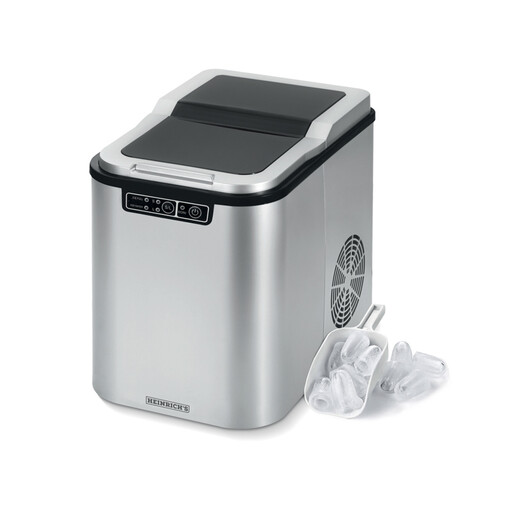
If you need a small portion before you leave, the stated cycle time and number of ice cubes are useful points of comparison.
The product name lists 9 ice cubes in 9 minutes, up to 12 kg in 24 hours, a self-cleaning function and a 2.2-l water tank.
 No image available
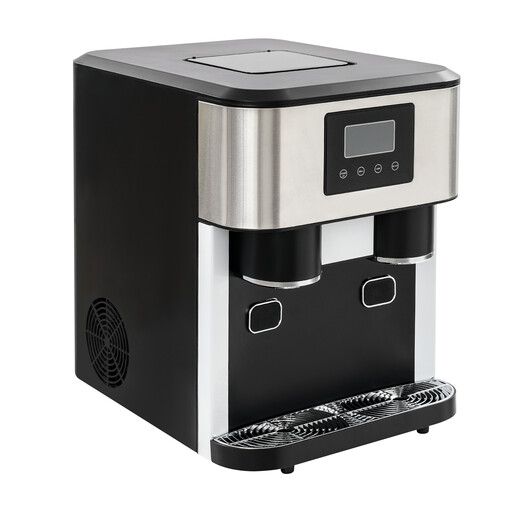
If you’re looking for an appliance with several functions, check which features are included in the specific version before buying.
The product name describes the model as a 3-in-1 countertop appliance for home and commercial use.
 No image available
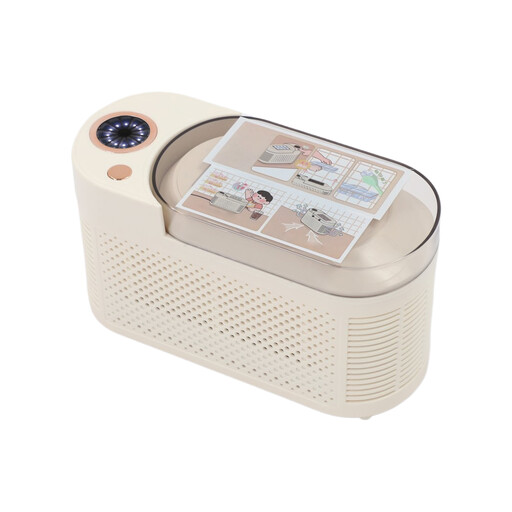
If you’re looking for a model for home or use in the car, check that the stated uses match how you plan to use it.
The product name lists 120 W and describes the appliance as a portable mini ice maker for home and car use; this version is white.
 No image available
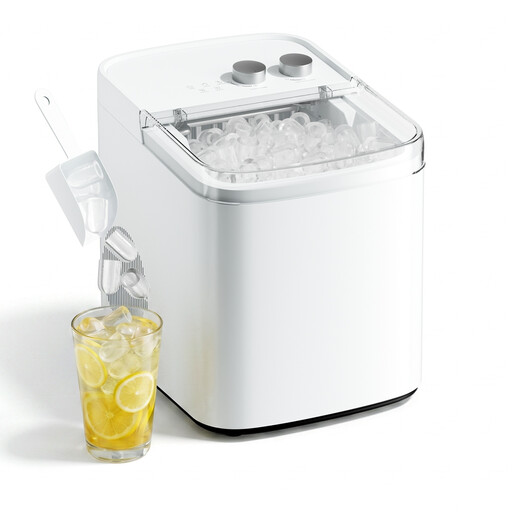
For a morning portion, you can compare the stated cycle time and number of ice cubes with the time you have available.
The product name lists 9 round ice cubes in 6–10 minutes, up to 14 kg in 24 hours, a 1.2-l water tank and a 0.5-kg ice basket. It also specifies two ice sizes and automatic cleaning; remember to follow the care instructions.
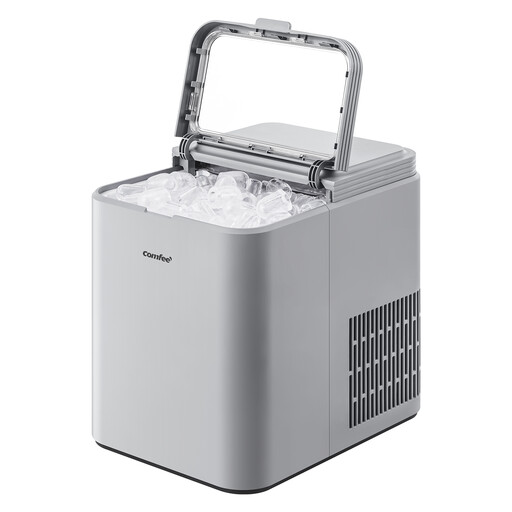 No image available
If you want to make a small portion of ice before packing, compare the stated batch time with your morning routine.
The product name lists 8 ice cubes in 6 minutes, up to 12 kg in 24 hours, a 1.3-l tank and a self-cleaning function. The product name also states that a scoop and basket are included; the specified type is bullet ice.
No. First compare the time to make the first batch and the quantity per cycle with the time you need to leave; daily output is a different measure. Figures vary from one model to another.
Follow the instructions for the model you choose. Check its setup and ventilation guidance, as well as the steps for draining leftover water and cleaning it. An automatic rinse function won’t necessarily replace all the recommended care steps.
No. You can’t work out a safe chilling time from an ice maker’s performance figures. The German Federal Institute for Risk Assessment recommends keeping perishable foods as cold as possible until they’re eaten; plan separately for transporting and chilling ingredients that need to be kept cold.
When you buy from a business seller in the EU, you’re generally entitled to a legal guarantee of at least two years from the date you receive the goods. This is separate from any voluntary manufacturer’s warranty. You can contact the seller to exercise your legal rights.
No. In Germany, waste electrical equipment must be collected separately. The German Environment Agency outlines the general requirement for free take-back at municipal collection points, as well as retailers’ take-back obligations in certain circumstances.