What should you look for when buying?
First decide when you want the ice to be ready. Then consider whether the ice shape and cleaning requirements fit into your routine.
| What matters to you |
What to check before buying |
Who it matters most to |
| Time to the first batch |
Check the batch time and number of ice cubes for the specific model. Distinguish between manufacturer claims and measured test results. |
If I want to make iced coffee as soon as I switch the machine on, the first batch I can take out is crucial. Around 36% of consumers put this first. |
| Ice for later |
Check whether the basket is easy to remove and whether you can make room for it in your freezer. |
If I’m planning several drinks for different times, I want to take out batches and store them separately. Around 29% of consumers prioritise having ice ready in advance. |
| Cleaning if you use it often |
Read the instructions for the specific model and check which parts can be removed and how to drain the water. |
If I use the machine regularly, I want to be able to reach and clean the basket and other parts that come into contact with ice. Around 21% of consumers pay particular attention to regular cleaning. |
| Ice shape and texture |
Check the ice shape produced by the specific model: a choice of bullet sizes doesn’t mean it makes nugget ice. |
If I prefer a particular texture in my iced coffee, I compare bullet ice and small nuggets carefully. Around 14% of consumers prioritise their preferred ice shape. |
Joybuy products
This selection includes countertop machines for making ice for iced coffee. Compare the ice shape, stated batch and daily output figures, and the cleaning functions described with what you need.
 No image available
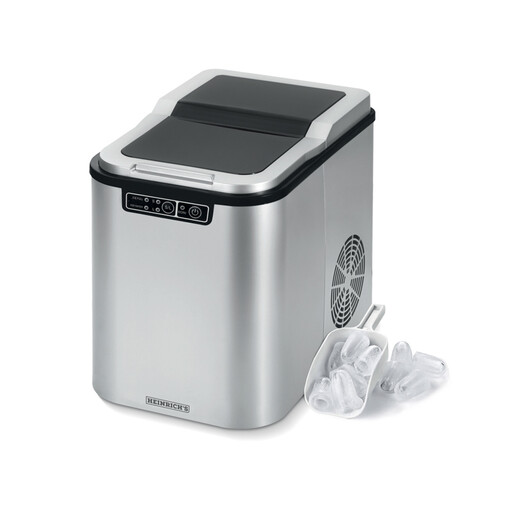
120 W ice maker with 2.2 l water tank
An option if you want to choose between two ice cube sizes.
The title states that it makes nine ice cubes in nine minutes, with a daily output of 12 kg and a self-cleaning function.
View at Joybuy
 No image available
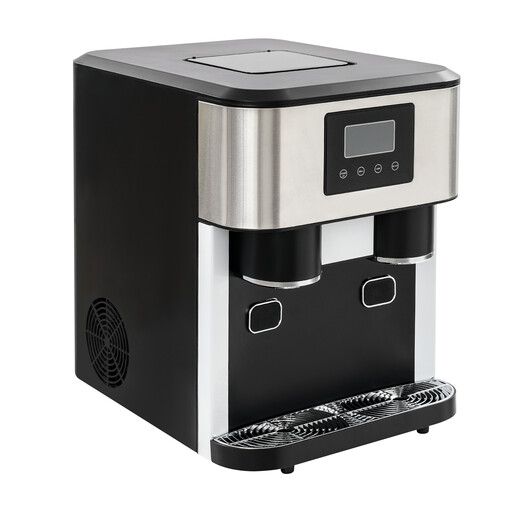
3-in-1 countertop ice maker for home and commercial use
An option if you’re looking for an ice maker described as 3-in-1 for use at home or in a commercial setting.
The product title describes a countertop machine and identifies it as a 3-in-1 model.
View at Joybuy
 No image available
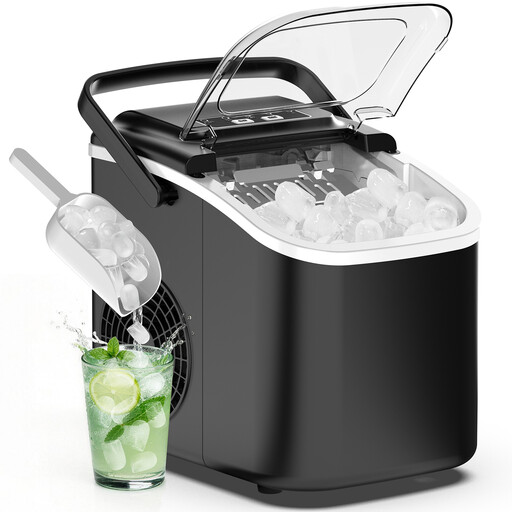
Self-cleaning ice maker with two ice sizes
An option if you’re considering two ice sizes and a self-cleaning function.
The title states that it makes eight ice cubes in six minutes, with a daily output of 12 kg. An ice scoop is also listed.
View at Joybuy
 No image available
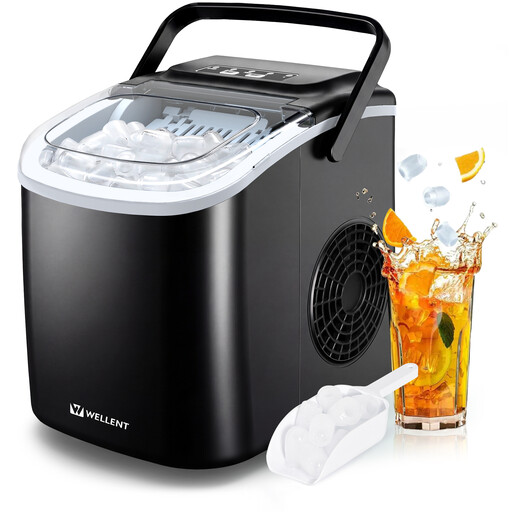
Black ice maker with carry handle
An option if a carry handle and self-cleaning function are among your selection criteria.
The title states a daily output of 12 kg.
View at Joybuy
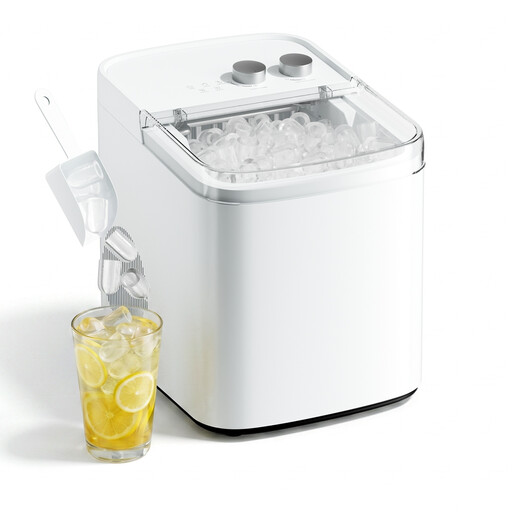 No image available
Ice maker with 1.2 l water tank and 0.5 kg ice basket
An option if you’re considering a machine with an ice basket, as described in the title, and a choice of two ice sizes.
The title states that it makes nine spherical ice cubes in 6–10 minutes, with a daily output of 14 kg and an automatic cleaning function.
View at Joybuy
Frequently asked questions
Can I store the stated daily output in the collection basket for tomorrow?
No. Daily output describes how much ice the machine can make, not how much it can store. MEDION recommends taking out batches for larger supplies and, if necessary, putting them in the freezer.
Where should I keep milk or other perishable ingredients I’ve prepared?
Keep them in the fridge until you’re ready to use them. The German Federal Institute for Risk Assessment classifies milk as a perishable food that should be kept sufficiently chilled; an ice maker doesn’t replace refrigeration.
Does self-cleaning mean I don’t need to clean the parts that come into contact with ice?
No. A self-cleaning function doesn’t guarantee that a machine is completely maintenance-free. Check the instructions for the specific model; the basket and scoop can be removed from the Severin EZ 7415.
What does the CE marking mean on an ice maker?
Check whether the relevant EU harmonised rules apply to the electrical appliance and require CE marking. If they do, the marking must be present. According to Your Europe, the manufacturer uses it to declare that the product complies with the relevant rules. It isn’t an independent quality mark and isn’t approved by a central EU body.
Are a manufacturer's guarantee and your statutory rights the same thing?
No. Your statutory rights are against the seller, while a guarantee is an additional voluntary offer that is subject to its own terms and conditions. The Verbraucherzentrale explicitly distinguishes between these two rights.


