Iced coffee at different times of day
If you need ice for several meals, plan how you’ll take it out, make more and store it for later. MEDION recommends considering production speed and capacity together.


If you need ice at short notice several times a day, look at how long each batch takes, how much ice you can remove at once, and the effort involved in refilling and cleaning – not just the daily output. If you can plan your portions in advance, ice cube trays may be the simpler option. With a machine, you’ll also need to decide how to store the ice until a later meal.
If you need ice for several meals, plan how you’ll take it out, make more and store it for later. MEDION recommends considering production speed and capacity together.
If you decide you fancy an iced coffee at short notice, the time it takes to make the first usable batch matters more than the daily output. F.A.Z. notes that ice cube trays may be enough if you only need ice occasionally.
If you use your appliance regularly, check how easy it is to clean the tank and basket, and what’s involved. MEDION recommends checking the cleaning options and the instructions for the specific appliance.
A good fit if: you want to make fresh ice at different mealtimes and don’t want a fixed water connection.
The trade-off: You may need to refill or remove ice more often; daily output doesn’t tell you how much ice is ready straight away.
A good fit if: you need several portions or drinks for guests and have enough worktop space.
The trade-off: A larger appliance may take up more room. For example, the manufacturer lists a 2.8-litre tank and a 1.5-kg ice container for the Gastroback Bartender Pro; it measures around 400 × 240 × 430 mm.
A good fit if: you can prepare ice before meals and only need a portion occasionally.
The trade-off: You’ll need room in the freezer and have to plan ahead, but you won’t need an extra compressor appliance.
| What you need | What to look for | Who is this important for? |
|---|---|---|
| Ice for later | Check the basket capacity and what happens when it’s full; if you need ice for a later meal, plan how you’ll store it separately. | If I need ice for a later meal, I need to know how much I can remove and how I can store it until then. Around 36% of consumers would make later availability their most important buying criterion. |
| First batch | Consider batch time and quantity together. Don’t treat manufacturers’ figures as independently measured times. | If I want to make iced coffee on a whim, how long I have to wait for the first portion matters. Around 29% of consumers would prioritise a quick first batch. |
| Everyday maintenance | Check whether the basket and tank are easy to access, and what steps are set out in the cleaning instructions. | If I use the appliance regularly, I want to fit water changes and cleaning easily into my routine. Around 21% of consumers would prioritise easy maintenance. |
| Space and running costs | Compare the appliance’s dimensions and required clearances with the space you have; wattage alone isn’t enough to estimate costs. | If I have limited worktop space or want to avoid adding another appliance, the extra space and running costs need to suit my needs. Around 14% of consumers would make these considerations their most important buying criterion. |
Kilograms per day, the time taken for one batch and the basket capacity all describe different things. A high daily output doesn’t tell you how much ice you can take out at a particular mealtime.
Start by checking the batch time and basket capacity against your schedule. Use the daily output as an additional guide only.
For several portions, you may need to remove ice more than once; ice made in advance may also need extra space in the freezer.
A programme alone doesn’t tell you which parts need additional cleaning by hand. For the CASO IceMaster Pro, the manufacturer recommends changing the water in the tank every 24 hours.
Before buying, read the instructions for the exact model and check the steps for cleaning the tank, basket and drain.
Changing the water regularly and cleaning accessible parts takes extra time.
As well as its footprint, a compressor appliance may need extra clearance for ventilation. KLAMER requires 20 cm of clearance all around the 120-watt model described; this doesn’t automatically apply to other models.
Compare the space available with the dimensions and installation guidance in the instructions for the specific appliance.
The specific 2-litre model is an option for making quick batches at home.
The IceMaster Pro 3301 is a documented option with a 2.2-litre tank and two ice sizes.
The Bartender Pro 41143 is worth considering if you’re looking at tank and ice container capacity.
The 120-watt model described has a timer and two ice sizes.
This selection includes ice makers for iced coffee and making more ice as you need it, including worktop models.
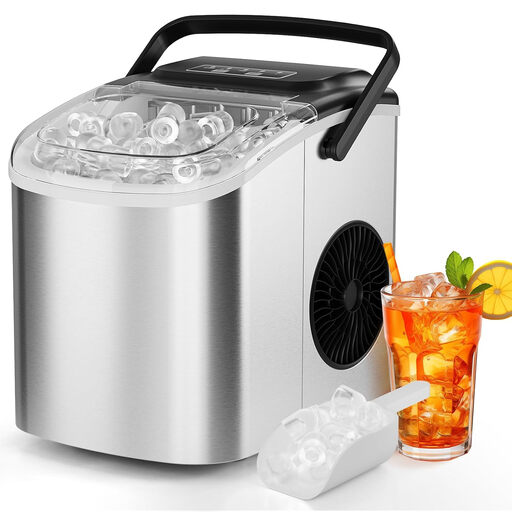 Image unavailable
For a quick portion, the product title lists nine cubes in six minutes.
The product details list two ice sizes, a 1.2-litre water tank and an ice container.
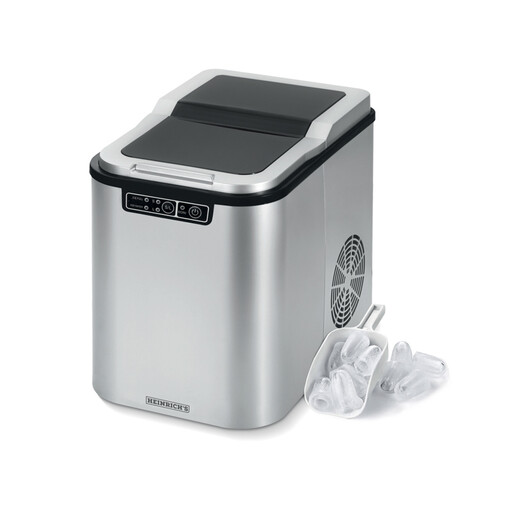 Image unavailable
For a portion without a long wait, the product title lists nine ice cubes in nine minutes.
The product details list two ice sizes, a 2.2-litre water tank, a self-cleaning function and up to 12 kg of ice in 24 hours.
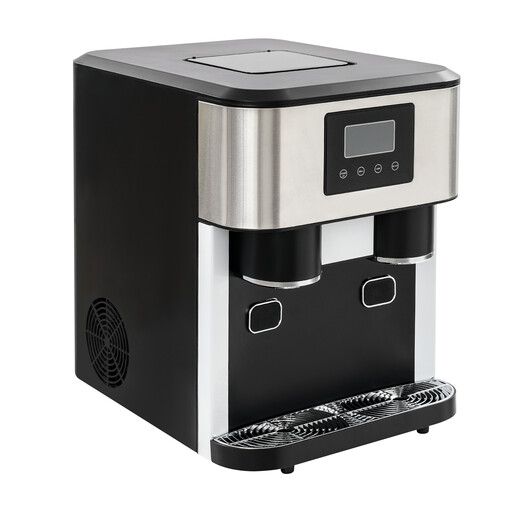 Image unavailable
The product description lists bullet ice, crushed ice and cold water as its functions.
It lists 16 ice cubes per batch in 7–9 minutes at room temperatures below 77 °F. The appliance can be filled manually or connected to a water supply.
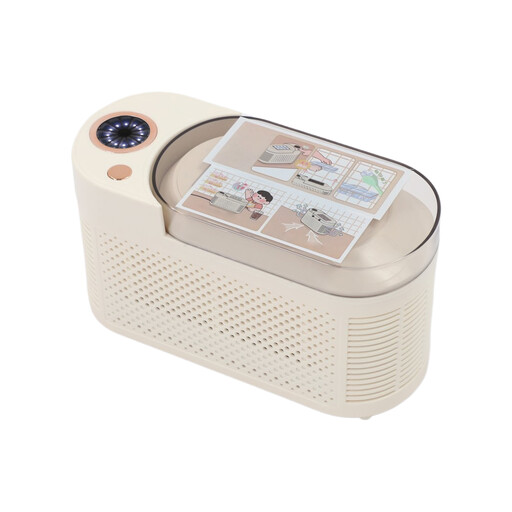 Image unavailable
The product description lists ice cubes for iced coffee and eight square ice cubes per cycle.
Power options include an AC adapter or a 12 V car cable.
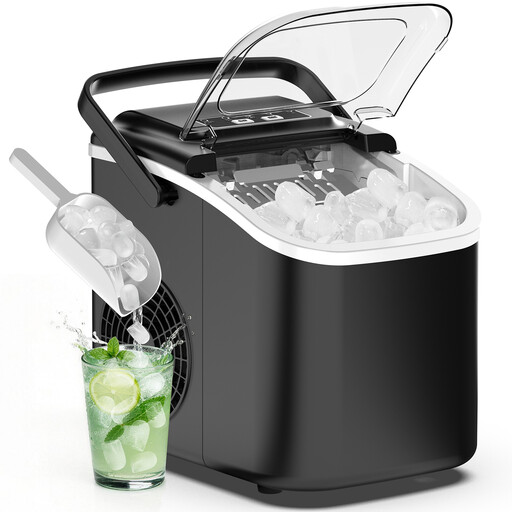 Image unavailable
For a quick portion, the product description lists eight ice cubes in six minutes.
The details list two ice sizes, a self-cleaning function and up to 12 kg of ice in 24 hours.
Check separately how quickly a batch is made and how much the basket can hold. Use the instructions for the specific model to find out what happens when the basket is full. If you’ll need a portion much later, plan to store the ice you’ve removed separately.
The Federal Office of Consumer Protection and Food Safety describes German tap water as drinking water that is subject to strict controls. You should also follow your appliance’s instructions: CASO recommends cleaning the tank and accessories before first use and changing the tank water every 24 hours for the IceMaster Pro. This interval is the manufacturer’s recommendation for this model.
If a product is faulty, you have statutory rights against the seller; these are separate from any voluntary manufacturer’s guarantee. For additional support from the manufacturer, check the terms for the model you actually bought.
The Federal Network Agency carries out spot checks on electrical household appliances, including checks on product and manufacturer identity, CE marking, and the required German-language instructions and warnings. According to the Federal Ministry for the Environment, an electrical appliance that has reached the end of its life shouldn’t go in household waste; take it to a suitable collection point instead. This doesn’t confirm that any particular appliance complies with the regulations.