If you only have iced coffee occasionally and can freeze ice cubes in advance, an ice cube tray is often enough; the F.A.Z. Kaufkompass recommends one for occasional drinks. If you want ice without planning ahead, a countertop machine could be a good option. Focus on the time until the first batch, the space it takes up, cleaning and the shape of the ice, rather than the advertised daily output. Production times are specific to each model and aren’t guaranteed under every set of conditions.
Who is a countertop ice maker suitable for?
Spontaneous iced coffee drinkers
You want to make a portion of ice without freezing cubes in advance. For you, the time until the first batch matters more than the maximum daily output; CHIP looked at how quickly ice cubes are made in its appliance test.
People with small kitchens
You want ice at the touch of a button, but need to weigh up the convenience against the worktop and storage space it takes up. Compare the dimensions of the specific machine with the space you can set aside for it.
People with a particular preference for ice
You want to choose between regular cubes and small nuggets for your iced coffee. The shape of the ice may matter more to you than extra production capacity.
What should you look for when buying an ice maker for iced coffee?
Ice cube tray in the freezer
A good fit if: You only make iced coffee occasionally and can freeze ice in advance.
The trade-off: You don’t need another electrical appliance, but you won’t have ice made on demand.
Bullet ice maker
A good fit if: You want a portion of ice on demand and have space for the machine.
The trade-off: The machine takes up space and needs looking after after use.
Nugget ice maker
A good fit if: You prefer small nuggets to regular bullet-shaped cubes.
The trade-off: Weigh up the ice shape you want against the space needed and how useful it will be for a single drink.
| What matters | What to check before buying | Who it matters to |
|---|
| Ice without waiting | Time until the first batch and number of ice pieces per cycle | If I want to make an iced coffee without planning ahead, the first usable batch is what matters to me. Around 40% of consumers prioritise having ice on demand. |
| Space it takes up | Machine dimensions and tank capacity | Free worktop space matters more to me than extra capacity, because the machine takes up room between drinks. Around 30% of consumers put space at the top of their list. |
| Cleaning and draining | Drain for leftover water and specific care instructions | After making a portion, I want to be able to drain leftover water easily and care for the parts according to the instructions. Around 20% of consumers prioritise ease of maintenance. |
| Ice shape | Type of ice you want and the exact model variant | If I want small nuggets or a particular cube shape, I check the type of ice made by the exact model. Around 10% of consumers say ice shape matters most to them. |
Common buying mistakes
Assuming the daily output tells you what you’ll get for an iced coffee
A figure in kilograms per 24 hours doesn’t tell you when the first usable portion will be ready. If you want a drink straight away, the time until the first batch is a more useful figure.
Compare the first batch, machine dimensions and your actual needs separately, rather than focusing only on daily output.
Assuming ‘self-cleaning’ means the machine is fully cleaned
For the Unold Freeze 48935, the manufacturer describes the function as flushing the water circuit. This doesn’t prove that it covers every part and cleaning step; the Verbraucherzentrale also recommends using clean kitchen utensils.
Read the care instructions for the specific machine and check whether leftover water can be drained easily.
Assuming bullet ice and nugget ice are the same because the product images look similar
Manufacturers distinguish between bullet-shaped cubes and small nuggets. Having two bullet sizes to choose from doesn’t mean a machine makes nugget ice.
Before choosing, check the stated ice shape and the full model name.
Key brands to consider
CASO Design
The manufacturer describes the IceMaster Pro 3301 as a bullet ice maker with two sizes. CASO Design states that this model takes 6–13 minutes to make ice, has a 2,2-l tank and measures 240 × 320 × 360 mm.
- The specific model details help you weigh up waiting time and space requirements.
- Manufacturer specifications don’t prove that the first batch will be ready just as quickly in every kitchen, or that you need the stated capacity for an iced coffee.
Unold
For the Freeze 48935, Unold lists a drain for leftover water and a flushing function for the water circuit. The manufacturer gives the dimensions as 32,3 × 22,4 × 28,9 cm; the tank holds 1,6 l.
- The drain and flushing function are specific features you can compare when considering emptying and care.
- The flushing function isn’t proven to replace every cleaning step.
MEDION
MEDION says the LIFE Nugget ice maker MD 11960 is also suitable for iced coffee. The manufacturer states that the first cubes are ready in five minutes, the tank holds 2 l and the daily capacity is 15 kg.
- The nugget shape is worth considering if you prefer small pieces of ice to regular bullet-shaped cubes.
- The time stated comes from the manufacturer, not an independent test. Tank capacity and daily output aren’t automatically benefits for a single drink.
GASTROBACK
According to the manufacturer, the Bartender Pro 41143 offers two bullet sizes, a 2,8-l tank and a removable ice basket.
- The removable basket and choice of sizes are specific features of this model.
- Check the manufacturer’s dimensions of around 400 × 240 × 430 mm and weight of around 11,2 kg if your kitchen is short on space. The capacity isn’t automatically an advantage for a single iced coffee.
Joybuy products for making ice
The following Joybuy products offer different ways to make ice for drinks. Depending on the model, compare the ice shape, first batch, space requirements and care instructions in particular.
 No image available
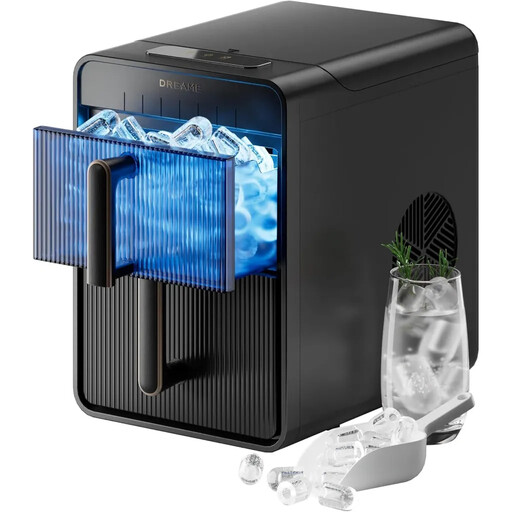
Dreame Bullet Portable Ice Maker, 12 kg/day
Could be a good fit if you’re looking for bullet ice in a choice of sizes and a short, model-specific cycle time.
The product title lists 6–8 minutes per cycle, two types of bullet ice, a 900-ml water tank, a daily output of 12 kg and a self-cleaning function.
 No image available
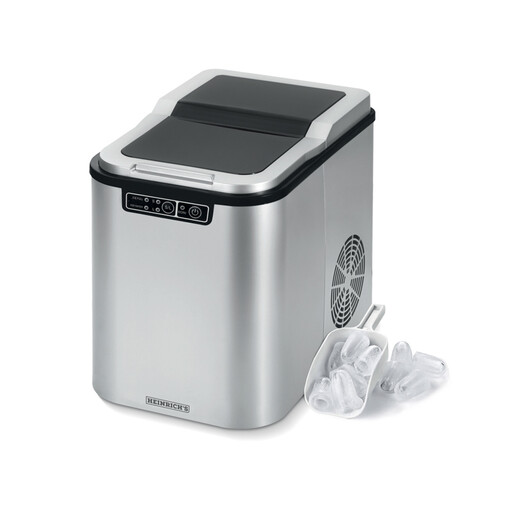
Ice maker, 120 W, 2,2-l tank
An option if you want to choose between two ice sizes and the stated number of pieces per cycle suits your needs.
The product title lists 9 ice pieces in 9 minutes, two ice sizes, 120 W, a 2,2-l water tank, a daily output of 12 kg and a self-cleaning function.
 No image available
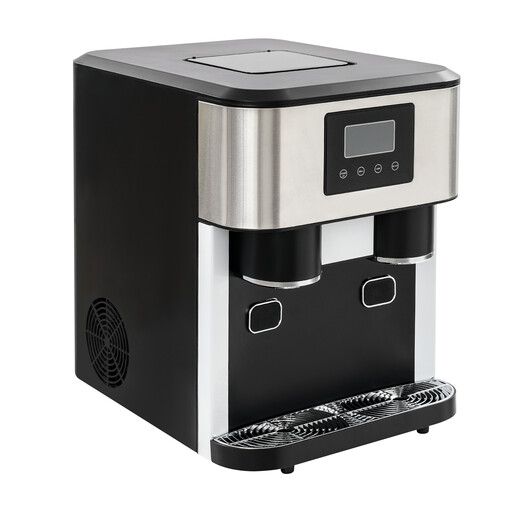
3-in-1 countertop ice maker
Could be an option if you’re looking for a countertop ice maker described as 3-in-1; before buying, check exactly which features are included in this variant.
The product title describes a 3-in-1 machine for home and commercial use.
 No image available
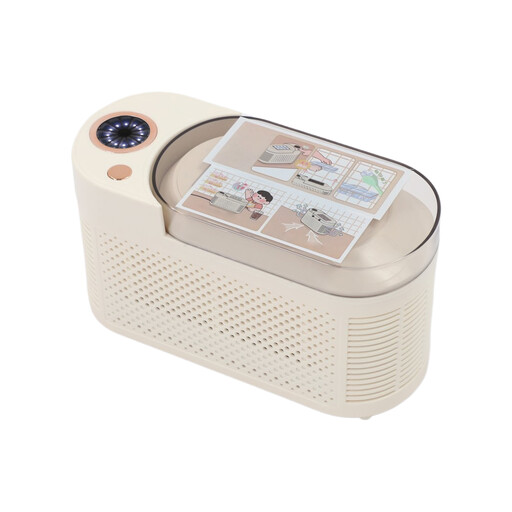
Portable countertop ice maker, 120 W, White
Could be a good fit if you’re looking for a portable ice maker for the different settings listed in the product title.
The product title lists 120 W and use at home, in the car, while travelling, camping and in a motorhome. The variant is described as White.
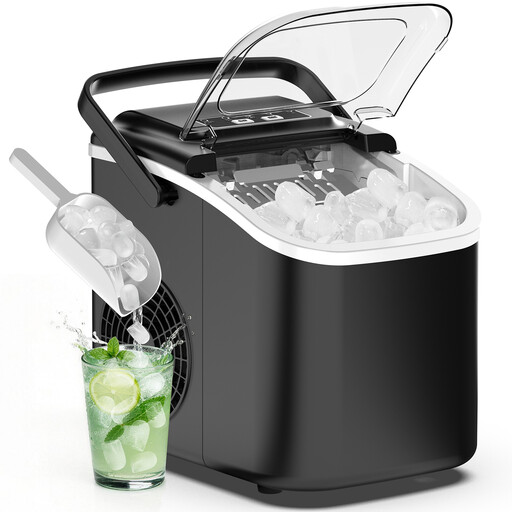 No image available
Ice maker, 12 kg/24 h, 2 ice sizes
An option if you want to compare two ice sizes; for a single drink, the time until the first batch is more useful than daily output alone.
The product title lists 8 ice cubes in 6 minutes, 12 kg/24 h, two ice sizes and a self-cleaning function. The stated function doesn’t automatically replace care according to the instructions.
Frequently asked questions
Is an ice cube tray enough for iced coffee?
If you only make iced coffee occasionally and can freeze cubes in advance, an ice cube tray is a sensible first option. If you want ice without planning ahead, consider a countertop machine.
What should I check when setting up and after using the machine?
Check that the machine’s dimensions suit the space you have and follow the setup instructions for the specific model. Drain and clean the parts that come into contact with water according to its instructions; don’t assume that a flushing function is the same as a full clean.
What are my rights if the machine is faulty?
For a consumer purchase in Germany, the seller’s statutory liability for defects is separate from any additional manufacturer’s guarantee. The Verbraucherzentrale explains that the retailer is generally responsible for ensuring the goods are free from defects for two years; whether you have a claim in a specific case depends on the relevant conditions.
What should I look out for on the label and when disposing of the machine in Germany?
The Bundesnetzagentur includes correct CE marking and manufacturer details among its checks. According to information from the Federal Ministry for the Environment, end-of-life electrical appliances must not be put in household waste; they should be taken to an authorised collection point. Retailers’ obligations depend on the applicable legal requirements. This general guidance from public authorities doesn’t confirm that any specific model complies with the rules.


