Iced latte fans who use ice cubes
If you want to crush ice in your drink, check that the exact model and the container you’ll be using are approved for this purpose. The wattage alone won’t tell you whether the blender is designed for the job.


For an iced latte with ice cubes, the exact blender model must be explicitly approved for this use; a high wattage alone is no guarantee of good results. A mains-powered model is a good fit if there’s a socket where you want to blend, while a cordless blender needs to be charged before use. If your coffee and milk are already chilled and you don’t need to crush ice, cup size, worktop space and ease of cleaning may matter more.
If you want to crush ice in your drink, check that the exact model and the container you’ll be using are approved for this purpose. The wattage alone won’t tell you whether the blender is designed for the job.
A compact blender with a drinking cup can be handy for single servings. Check how much you can actually fill it with, and how easily the appliance and cup can be stored.
A cordless blender can be used away from a socket, but it needs charging first. Cup size and approval for crushing ice are still important factors.
A good fit if: There’s a socket where you want to blend and you’d like to make individual drinks directly in the cup.
Things to consider: The appliance needs to be plugged in. It’s only approved for crushing ice if this is specified for the exact model and intended container.
A good fit if: You can choose where to blend and have time to charge the appliance before use.
Things to consider: Charging is part of using it. Even with a cordless appliance, check that the exact model is approved for crushing ice.
| What you’re looking for | What to check before buying | Who is it important to? |
|---|---|---|
| Crushing ice cubes | Explicit approval for crushing ice with the exact model and the container you’ll be using. | If I want to blend ice cubes straight into my iced latte, I’ll first check that the intended container is approved for this. Around 36% of consumers put ice crushing at the top of their list. |
| Single servings and limited worktop space | Usable cup capacity, appliance dimensions and what’s included with the model. | For a single serving in a small holiday cottage, I want to be able to store the appliance and drinking cup without taking up much space. Around 29% of consumers put a compact single-serving option first. |
| Cleaning after coffee and milk | How easy the cup and blades are to reach, and whether each individual part is approved for the dishwasher. | If I use the blender regularly for drinks with milk, I want the cup, lid and blades to be easy to clean. Easy cleaning is a priority for around 21% of consumers. |
| Blending without a socket | Cordless operation, charging options, maximum fill capacity and approval for crushing ice. | If there’s no socket where I want to blend, I want to be able to charge the appliance beforehand and fit the planned serving inside. Around 14% of consumers put using a blender without a socket first. |
The VKI test of smoothie makers points out that a high power rating alone does not guarantee good blending results.
Check that the exact model and intended container are approved for crushing ice, rather than comparing appliances by wattage alone.
Approval for the cup or lid doesn’t necessarily apply to the blade unit as well. Hard-to-reach areas can make cleaning more difficult, as the VKI explains in its test.
Check the manual for cleaning instructions for the cup, lid and blades separately.
The product description for the Ninja Blast BC151EUBK lists a 530 ml cup size but a maximum fill capacity of 470 ml. This information is from Joybuy Germany and applies to this model.
Measure out your coffee, milk and ice using the maximum fill line, rather than relying on the advertised cup capacity alone.
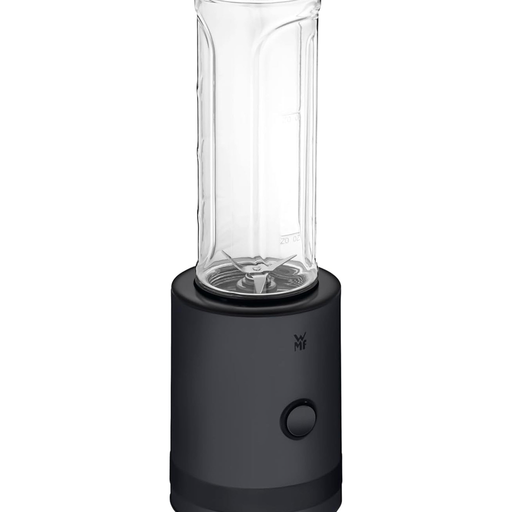
According to WMF, the Kult X Mix & Go is a compact mains-powered blender with a container that also doubles as a drinking bottle.
The SM 3743 and SM 3737 differ in their containers and design; the manufacturer’s specifications apply to each specific model.
The range includes different blending cups and portable blenders. Mains-powered and cordless models, along with their container specifications, should be considered separately.
According to the manufacturer, the Pro 900 NB904W is a single-cup blender supplied with a to-go cup.
This selection includes portable blenders and blending appliances with drinking cups for single servings, including both mains-powered and cordless models.
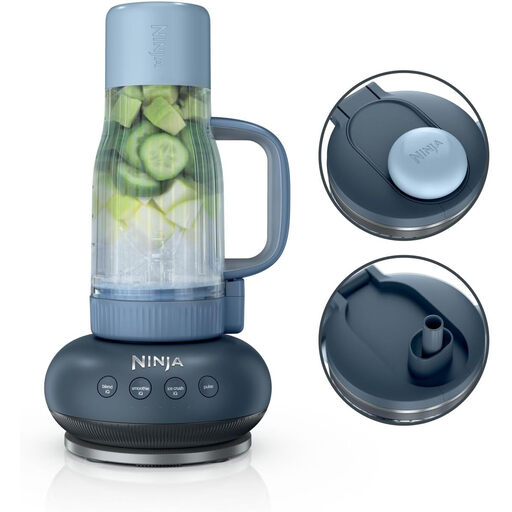 No image available
For an iced latte you want to blend directly in the travel cup and take with you; the product description says it can crush ice.
710 ml travel cup; three automatic programmes; parts listed as dishwasher-safe in the product name.
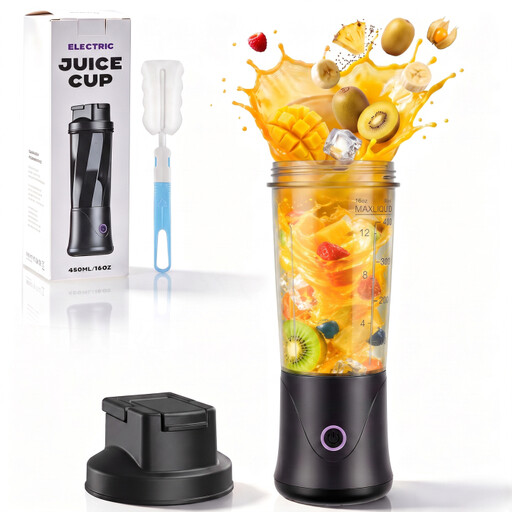 No image available
For a single serving in a holiday cottage when you’re looking for a portable appliance with a cup.
400 ml cup; 6 blades. Before use, check whether the exact model is approved for ice cubes.
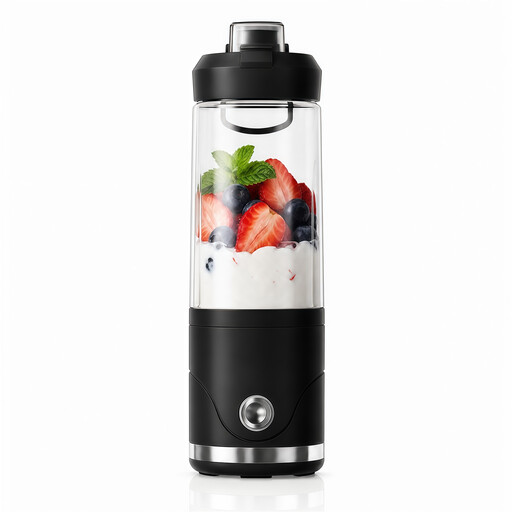 No image available
For blending somewhere without a socket, as long as you can charge the battery before making your drink.
650 ml cup; USB-C charging; the product description states that a full charge takes around four hours. Check whether the exact model is approved for crushing ice.
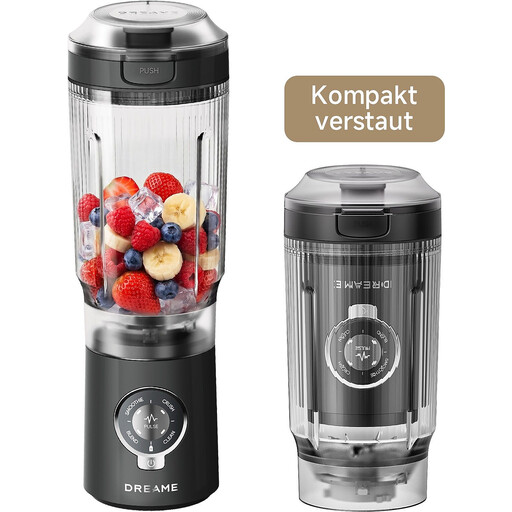 No image available
For a single serving when you want a cordless appliance with a drinking lid and explicitly stated ice-crushing capability.
0.88 l blending container; 120 W; USB-C charging; stainless steel blades. The appliance must be fully charged before first use.
 No image available
For individual drinks blended directly in the cup; the product description says it can crush ice.
Two 0.6 l containers; 300 W. The product description states a maximum liquid temperature of 60 °C and says the containers and lids are dishwasher-safe.
No. A high wattage alone doesn’t confirm that a blender is suitable for ice cubes. In its test published on 29 October 2026, the VKI points out that high power ratings don’t guarantee good blending results. Check that the exact model and intended container are approved for crushing ice.
It depends on the model and the individual parts. The VKI points out that dishwasher approval doesn’t automatically apply to the blade unit. Check the manual to see which parts of the cup, lid and blade assembly can go in the dishwasher.
CE marking and requirements for materials that come into contact with food should be considered separately. The European Union explains that CE marking is the manufacturer’s declaration that the product meets the relevant requirements, not an independent quality mark. EU rules apply to food contact materials, including Regulation (EC) No 1935/2004 of the European Commission. These general rules do not confirm that an individual product listing is compliant.
No. The Verbraucherzentrale distinguishes between your statutory rights against the seller if a product is faulty and an additional, voluntary guarantee subject to its own terms and conditions. Online purchases in Germany generally come with a 14-day right to cancel; the Verbraucherzentrale explains this period in its information dated 13 August 2026. The relevant requirements and exceptions should be checked separately.