What should you look for when buying?
Cordless single-serve blender
A good fit if: you want to make a single serving without a socket nearby and the model is approved for the amount of ice you plan to use.
Things to consider: battery life and any limits on the amount of ice restrict how you can use it; being cordless doesn’t mean it will be quieter.
Mains-powered on-the-go blender
A good fit if: there’s a socket at a suitable blending spot and you want to blend straight into a drinking cup. Bosch says that 2 ice cubes are suitable ingredients for the VitaPower Series 2.
Things to consider: you’ll need to manage the cable and clean the blade assembly; check that the exact model variant is approved for crushing ice.
Jug blender with a larger capacity
A good fit if: you plan to make several servings or blend other things, and have a suitable place to keep it. Philips lists a 2-litre glass jug and an ice-crushing function for the HR3030/00.
Things to consider: the jug’s capacity and cleaning routine may be more than you need for a single latte. Philips gives a standard noise level of 86 dB(A) for this model; this isn’t a measurement taken at your office desk.
Each section below highlights the most important consideration for choosing a blender in a particular office setting.
| What matters |
What to check before buying |
Who is it important to? |
| Ice and drink consistency |
Check that the exact model is approved for crushing ice, including any quantity limits, and make sure the usable cup capacity suits your needs. |
If I want to crush ice cubes directly into my latte, I need explicit approval for the model and quantity. Around 31% of consumers put this ice-crushing feature first. |
| Noise and blending location |
Compare noise information, including the conditions under which it was measured, and plan where you’ll blend. |
If I share a workspace with others, I want to find a suitable place to blend and disturb my colleagues as little as possible. Around 25% of consumers prioritise this consideration. |
| Cleaning |
Check which parts are removable and dishwasher-safe; remember to consider the blades and seals too. |
If several people use the office kitchen, I want to be able to clean the parts that come into contact with drinks thoroughly after use, without unnecessary hassle. Around 25% of consumers prioritise easy cleaning. |
| Serving size and power supply |
Make sure the cup capacity and drinking lid suit your serving size, and consider whether you’ll have a charged battery or a socket where you blend. |
If I want to make my latte straight in the cup and take it with me, I look for the right capacity and power supply. Around 19% of consumers prioritise the portability of a single serving. |
Blenders at Joybuy
This range includes portable cup and travel blenders, as well as jug blenders with different capacities. For the exact variant, check that the materials that come into contact with drinks meet the applicable EU requirements for food contact materials.
 No image available
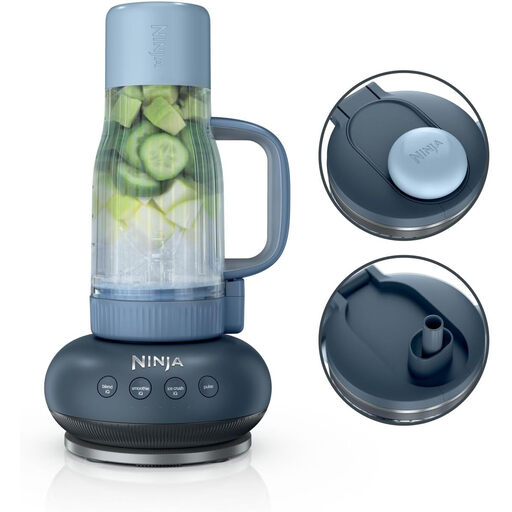
Ninja BlendBoss Portable Blender, 710 ml, Cyberspace
This portable cup is designed for blending and taking your drink with you; the product information lists an ice-crushing function.
710 ml travel cup, three automatic programmes and dishwasher-safe parts.
View at Joybuy
 No image available
3-in-1 blender with 600 ml travel bottle
The travel bottle is designed for a single serving to take with you; the product information also lists an ice-crushing function.
800 W, 600 ml travel bottle, 1,500 ml blending jug, 300 ml chopper and six stainless steel blades.
The product information lists dishwasher-safe attachments.
View at Joybuy
 No image available
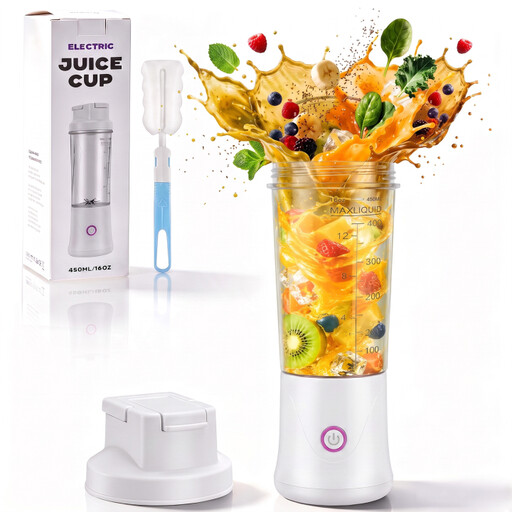
Portable blender, 652 ml, six blades
Described as a portable blender for shakes and smoothies; before making an iced latte with ice, check that the specific variant is approved for this use.
652 ml container and six blades; the product information lists a leak-proof lid and removable, dishwasher-safe parts.
View at Joybuy
 No image available
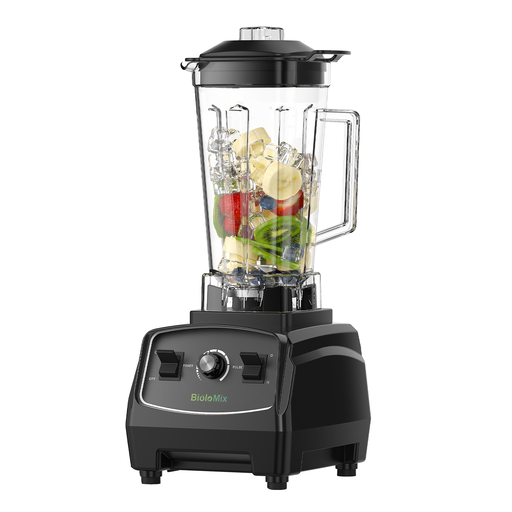
BioloMix 010 smoothie blender, 2 litres
The 2-litre jug is an option if you want to make more than one serving; the product information lists ice and frozen fruit as suitable ingredients.
2,200 W, six stainless steel blades and an automatic cleaning function, according to the product information.
View at Joybuy
 No image available
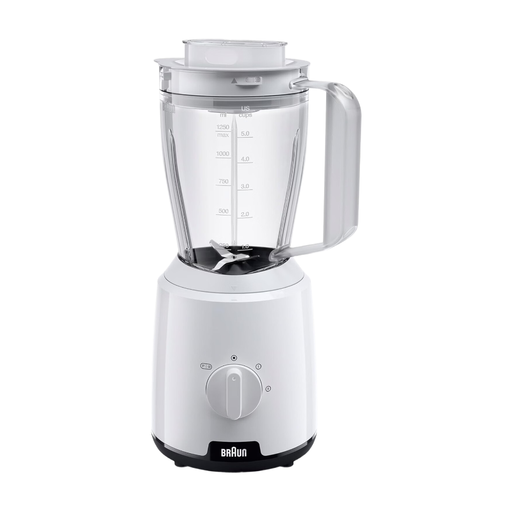
Braun PowerBlend 1 JB1000WH, 1.5 litres
The product information lists an ice-crushing function; check that the jug capacity suits your usual serving size and available space.
1.5-litre blending jug, two speed settings and 600 W.
The product information lists removable, dishwasher-safe parts.
View at Joybuy
Frequently asked questions
Can I crush ice cubes in any smoothie maker to make my latte?
No. Don’t assume it’s suitable based only on the design or wattage. nutribullet Germany says the Portable NBP003B can handle only a small amount of ice; Severin explicitly says the SM 3737’s glass blending jug is suitable for crushing ice. Check the model, container and instructions against the quantity you plan to use.
How should I clean a blender used by several people?
After use, clean all parts that come into contact with drinks according to the model instructions, paying particular attention to the blades and hard-to-reach areas. “Dishwasher-safe” applies only to the components specifically listed. Germany’s Federal Institute for Risk Assessment also highlights the risk of cross-contamination from shared kitchen utensils.
How should I store milk for a latte I’ll make later at the office?
Follow the storage instructions for the milk you’re using. Germany’s Federal Institute for Risk Assessment recommends keeping perishable foods chilled until they’re eaten or prepared; a blender is no substitute for refrigeration.
What happens if the blender develops a fault, and what should I check when buying spare parts?
If a product is faulty, you may have legal rights against the seller, subject to the relevant legal requirements. The German legal information portal Gesetze im Internet states that, under Section 438 of the German Civil Code (BGB), the limitation period for ordinary goods is generally two years from delivery. Also check whether replacement cups, lids or seals are available for the exact model variant; a manufacturer’s warranty is not the same as your statutory rights relating to defects.
Which regulations are relevant to using a blender in a German office?
The relevant EU requirements for food contact materials apply to materials that come into contact with drinks. Germany’s Federal Institute for Occupational Safety and Health covers noise in workplaces under ASR A3.7; this doesn’t set a general dB limit for every office blender. Whether you can use a blender at your particular workstation also depends on the rules in place there.


