For the occasional iced latte when space is limited, a compact capsule machine is a simple option. A portafilter machine may suit you if you want to take charge of making the espresso yourself, while a bean-to-cup machine is more suitable if several people regularly want espresso made from beans. You don’t need a cold-drink programme to make espresso over ice: simply combine espresso, ice and cold milk. When choosing, also consider how much cleaning each type requires and, for capsule machines, which capsule system they use.
Which type of machine is right for you?
Quick single servings
If you usually make one espresso for your iced latte in a shared kitchen, a capsule machine can save you a few steps. Nespresso says the Essenza Mini lets you programme espresso serving sizes, but the capsule container and machine still need looking after.
Limited worktop space
Allow space not only for the machine, but also for your glass and access to the water tank. Nespresso gives the Essenza Mini C dimensions of 8,4 × 33,0 × 20,4 cm (W × D × H); De’Longhi lists a width of 15 cm for the Dedica Style EC685.M EX:4. Check the full dimensions and make sure you can access removable parts for the model you’re considering.
Espresso made to your taste
If you want more control over the serving size and preparation, and don’t mind the extra work, a portafilter machine could be a good fit. Sage lists baskets for one or two servings with the Bambino; Philips describes three settings via My Coffee Choice on the EP2220/10, but this isn’t the same as preparing espresso manually with a portafilter machine.
What should you consider when choosing?
| Consideration |
What to look for |
Who should pay particular attention? |
| Quick brewing and cleaning |
Check the capsule or coffee grounds container, drip tray and cleaning instructions. Decide who will tidy up after each serving. |
If several people share the same worktop, it’s important to have a straightforward routine between servings. Around 33 % of consumers prioritise quick brewing and cleaning. |
| Space and access |
Measure the width, depth and height of the space, and allow room to fill the machine and fit your glass. De’Longhi lists a maximum cup height of 120 mm for the Dedica Style EC685.M EX:4. |
If you need to fit the machine, access to the tank and a glass into a small space, check the appliance’s full dimensions. Around 27 % of consumers prioritise having a suitable space for their machine. |
| Control over your espresso |
Compare the serving sizes and how the machine works with ground coffee or beans. Sage lists baskets for one or two servings with the Bambino; the ground coffee needs to be prepared. |
If you want to adjust the strength or serving size yourself, the extra preparation can give you the control you’re looking for. Around 20 % of consumers put customising their espresso first. |
| Consumables and care |
Check which capsule system the machine uses, or whether it works with beans, and compare the care instructions with the way you’ll use it. |
If several people regularly make drinks, it’s worth considering which consumables you’ll share and who will take care of the machine. Around 20 % of consumers prioritise consumables and care. |
Common misconceptions
-
‘Iced latte’ means cold brew made by the machine
Espresso served over ice with cold milk isn’t the same as cold-brew coffee, which is extracted using cold water. You don’t necessarily need a special cold programme for an iced espresso drink.
First decide which drink you want to make, then check the espresso function and how it will fit into your kitchen routine.
-
The advertised machine width tells you how much space you’ll need
The width of 15 cm listed by De’Longhi for the Dedica Style EC685.M EX:4 doesn’t automatically account for its depth, access to the tank or space for a glass. The manufacturer also lists a maximum cup height of 120 mm for this model.
Measure the space you have in mind and check that you can access removable parts and fit your glass under the spout.
-
An espresso button means the machine is maintenance-free
Capsule machines still need descaling, and brew units and milk systems each have their own cleaning steps. Nespresso recommends descaling at intervals based on usage and water hardness.
Compare the care instructions for the specific models and agree on who will take care of cleaning and descaling.
Key brands at a glance
Nespresso
The original capsule system includes compact espresso machines such as the Essenza Mini.
- Nespresso lists programmable espresso and lungo serving sizes and a 0,6-l water tank for the Essenza Mini C.
- Original and Vertuo are different systems. With this model, you’ll need to add milk separately for an iced latte.
De’Longhi
The range includes the manual Dedica Style EC685.M EX:4 portafilter machine and the Essenza Mini EN85.R capsule machine.
- De’Longhi lists a width of 15 cm, single or double espresso and a steam wand for the Dedica Style.
- Preparing espresso with a portafilter and cleaning the machine are still hands-on tasks. The EN85.R is a different model and uses Nespresso Original capsules.
Sage
The Bambino is a compact portafilter machine for anyone who wants to control the serving size and preparation themselves.
- Sage lists a 54-mm portafilter, baskets for one or two servings and a steam wand for the Bambino SES450BSS4EEU1.
- The ground coffee needs to be prepared before brewing; the machine doesn’t do this for you.
Philips
The Series 2200 makes espresso from beans, while the EP2230/10 model also comes with a LatteGo milk system.
- Philips describes the EP2230/10’s LatteGo system as having two parts and being dishwasher-safe. The brew group on the EP2220/10 is removable.
- Bean-to-cup machines still need looking after. You don’t need an integrated milk system to make an iced latte with cold milk.
Joybuy products for espresso in iced lattes
The Joybuy products below include capsule machines, semi-automatic portafilter machines and bean-to-cup machines with an espresso function, suitable for making iced lattes in shared kitchens.
 No image available
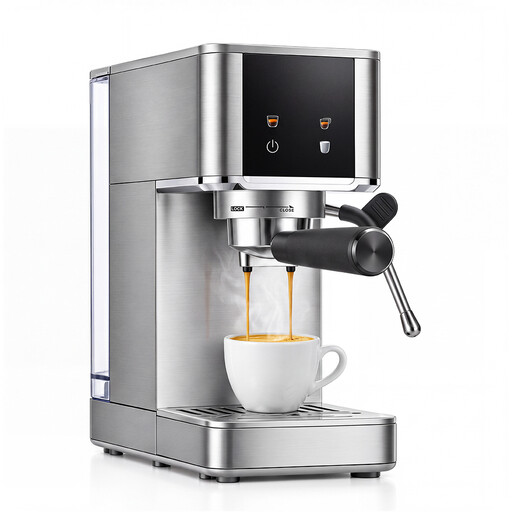
2-in-1 espresso and capsule machine
For anyone who wants to choose between capsules and ground coffee.
Semi-automatic brewing; 1,4-l water tank; touch control panel and built-in steam wand, according to the product details.
The casing and steam wand can get hot during use. Unplug the machine and let it cool down before cleaning.
View at Joybuy
 No image available
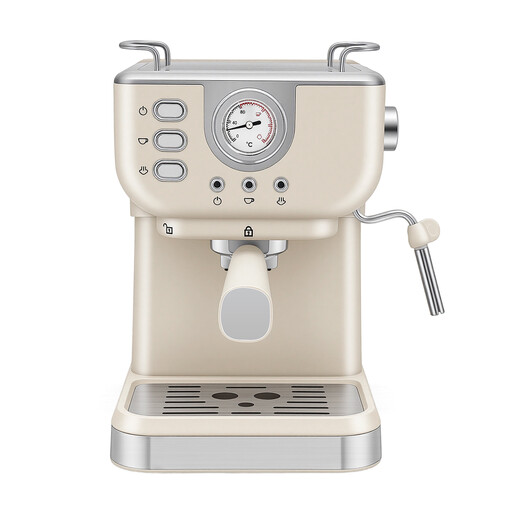
1050 W/20 bar espresso machine
A semi-automatic option for single and double shots, if you’re happy to clean removable parts after each use.
1050 W and 20 bar, according to the product name; single and double shots and removable, dishwasher-safe parts, according to the product details.
View at Joybuy
 No image available
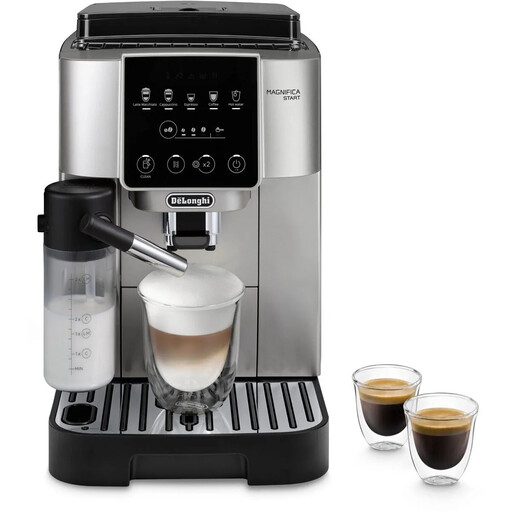
De’Longhi ECAM 220.80.SB Magnifica Start
For several people who want espresso made from beans and would like to use a built-in grinder.
13 grind settings, 1,8-l water tank and 250-g bean hopper, according to the product details; with an X2 function for two espressos.
Hot drinks and steam can cause burns. Avoid touching hot parts and unplug the machine before cleaning.
View at Joybuy
 No image available
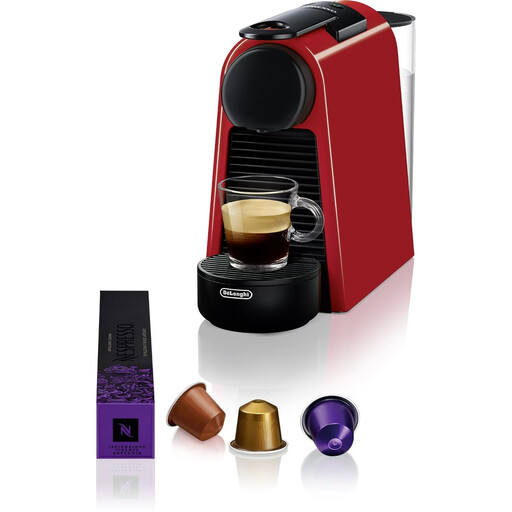
Nespresso De’Longhi Essenza Mini EN85.R
For single espressos without grinding coffee by hand; you can add cold milk separately.
Nespresso Original capsule system; 0,6-l water tank; programmable espresso and lungo buttons and a container for up to six used capsules, according to the product details.
The machine is designed for Nespresso Original capsules.
View at Joybuy
 No image available
IAGREEA 20 bar espresso machine
For anyone who wants to make single or double shots and clean removable parts after use.
20 bar, according to the product name; pressure gauge, adjustable steam wand and removable, dishwasher-safe parts, according to the product details.
View at Joybuy
Frequently asked questions
Do I need a cold-brew or cold-drink programme for an iced latte?
No, not for an iced latte made with espresso, ice and cold milk. One Nespresso recipe combines espresso with ice and cold milk foam. Cold brew is extracted differently, so it’s only relevant if that’s the drink you specifically want to make.
Will a tall glass fit directly under the machine?
That depends on the clearance under the spout on the specific model. De’Longhi lists a maximum cup height of 120 mm for the Dedica Style EC685.M EX:4. If your glass is taller, you can brew the espresso into a smaller vessel and pour it into your glass afterwards.
What should we consider when it comes to milk and cleaning in a shared kitchen?
Store milk according to the refrigeration advice on the packaging, and clean any containers and milk accessories you use afterwards. The German Federal Institute for Risk Assessment warns that insufficient refrigeration can allow germs to multiply. Philips describes the EP2230/10’s LatteGo system as having two parts; an integrated milk system still needs cleaning.
What should I know about faults and care after buying?
Your statutory rights against the seller are separate from any voluntary manufacturer’s guarantee. You’ll also need to follow the care and descaling instructions for your model: Nespresso recommends intervals based on usage and water hardness.
What are the requirements in Germany for instructions and eventual disposal?
The Federal Network Agency lists correct CE marking and German-language instructions with the necessary usage and safety warnings among the criteria it checks when monitoring the market; this does not mean that any particular appliance has been inspected. According to the German Environment Agency, electrical waste must not go in household rubbish and should instead be collected separately.


