
Lieferung heute & morgen

Qualitätsgarantie

Willkommens-Angebote freischalten: KOSTENLOSE Lieferung | Bis zu 80 % RABATT | Kostenlose 30-Tage-JoyPlus-Testphase
App herunterladen
A good knife set is the foundation of any functional kitchen. But the market is a confusing landscape of oversized knife blocks, lofty promises about materials, and designs that prioritise aesthetics over function. As your Joybuy Product Recommendation Officer, I'll help you separate the wheat from the chaff and make a choice tailored to your actual needs.
Many buyers fall into traps that not only cost money but also diminish the joy of cooking. Before you make a decision, you should be aware of these three common pitfalls:
To avoid a bad purchase, focus on the fundamental qualities that define a good knife. These three parameters are crucial for performance and longevity.
The steel determines how sharp a blade can get, how long it stays sharp (edge retention), and how resistant it is to rust.
Instead of an overloaded block, you should focus on the knives you will actually use. A good starter set typically consists of:
A knife must feel good and secure in your hand. Look for an ergonomically designed handle without sharp edges. The material—whether plastic, wood, or metal—should be non-slip, even with wet hands. Balance is also important: the knife should not be blade-heavy or handle-heavy, so it doesn't cause fatigue during prolonged use. A full tang (the extension of the blade into the handle) is often a sign of a stable and durable construction.
Here are some recommendations tailored to different user profiles and needs.
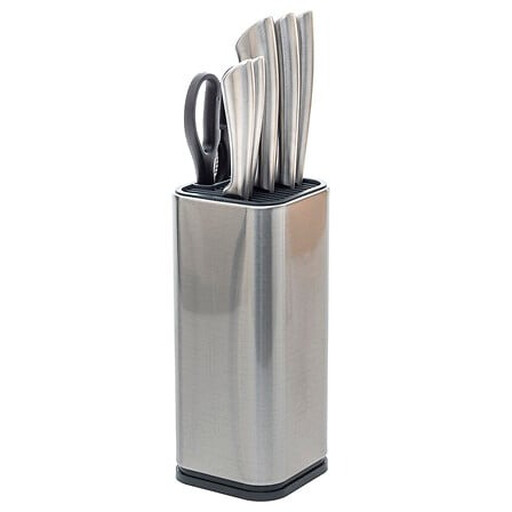
Why This Fits Their Persona: This set provides a complete starter kit for the kitchen. It includes the most essential knife types, as well as a pair of shears and a knife block for safe storage. Ideal for anyone looking for a straightforward and cost-effective solution.
It bypasses the "more is more" trap by focusing on a functional selection: a chef's knife, bread knife, utility knife, and paring knife cover 90% of daily tasks.
All-in-one solution with a knife block and shears. The stainless steel blades are low-maintenance and designed for everyday use.
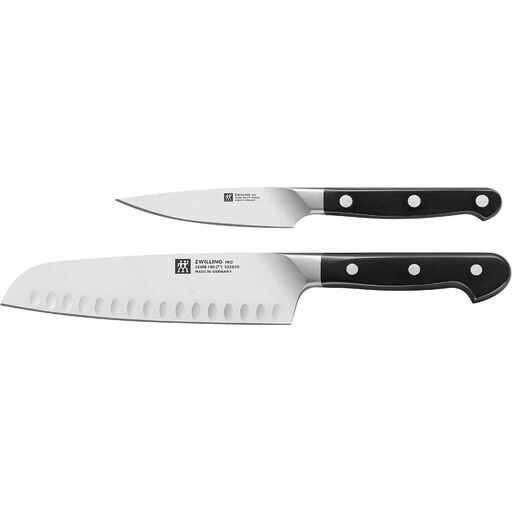
Why This Fits Their Persona: This set is a targeted upgrade for ambitious cooks. It combines a versatile Santoku knife for precise cuts with an indispensable paring knife from an established brand.
Instead of quantity, this set focuses on quality. You get two highly functional knives that can meaningfully supplement an existing setup or serve as a high-quality foundation for a new collection.
The blades are crafted from ZWILLING's special formula steel and are FRIODUR ice-hardened, which the manufacturer claims ensures exceptional durability and corrosion resistance. The ergonomic plastic handle allows for balanced handling.
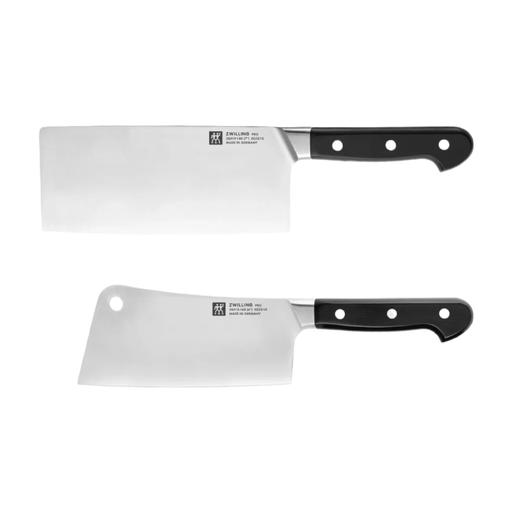
Why This Fits Their Persona: This set is specifically aimed at cooks who specialise in Asian cooking methods. It offers a versatile Chinese chef's knife for vegetables and meat, plus a robust cleaver for bones.
This is a purpose-driven purchase that meets a specific need. Instead of unnecessary filler knives, you get two specialised tools that are rarely found in a standard European kitchen.
According to Zwilling, the SIGMAFORGE blades are forged from a single piece of steel, ensuring high stability. The curved bolster acts as a finger guard and enables safe handling.
We've compiled a complete, up-to-date list of products that fully meet these strict selection criteria and German safety regulations.
1. How do you properly care for a high-quality knife set? Proper care is crucial for the longevity of your kitchen knives. Clean the knives by hand with warm water and a mild detergent immediately after use. Dry them right away to prevent surface rust. Even if some knives are labelled as dishwasher-safe, harsh salts and high temperatures can damage the blade and handle. Store the knives in a knife block, on a magnetic strip, or with a blade guard to maintain their sharpness.
2. What is the difference between a Santoku knife and a chef's knife? Although both serve as all-purpose knives, there are differences in shape and application. The classic European chef's knife has a curved blade that allows for a rocking cutting motion. The Japanese Santoku knife has a straighter cutting edge and a wider blade, which is well-suited for quick, chopping motions. Many Santoku knives also feature a hollow-edge (small indentations on the blade) designed to reduce food from sticking.
3. Is a pre-filled knife block worth it? A filled knife block can be a practical and often cost-effective solution for beginners to get a basic set of tools. For more advanced cooks, however, it is often better to buy individual, high-quality knives as needed and store them in an empty knife block or on a magnetic strip. This ensures that you only own the tools you actually use and that meet your quality standards.