
Lieferung heute & morgen

Qualitätsgarantie

Willkommens-Angebote freischalten: KOSTENLOSE Lieferung | Bis zu 80 % RABATT | Kostenlose 30-Tage-JoyPlus-Testphase
App herunterladen
A new illuminated bathroom mirror can significantly enhance the functionality and aesthetics of any bathroom. However, the market is flooded with models whose descriptions often promise more than they deliver. Before you make a decision, it's crucial to understand the common pitfalls that can lead to a poor purchase.
This guide will help you separate the wheat from the chaff by focusing on critical technical features and frequent shortcomings.
Common Pitfalls When Buying an Illuminated Mirror:
To find a durable and functional LED bathroom mirror, you should focus on a few critical technical specifications. These determine the safety, utility, and longevity of the product.
The IP (Ingress Protection) rating indicates how well an electrical device is protected against the intrusion of foreign objects and water. For bathrooms, an IP44 rating is the established minimum standard.
A mirror marked IP44 is suitable for installation above the washbasin (Zone 2 of the bathroom) and ensures safe operation.
The lighting is the core feature of such a mirror. Look for models that allow you to adjust the light colour and brightness. The colour temperature is measured in Kelvin (K):
A dimmable LED mirror offers the flexibility to adjust the light intensity depending on the time of day and your needs—from bright task lighting in the morning to soft ambient light in the evening.
While some "smart" features can be superfluous, others offer real added value in daily life:
Instead of presenting an overwhelming list, we have matched models based on typical user profiles.
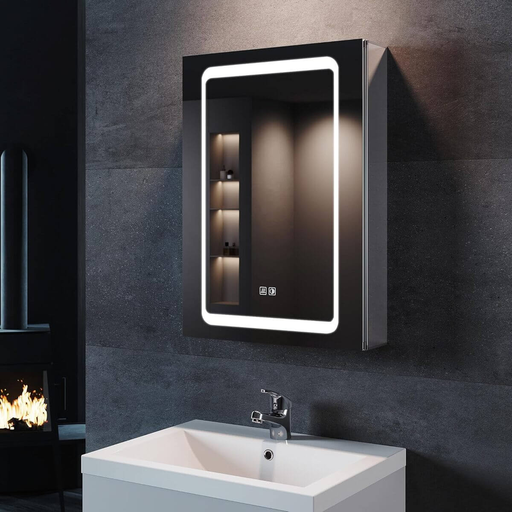
Why it's a great fit: This model combines a mirror, lighting, storage, and a socket into one compact unit. It's the ideal solution for anyone seeking maximum functionality in a limited space and who values an organised setup.
The cabinet is explicitly rated IP44 and bundles useful functions like anti-fog technology and an integrated socket, rather than relying on unreliable gimmicks.
Combines storage and technical features in an all-in-one solution. The aluminium profile frame promises durability.
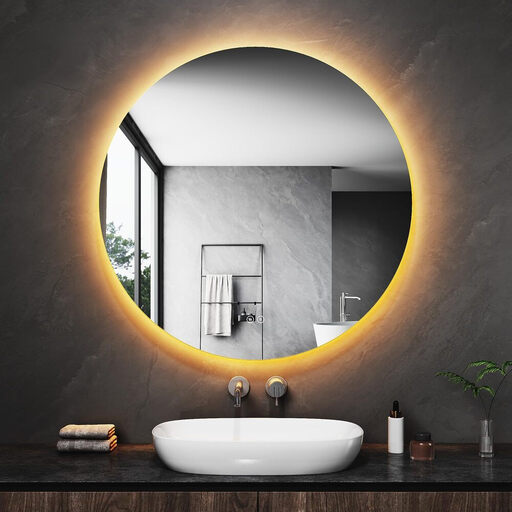
Why it's a great fit: A round mirror in the bathroom is a clear design statement. This backlit model creates a soft, indirect light source that makes the room feel larger and more inviting, creating a modern, hotel-like atmosphere.
The focus is on high-quality lighting technology. With three selectable light colours and a dimming function, it offers customisable, high-quality illumination that is both functional and atmospheric.
Elegant, frameless design with atmospheric backlighting. The anti-fog function ensures a clear view without compromising on aesthetics.
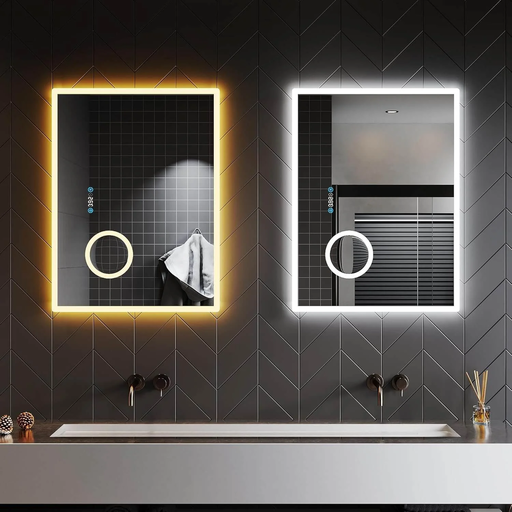
Why it's a great fit: For users who value convenience and modern technology. This mirror integrates all useful functions into one elegant surface: from the time and temperature display to the integrated illuminated vanity mirror with 3x magnification.
The integrated features are designed for practical, everyday use. The anti-fog function, adjustable lighting, and magnification are proven aids, not short-lived gimmicks.
Maximum functionality by combining adjustable light, anti-fog, a clock, a temperature display, and a magnification area for detail-oriented tasks.
We have compiled a complete, up-to-date list of products that fully meet these strict selection criteria and UK safety regulations.
1. What does the IP44 rating mean for a bathroom mirror? The IP44 rating means the mirror is protected against splashing water from all directions and against solid foreign objects with a diameter greater than 1 mm. This is the recommended minimum standard for safe installation near washbasins and showers (Zone 2 in the bathroom).
2. Can an LED bathroom mirror replace the main lighting in the bathroom? Usually not. The lighting from a mirror is designed as task or accent lighting, intended for direct illumination of the face. It is generally not powerful enough to light up an entire room. A separate ceiling light as the main light source is still recommended.
3. How does an anti-fog function on a bathroom mirror work? The anti-fog mirror function is achieved by a thin heating film on the back of the mirror surface. This is usually activated by a separate switch (often a touch sensor on the mirror) and gently warms the surface to prevent condensation from forming. The energy consumption is comparable to that of a low-wattage light bulb.