
Lieferung heute & morgen

Qualitätsgarantie

Willkommens-Angebote freischalten: KOSTENLOSE Lieferung | Bis zu 80 % RABATT | Kostenlose 30-Tage-JoyPlus-Testphase
App herunterladen
Choosing the right next-stage car seat after the infant carrier is one of the most critical decisions for your child's safety in the car. The market offers an overwhelming variety, and the impact shield car seat in particular raises questions for many parents. As a Joybuy Product Recommendation Officer, I'm here to help you separate fact from marketing hype and make an informed decision. This guide will show you which critical features to look for and how to avoid common purchasing traps.
Before we dive into the technical details, it's important to understand the most common misconceptions that often lead to unsuitable and expensive purchases.
To make a safe and durable choice, you should focus on three core aspects.
A modern and safe car seat from 15 months should be approved under the UN R129 (i-Size) standard. This standard ensures the seat has been subjected to strict side-impact tests. Also, pay attention to the installation method. A car seat with ISOFIX and an impact shield provides a firm and stable connection to the vehicle's chassis.
Independent testing bodies like the ADAC regularly evaluate these features. A look at the latest ADAC car seat test results can offer additional guidance in assessing a model's safety performance.
Unlike a classic 5-point harness, an impact shield functions like a pre-deployed airbag. In a frontal collision, the child's upper body rolls over the impact shield. The impact energy is distributed over a large area of the shield and the energy-absorbing seat shell. According to manufacturers like Cybex, this principle can reduce the forces acting on the sensitive neck area compared to conventional harness systems. The impact shield is used in the first stage of use (e.g., from 76 cm to 105 cm). Afterwards, it is removed, and the child is secured with the vehicle's 3-point seat belt.
A true multi-stage car seat must do more than just promise a long service life on paper. The key is its adaptability to the child's changing proportions. Look for a multi-position, easily adjustable headrest and a backrest that adapts to the recline angle of the vehicle seat. This ensures not only safety but also comfort on long journeys.
We have filtered models from the current range that meet the criteria above and are suitable for different profiles.
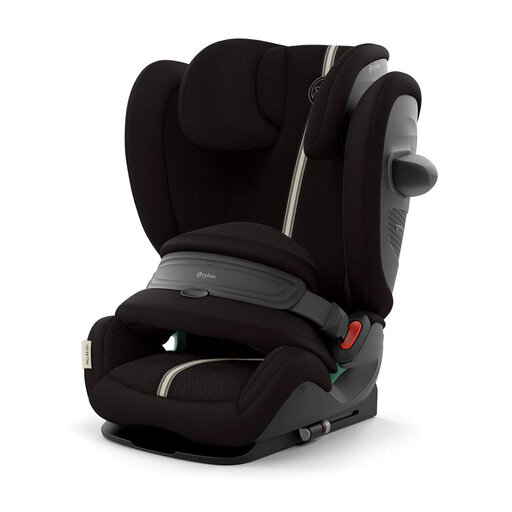
Why This Fits Their Persona: This model is aimed at parents for whom verifiable safety features are the top priority. It combines the i-Size standard with advanced side-impact protection (L.S.P. System Plus) and a reclining headrest that keeps the child's head in the safety zone, even during sleep.
The seat is certified to the latest UN R129/03 standard and focuses on technical safety innovations rather than superficial features. It is a true multi-stage car seat for 76-150 cm, offering a safe solution until the child is approximately 12 years old.
Advanced impact shield technology to reduce neck injuries; one-hand adjustable recline for high comfort on long journeys.
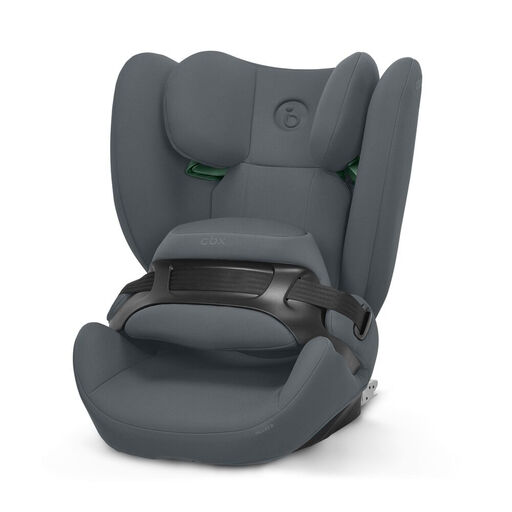
Why This Fits Their Persona: Ideal for families seeking a long-term, economical solution without compromising on core safety features. This seat offers proven impact shield technology and i-Size safety in a more accessible package.
It avoids the trap of a short-lived seat by covering over 10 years of use as a 2-in-1 car seat. The focus is on essential safety standards and solid construction, not on costly extra features.
Solid safety concept with an impact shield and i-Size approval; very long service life from toddlerhood until the end of the car seat requirement.

Why This Fits Their Persona: This model is designed for parents who frequently need to switch the car seat between different vehicles, such as between the family car and the grandparents' car. Its low weight and straightforward installation are key advantages here.
The simple installation with ISOFIX and Top Tether minimises the risk of installation errors, a common source of failure with frequent transfers. The lightweight design avoids the frustration associated with heavy, cumbersome seats.
Very lightweight for easy transport and switching; quick and intuitive installation that ensures safety during flexible use.
We've compiled a complete, up-to-date list of products that fully meet these strict selection criteria and safety regulations.
1. How long can a car seat with an impact shield be used? The impact shield itself is typically used in the first stage, generally for children from 76 cm to approx. 105 cm in height (or up to 21 kg, depending on the model). Afterwards, the impact shield is removed, and the seat converts into a high-back booster seat (Group 2/3). The child is then secured directly with the vehicle's 3-point seat belt. In this way, the seat accompanies the child until they no longer require a car seat, at around 12 years of age.
2. Is a car seat with an impact shield suitable for every child? The safety principle of the impact shield is well-proven, but the subjective experience can vary from child to child. Some children enjoy the freedom of movement for their arms, while others might feel constricted by the shield. Modern impact shields are adjustable to ensure a better fit. It is advisable to observe your child's reaction and ensure the shield fits correctly and is not too tight.
3. How do I know if the car seat is correctly installed in my car? With an ISOFIX installation, there are visual indicators that switch from red to green once the connectors have locked into place correctly. The seat should have minimal side-to-side movement after installation. The Top Tether strap must be pulled taut; here too, there is often an indicator that signals correct tension. Always read the car seat's instructions and your vehicle's manual to ensure the correct procedure.