
Lieferung heute & morgen

Qualitätsgarantie

Willkommens-Angebote freischalten: KOSTENLOSE Lieferung | Bis zu 80 % RABATT | Kostenlose 30-Tage-JoyPlus-Testphase
App herunterladen
The search for the right in-ear Bluetooth headphones can quickly become overwhelming. The market is saturated with models that advertise impressive specs and technical jargon. However, not every claim lives up to its promise. Many users invest in a product only to find that it fails to meet their daily needs. This guide will help you identify the crucial features and sidestep common marketing traps.
Before we dive into the key technical specifications, let's look at three common issues that can lead to an unsatisfying purchase:
To make an informed decision, you should focus on objective, technical parameters. These three criteria are of central importance for most users.
Pay close attention to the specified playback time on a single charge. A long battery life of 6 to 8 hours per charge is a good benchmark for commuters and professionals. While the total runtime with the charging case is relevant for portability, it's secondary to continuous, uninterrupted use. Also, check if the case charges via a modern USB-C port, which ensures compatibility with current charging cables.
If you want to listen to music or podcasts undisturbed in noisy environments like public transport or open-plan offices, noise-cancelling headphones with Active Noise Cancellation (ANC) are the right choice. This technology generates an anti-noise signal to neutralize low-frequency, monotonous sounds. ENC, on the other hand, is a feature for the headphone microphone that makes your voice clearer for the person on the other end of a call but has no impact on your own listening experience.
The IP rating consists of two digits. The second digit is relevant for water resistance:
Instead of making a one-size-fits-all recommendation, we have selected models tailored to specific use cases.

Why This Fits Their Persona: Ideal for the daily commute and the office. The powerful noise cancellation creates a quiet listening environment on loud trains or in busy offices, while the long battery life ensures the headphones don't need to be charged midday. The 6-mic system provides clear calls.
According to the manufacturer, this model specifies an adaptive hybrid ANC performance of up to -50 dB, clearly distinguishing it from vague "noise reduction" promises. The battery life is also transparently stated as up to 11 hours per charge (at 50% volume).
Effective active noise cancellation and a very long total runtime of up to 55 hours, according to the manufacturer. It also supports higher-quality audio codecs like LDAC.
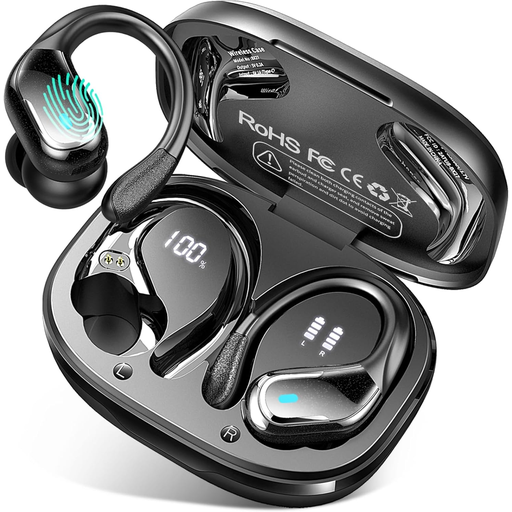
Why This Fits Their Persona: Designed for use while jogging and at the gym. The high water-resistance rating provides reliable protection against sweat and heavy rain, while the long battery life is sufficient even for marathon training or long excursions.
This model advertises a clear IPX7 certification. This means it's not just "sweat-proof" but protected against temporary immersion, making it suitable for demanding sports activities. The battery life is also prominently featured.
The combination of high water resistance (IPX7) and a very long total runtime of 75 hours (per the manufacturer) makes this model a robust companion for athletes.
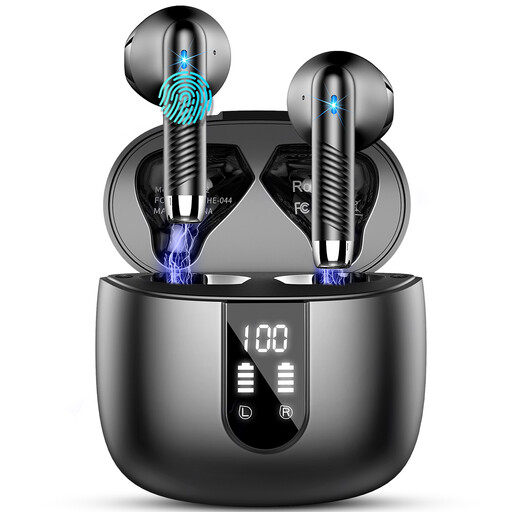
Why This Fits Their Persona: Offers a comprehensive feature set for users looking for great value. With long battery life, water resistance, and ENC for calls, it covers the basic requirements for everyday use without breaking the bank.
This model provides concrete numbers: a total runtime of 56 hours and an IP7 water-resistance rating. It also clearly distinguishes between ENC for calls and the absence of ANC for the listening experience, which ensures transparency.
A strong overall package with long battery life and high water resistance at an accessible price. The LED display on the charging case is a practical bonus feature.
We have compiled a complete, up-to-date list of products that fully meet these strict selection criteria and all relevant safety regulations.
The lifespan of true wireless earbuds is primarily determined by the built-in, non-replaceable battery. With daily use, the battery capacity typically begins to noticeably degrade after about two to three years. The mechanical durability depends heavily on build quality and care. Proper storage in the charging case protects the earbuds and can extend their lifespan.
ANC (Active Noise Cancellation) is a technology that effectively reduces constant, low-frequency ambient sounds, such as the drone of airplane engines, train travel, or air conditioning systems. If you frequently travel or work in such environments and need to concentrate, ANC is a very useful feature. However, for use in quiet surroundings or during outdoor sports, it is often not essential.
Not all wireless in-ear headphones are suitable for sports. Two factors are crucial: a secure fit in the ear to prevent them from falling out during movement, and adequate water resistance (IP rating). For sports, at least an IPX4 rating is recommended to ensure protection against sweat and splashing water. For more intense workouts or running in the rain, a higher rating like IPX5 or IPX7 is advisable.