For audio courses in a noisy home, well-fitting, closed-back in-ear headphones are a sensible place to start. The WHO points out that well-fitting, noise-cancelling headphones can help you avoid turning the volume up unnecessarily in noisy surroundings. If you need to hear people or important sounds, look for an easily accessible ambient mode. Open earbuds let in surrounding sounds, but they don’t block household noise to the same extent. For longer sessions, you should also consider how comfortable the fit is for you and, with Bluetooth models, the battery life with ANC switched on.
Which in-ear headphones are right for you?
Learners dealing with a lot of background noise
If you want to understand spoken lessons despite everyday noise, start by checking the fit and, if needed, look for ANC. The WHO recommends well-fitting, noise-cancelling headphones to help you avoid turning the volume up in noisy surroundings.
Learners with long listening sessions
For longer sessions, it’s important to choose eartips that feel comfortable in your ears. If you’re considering wireless models, also check that the battery life is sufficient for the features you want to use during your course.
Learners who need to stay reachable at home
If you need to respond to people or important sounds during your course, weigh up an ambient mode against an open design. Open earbuds let in surrounding sounds, but do less to block out distracting household noise.
What should you look for when buying?
Start with the biggest obstacle to your learning: understanding speech, finding a comfortable fit or staying aware of your surroundings. Then check battery life, connectivity and any accessories you need.
Closed-back Bluetooth in-ear headphones with ANC
A good choice if: Recurring household noises drown out voices in your course and you want to listen wirelessly.
The trade-off: Fit and how well the headphones reduce voices vary by model. You’ll also need to consider battery life with ANC switched on.
Closed-back wired in-ear headphones
A good choice if: Your course device has a compatible audio connection and you want to listen without relying on an earbud battery.
The trade-off: Passive noise isolation depends on the fit; there’s no ANC or switchable ambient mode.
Open earbuds
A good choice if: It’s fairly quiet at home and you need to stay reachable while listening.
The trade-off: The open design deliberately lets in surrounding sounds, so it won’t provide the same level of noise isolation in a noisy home.
| What you need |
What to check when buying |
Who should consider this? |
| Understanding speech |
Check the eartips and fit; for ANC, look for model-specific results on how well voices are reduced. |
If I want to understand course voices despite background noise, I look for well-fitting eartips and effective noise reduction for voices. Around 31% of consumers put speech clarity first. |
| Fit during long sessions |
Check the sizes of the supplied eartips and any included stabilisers; before buying, review the terms for possible returns. |
For long lessons, I want eartips that feel comfortable and don’t need constant adjustment. Around 25% of consumers prioritise long-term comfort. |
| Staying aware of your surroundings |
Compare open designs with closed-back in-ear headphones that have an ambient mode; check the controls and how to switch modes. |
If I need to respond to people I live with during a course, I want to be able to hear important sounds. Around 19% of consumers prioritise staying reachable. |
| Listening without a break |
For wireless models, check battery life per charge with ANC switched on; for wired models, check your course device’s connection. |
For a long lesson without a charging break, or when I need a particular device connection, I need suitable battery life or connectivity. Around 13% of consumers prioritise uninterrupted listening. |
| Essential extras |
Check whether any charging accessories you need are included; distinguish optional extended warranties from your statutory rights for faulty goods. |
If I want to use the product without unnecessary extras, I check what accessories I actually need and what additional services are offered. Around 12% of consumers first look at possible extra requirements. |
Common buying mistakes
-
Assuming an advertised ANC figure guarantees clear course voices
Noise reduction and how clearly you hear speech in your home aren’t the same thing. Performance and fit vary from one model and one ear to another.
Start by checking the fit and, where available, compare model-specific results for reducing voices. Don’t simply turn up the volume instead of finding eartips that fit properly.
-
Buying open earbuds for noise protection
An open ring design deliberately lets sounds reach your ears. This can make it harder to follow a course when there’s a lot of household noise.
If blocking out noise is your priority, look at closed-back in-ear headphones. Choose an open model only if staying aware of your surroundings matters more to you than noise isolation.
-
Confusing battery life with the charging case with listening time per charge
Battery life on a single earbud charge isn’t the same as the extra power provided by the charging case.
For the length of your course, compare the stated playback time per charge with ANC switched on.
-
Confusing an extended warranty with your statutory rights for faulty goods
Your statutory rights against the seller are set out by law; a warranty is an optional extra with its own terms and conditions.
Check your statutory rights for faulty goods first, then compare them with the terms of any additional cover on offer. The Verbraucherzentrale explicitly distinguishes between statutory rights and warranties.
Brands to consider
Sony
Sony offers both closed-back ANC in-ear headphones, such as the WF-1000XM6, and open models, such as the LinkBuds Open.
- Sony describes noise-cancelling features for the WF-1000XM6. Still, check the fit and whether they’re suited to the sounds in your home.
- Sony says the LinkBuds Open’s open ring design lets in surrounding sounds. This makes them less effective at blocking noise in a noisy home.
Apple
The AirPods Pro 3 are closed-back ANC in-ear headphones with Transparency mode. They’re worth considering if you use compatible Apple devices.
- Apple states that they offer up to 8 hours of playback per charge with noise cancellation switched on.
- This is the manufacturer’s stated battery life. Also check that the fit and the features you want are compatible with your devices.
Shure
The wired SE215 offers passive noise isolation and may suit a course device with a compatible 3.5-mm connection.
- Shure lists several eartip options and a detachable cable.
- This model has no ANC or switchable ambient mode. Shure’s advertised noise isolation of up to 37 dB isn’t guaranteed for every ear shape or household noise.
Bose
The 2nd generation QuietComfort Ultra Earbuds are an ANC option with eartips and stability bands for a more personalised fit.
- Bose lists three eartip sizes and three stability band sizes.
- Bose’s stated battery life of up to 6 hours doesn’t guarantee the actual battery life or comfort for every individual.
Samsung
The Galaxy Buds4 Pro are closed-back in-ear headphones with adaptive noise control.
- Samsung describes this model as having adaptive ANC.
- Check whether the Galaxy features you want work with your devices. Manufacturer claims don’t prove that a particular audio course will be easier to understand.
soundcore
The Liberty 4 NC is another ANC option. Check the fit, battery life and specific variant before buying.
- The Joybuy product description states that this model offers 8 hours per charge with ANC switched on.
- An advertised maximum noise reduction figure alone doesn’t tell you how clearly you’ll hear course voices in your home.
Joybuy products for audio courses
This selection includes wired in-ear headphones, ANC Bluetooth models and other wireless in-ear headphones. For each model, check that the connection, fit and noise mode suit your course routine.
 No image available
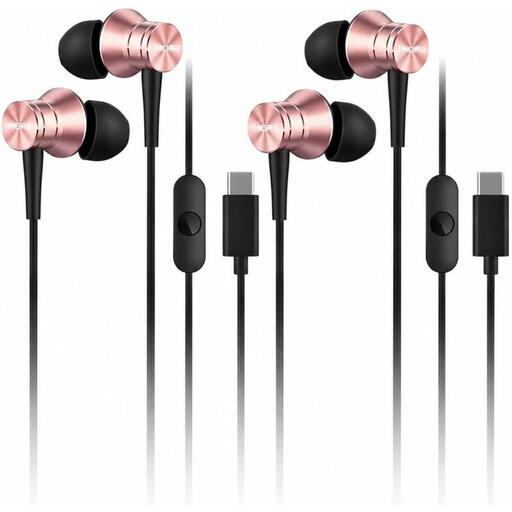
1MORE Piston P10, wired Type-C version, pink
For a course device with a USB-C connection; check that your device outputs audio through this connection.
Wired Type-C version; pink.
Joybuy
 No image available
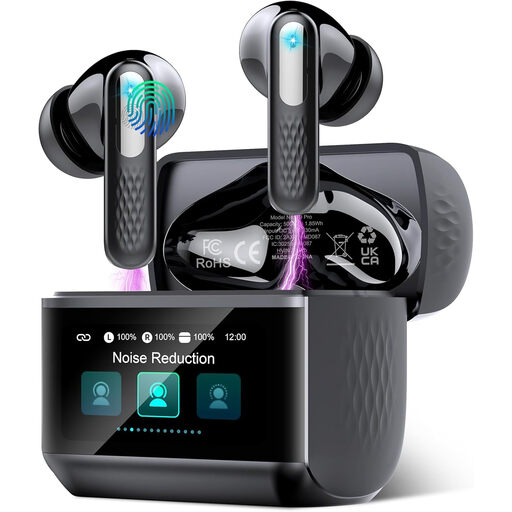
Bluetooth 5.4 in-ear headphones with ANC and touch controls
If you want to listen wirelessly with ANC, check the fit and make sure the battery life will last through your lesson.
Bluetooth 5.4; ANC; touch controls. The product name states 40 hours of battery life.
Joybuy
 No image available
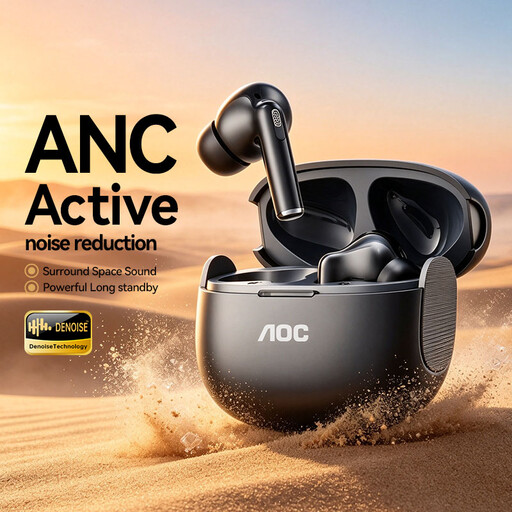
AOC ACT2615
A wireless ANC option. Before buying, compare the fit and check that the controls suit the way you’ll use them.
The product name lists ANC and Bluetooth 5.4.
Joybuy
 No image available
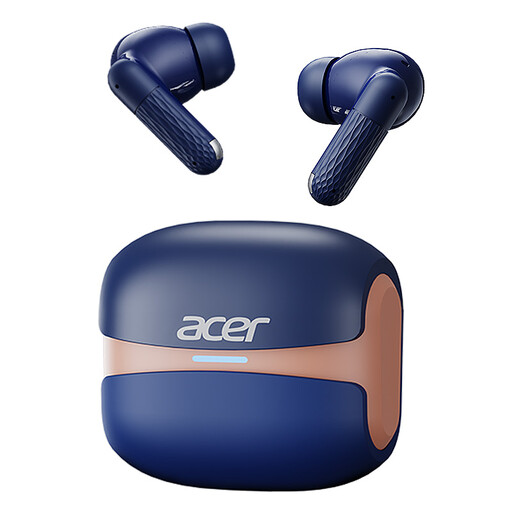
Acer OHR548
If you’re looking for wireless in-ear headphones, check whether the stated noise reduction suits the way you’ll use them for your course.
The product name lists Bluetooth 5.4 and a Type-C charging case.
Joybuy
 No image available
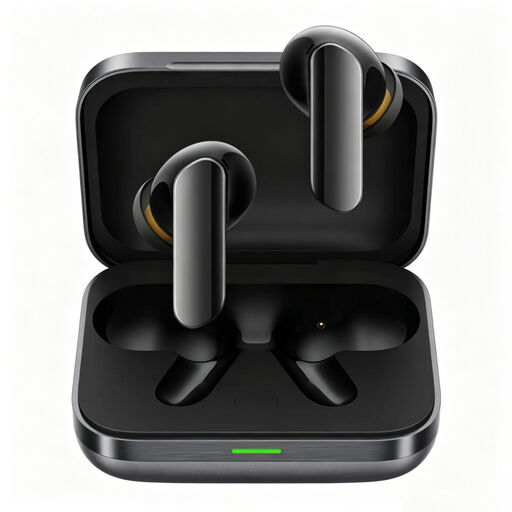
Realme Buds Air7 Pro
If you’re considering ANC for an audio course, check the fit and don’t rely solely on a stated noise reduction figure.
The product name lists Bluetooth 5.4, IP55, up to 48 hours of battery life and an ANC figure of 53 dB. According to the product details, a Type-C charging cable isn’t included.
Joybuy
Frequently asked questions
Will ANC automatically make voices in my audio course easier to understand?
No. ANC doesn’t guarantee clearer course voices. Check the fit and, where available, look for model-specific results on how well voices are reduced. The WHO points out that well-fitting, noise-cancelling headphones can help you avoid turning the volume up as much in noisy surroundings.
How should I set up in-ear headphones for a longer lesson?
Try eartips that fit, check that the headphones sit securely and start at a low volume. The WHO recommends keeping an eye on your volume and listening time, and taking regular breaks from listening.
How should I clean or maintain my in-ear headphones?
Follow the instructions for your particular model and check whether replacement eartips or cables are available. For the Shure SE215, the manufacturer lists a detachable cable and several eartip options; this doesn’t necessarily apply to other models.
Do I need an extended warranty when buying online?
You don’t need an extended warranty to exercise your statutory rights for faulty goods. These rights apply against the seller, while a warranty is an optional extra with its own terms and conditions. For an online consumer contract, there is generally a 14-day right to cancel; check whether any exceptions apply to your specific purchase.
Which German and European product requirements should I be aware of?
Bluetooth in-ear headphones are subject to the applicable requirements for radio equipment. The Bundesnetzagentur lists correct CE marking and the required product information among the requirements for retailers. For earbuds covered by EU rules on a common charging connection, the USB-C requirements have applied since 28 December 2024. Check separately whether the rules apply to a specific product; a CE mark is not a quality rating for sound or ANC.


