Choose in-ear headphones that fit comfortably and securely, and are compatible with the device your choir recordings are stored on. Wired models avoid charging breaks, but need a suitable connection. Wireless in-ear headphones give you more freedom to move, while ANC can also be useful when studying somewhere noisy. The best way to check whether you can follow individual voices and lyrics is to listen to a familiar recording, rather than relying on codec or driver specifications alone.
Who are the different types of in-ear headphones suited to?
Choir singers analysing recordings
If you listen to passages repeatedly, you’ll want to assess the lyrics and individual voices using your own reference recordings. A suitable sound profile and reliable playback controls can make a difference; Bitkom e. V. lists sound quality as an important factor when buying headphones. Sony Germany lists an ambient sound mode among the features of one model.
Listeners in long study sessions
If you wear in-ear headphones for extended practice sessions, comfort and fit should be your main priorities. For wireless models, also check the playback time per charge for the mode you’ll actually use. Shure Germany describes different ear tips for the SE215, while Sony Germany gives model-specific battery life figures.
Studying somewhere noisy
If you listen to saved recordings somewhere with background noise, make sure your headphones fit well and consider ANC rather than simply turning up the volume. The World Health Organization recommends well-fitting or noise-cancelling headphones to reduce the need to listen at higher volumes in noisy environments.
What should you look for when buying?
First decide between wired and Bluetooth, then check the fit and connection or pairing. Choose ANC as an extra feature only if it makes sense for where you study.
Wired, noise-isolating in-ear headphones
A good fit if: you usually listen on a device with a suitable audio output and want to work for long periods without needing to charge your headphones.
The trade-off: the cable limits your freedom to move. A good fit and a compatible connection are still essential.
Wireless in-ear headphones with ANC
A good fit if: you listen to saved recordings over Bluetooth and background noise regularly disrupts your concentration.
The trade-off: both the headphones and charging case need to be charged. ANC is no substitute for a good fit or a sensible listening volume.
Wireless in-ear headphones without prioritising ANC
A good fit if: you mostly study somewhere quiet and value freedom to move more than extra noise cancellation.
The trade-off: background noise can make it harder to follow the recording. Turning up the volume is not a suitable solution.
| Buying priority |
What to check |
Who it matters most to |
| Assessing voices and lyrics |
Compare a familiar recording; check the playback controls and sound processing on your device. |
When I listen to choir passages repeatedly, I want to be able to follow the voices and words in my recording. Around 28% of consumers put this first. |
| Fit during long listening sessions |
Try out the ear tips and check they stay secure during a typical study session. |
During longer practice sessions, I want to wear in-ear headphones without them pressing uncomfortably or coming loose. Around 22% of consumers prioritise a comfortable fit for longer listening sessions. |
| Background noise where you study |
Check the seal and assess ANC in the environment where you’ll use it. |
If it’s noisy where I study, I want to follow the recording without turning the volume up unnecessarily. Around 22% of consumers put unwanted background noise first. |
| Wireless playback |
Check Bluetooth pairing and switching between devices; compare battery life in the relevant ANC mode. |
When I play recordings wirelessly from my smartphone, tablet or computer, I want to be able to connect to my devices in a way that suits me. Around 17% of consumers prioritise wireless playback and device pairing. |
| Listening without a charging break |
Check the audio output against the plug on the specific model. |
During long listening sessions, I don’t want to have to take a break to charge my headphones. Around 11% of consumers prefer wired listening for this reason. |
Avoiding buying pitfalls
-
Assuming battery life with the charging case means uninterrupted listening time
The case’s battery life is not the same as the playback time you get from the headphones on a single charge. ANC mode also affects the basis for comparison.
Compare playback time per headphone charge in the same ANC mode with the length of your usual listening session.
Needing to recharge could interrupt a longer listening session.
-
Assuming a codec or sound claim means better separation of choir voices
Support for a Bluetooth codec or a sound description doesn’t prove that you’ll be able to distinguish individual voices more clearly in your particular recording. Some features also require a compatible playback device.
Check that your devices are compatible and, if possible, compare a familiar recording at a similar volume.
An extra feature may offer no noticeable benefit with your recording or playback device.
-
Ordering wired in-ear headphones without checking the connection
A plug will only work if your playback device has a suitable audio output or supports a compatible connection solution.
Before buying, check your device’s connection against the plug on the specific model.
Depending on your playback device, you may need a suitable connection solution.
Key brands at a glance
Shure
The wired SE215 is worth considering if your playback device has a suitable 3.5 mm output and you want to listen without relying on a headphone battery.
- Shure Germany lists a range of ear tips and a detachable cable. Passive noise isolation depends on how well the headphones fit.
- The manufacturer’s claim of up to 37 dB of noise isolation applies to this model and doesn’t guarantee a good fit.
Sony
According to Sony Germany, the WF-1000XM6 combines ANC, ambient sound mode and Bluetooth playback.
- Sony lists SBC, AAC, LDAC and LC3, as well as up to 8 hours of music playback per charge with noise cancelling switched on.
- Codec support alone doesn’t prove you’ll hear a benefit with a particular recording or playback device.
Apple
AirPods Pro 3 may be worth considering if you use an Apple playback device and want to make use of the features available with it.
- Apple lists ANC, Transparency mode, five sizes of silicone ear tips and up to 8 hours of playback per charge with ANC enabled.
- Apple says the headphones also work with devices from other manufacturers, but with limited functionality.
Technics
The EAH-AZ100 is a wireless option if you listen to saved recordings on several devices.
- Technics lists adaptive noise cancelling and the ability to connect to up to three devices simultaneously.
- The manufacturer’s claims about sound clarity don’t prove that every listener will be able to distinguish individual choir voices more clearly.
JBL
According to JBL, the Tour PRO 3 comes with a charging case that can transmit audio from a connected USB or analogue source.
- The transmitter feature may be useful if your playback source and connection are compatible.
- If you’re playing recordings from a Bluetooth-enabled smartphone, you don’t automatically need an extra transmitter case.
Samsung
The Galaxy Buds4 Pro are especially worth considering if you use a compatible Galaxy playback device.
- Samsung explicitly states that activating SSC-UHQ requires pairing with a compatible Galaxy device.
- That doesn’t mean you’ll get an advantage with every other phone, nor does it say anything about the quality of your choir recording.
Joybuy product offers
The models below include wired and wireless in-ear headphones for listening to saved recordings.
 No image available
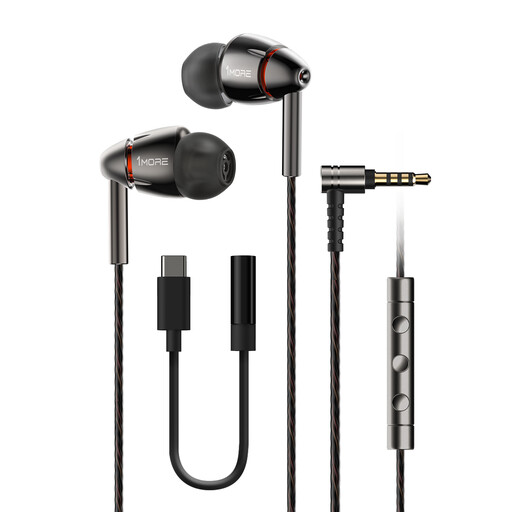
1MORE Quad Driver in-ear headphones
For longer listening sessions without a charging break; check that your playback device’s connection is compatible with the cable supplied with this specific model.
View at Joybuy
 No image available
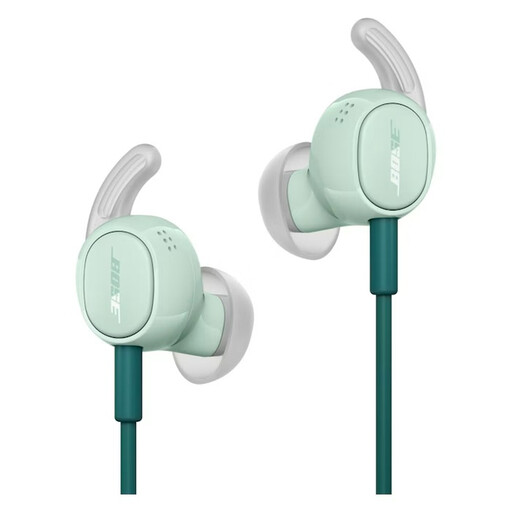
Bose Noise Cancelling Wired Earbuds, Dewdrop Mint
For wired listening without needing to charge the headphones; according to the product details, you’ll need a compatible USB-C device and the specified connection cable.
View at Joybuy
 No image available
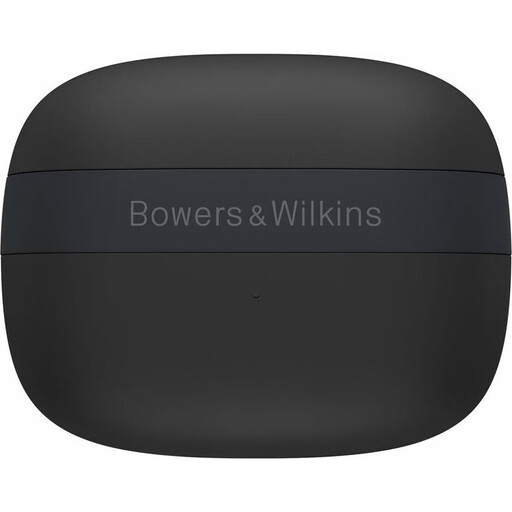
Bowers & Wilkins Pi6 True Wireless
If you want to listen wirelessly somewhere noisy, check the fit and ANC in your own surroundings. The listed specifications include Bluetooth 5.4, Multipoint and up to 8 hours of playback per charge.
View at Joybuy
 No image available
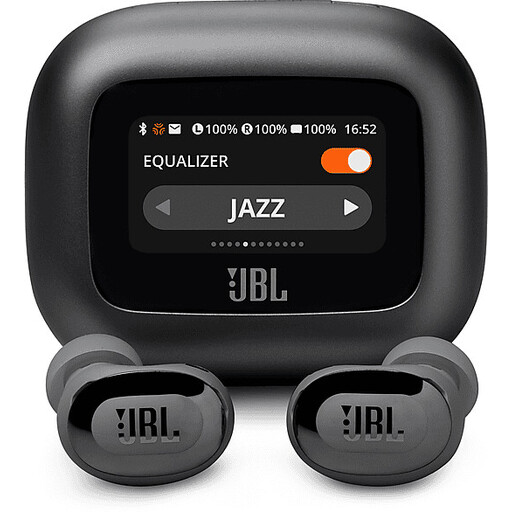
JBL Live Buds 3, Black
For listening wirelessly to saved recordings; check that the fit and noise cancelling suit where you study, and try the recording for yourself.
View at Joybuy
 No image available
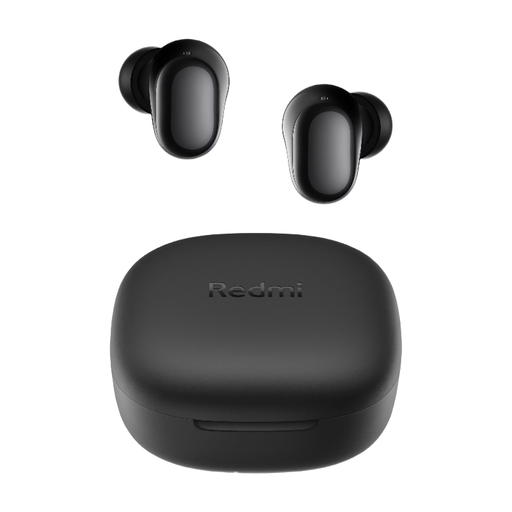
Redmi Buds 6 Play
For wireless listening in relatively quiet surroundings; noise cancellation is described for calls, not music playback. Bluetooth 5.4 and a 10 mm driver are listed.
View at Joybuy
Frequently asked questions
Do downloaded choir recordings need to be stored on the headphones themselves?
No. Your smartphone, tablet or computer plays the recording stored on it and sends the audio to your in-ear headphones through a suitable wired connection or Bluetooth. So first check the connections and connectivity options on your playback device.
What should I know about fitting and care?
Try the supplied ear tips and check the fit without turning up the volume. Follow the instructions for your specific model when cleaning it or replacing the ear tips or cable; these options vary between models.
How can I protect my hearing during long practice sessions?
The World Health Organization recommends keeping the volume low, taking regular breaks and using well-fitting or noise-cancelling headphones in noisy environments, rather than simply turning the volume up. As examples of sound exposure, it gives up to 40 hours per week at 80 dB and four hours per week at 90 dB; these are not fixed volume settings for headphones.
What happens if the headphones develop a fault: guarantee or statutory rights?
Your statutory rights are against the seller; a guarantee is an additional voluntary service provided under its own terms. According to the consumer advice centre, if a product is faulty, you should first ask the seller to put it right. Check who your seller is and keep your proof of purchase.
What should I know about Bluetooth headphones and disposal in Germany?
For Bluetooth products, the Federal Network Agency checks, among other things, whether the CE marking is present and correct, and whether the product and manufacturer details can be identified and are accurate. A product listing alone doesn’t prove that an individual item complies with the rules. According to the Federal Ministry for the Environment, old electrical equipment must not go in household waste; take it to an authorised collection or take-back point instead.


