Considerate jazz listeners
You listen in the same bedroom as someone else and want to keep your music to yourself at a moderate volume. Fit and potential sound leakage matter more to you than an ANC rating alone.


For jazz in a shared bedroom, closed-back in-ear headphones are a good choice if you want to enjoy quiet passages with as little disturbance as possible. Wired models avoid charging breaks, while true wireless models with ANC can reduce room noise. However, ANC doesn’t tell you how much sound leaks out, and open-ear headphones let you hear your surroundings but don’t provide a sealed fit. The key factors are fit, sound leakage at a moderate volume, device compatibility and how quickly you want to be able to hear someone speaking.
You listen in the same bedroom as someone else and want to keep your music to yourself at a moderate volume. Fit and potential sound leakage matter more to you than an ANC rating alone.
You want to assess the vocals and instruments in familiar recordings, and are weighing up wired headphones against wireless listening modes and possible changes to the sound.
You want to be able to respond to conversations while listening to music, so you’re checking pause controls, transparency mode or an open design.
A good fit if: you usually listen in the same place, want to avoid charging breaks and your playback device has a compatible connection.
The trade-off: ANC and a built-in microphone aren’t guaranteed; you’ll need to check the fit and sound leakage yourself.
A good fit if: room noise drowns out quiet jazz passages and you want to listen wirelessly.
The trade-off: ANC won’t reliably block out conversations; fit, sound and battery life depend on the model and listening mode.
A good fit if: you occasionally want to respond to the other person while listening, but prefer a sealed fit.
The trade-off: you may need to switch listening modes for focused listening; controls and features vary by model and device.
A good fit if: you want to hear the other person without switching modes and don’t need to block out background noise.
The trade-off: the open design lets room noise in; check whether other people can hear your music at your usual volume.
| Concern | What to check when buying | Who this matters most to |
|---|---|---|
| Being considerate and sound leakage | Check the fit and sound leakage at a moderate volume where you’ll actually be listening; ANC alone doesn’t prove that little sound will leak out. | When I listen next to someone else, I want to disturb them as little as possible while finding out whether any music leaks out. Around 26% of consumers say being considerate is their main concern. |
| The sound of familiar jazz recordings | Listen to the same familiar passage at a similar, moderate volume. For wireless models, check codec support and how the sound changes between listening modes. | With familiar recordings, I want to assess the vocals and instruments without confusing audio formats with sound quality. Around 26% of consumers put jazz sound quality first. |
| Comfort during longer listening sessions | Try different ear tip sizes in each ear separately and assess the fit over your usual listening time. Sony Germany notes that a gap that’s too large can affect ANC performance on the WF-1000XM6. | I want to be able to listen to a jazz recording all the way through without feeling pressure. Comfortable fit is the main concern for around 21% of consumers. |
| Staying approachable in a shared room | Test the pause controls and switch to transparency mode on the model you’re considering; with open-ear headphones, also consider sound leakage. | If I want to be able to hear someone talking while listening to music, I need an easy way to pause playback or hear my surroundings. Around 16% of consumers prioritise staying approachable. |
| Compatibility, battery life and maintenance | Check the connection or codec supported by your device and, for wireless models, compare battery life per charge in the listening mode you want to use. | I want to know whether the headphones work with my device and whether charging or maintenance will interrupt my routine. Technology and ongoing costs are the main concern for around 11% of consumers. |
ANC affects the sounds you hear. It doesn’t tell you how much music will leak out at your chosen volume.
Check the fit and ask the other person to listen from where they usually sit and see if they can hear any sound leakage at your usual volume.
The earbuds need to go in the case to charge. For the soundcore Liberty 4 NC, the manufacturer gives different battery life figures depending on the listening mode; it quotes a shorter battery life for LDAC and ANC together than for Normal mode.
Compare the battery life on a single charge in the mode you actually plan to use.
The Sennheiser IE 200 has a 3.5 mm plug; an independent review notes that some smartphones may need an adapter. Features on wireless models may vary depending on the playback device.
Before choosing, check your device’s connection and whether the features that matter to you are available with it.
The IE 200 offers wired listening with a replaceable cable; according to Sennheiser, the MOMENTUM True Wireless 5 have replaceable batteries.
The EAH-AZ100 combines true wireless listening with adaptive ANC and connections to multiple devices.
The closed-back WF-1000XM6 offers ANC and ambient sound mode; the open LinkBuds Open let you hear your surroundings.
The AirPods Pro 3 are closed-back in-ear headphones with ANC, transparency mode and five included ear tip sizes.
According to Denon, the PerL Pro combines a personalised listening profile created in the app with ANC and transparency mode.
The Liberty 4 NC are closed-back true wireless in-ear headphones with ANC and LDAC.
This selection ranges from wired in-ear headphones to true wireless models with noise cancellation. The key factors are a compatible connection for your device, a comfortable fit and the listening modes you want to use in a shared room.
 No image available
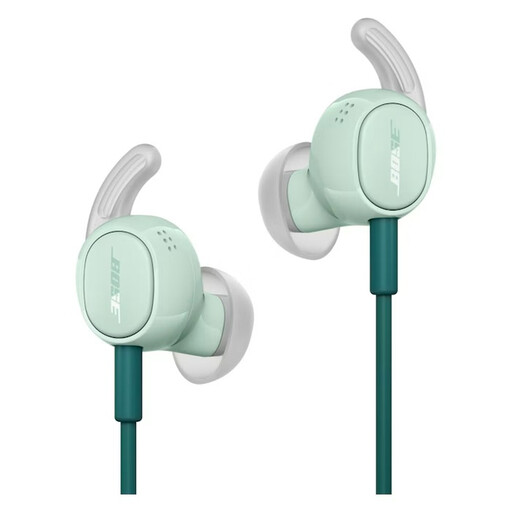
An option for wired listening without an earbud battery; check that your device supports USB-C audio and offers the controls you want.
 No image available
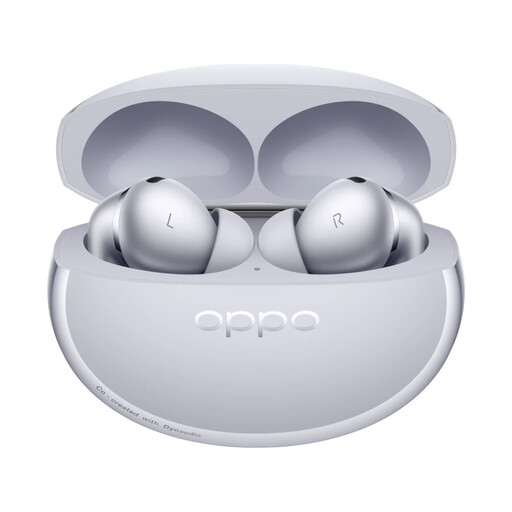
For wireless listening with noise cancellation; check on your own device whether you can easily switch on the ambient sound you want for conversations.
 No image available
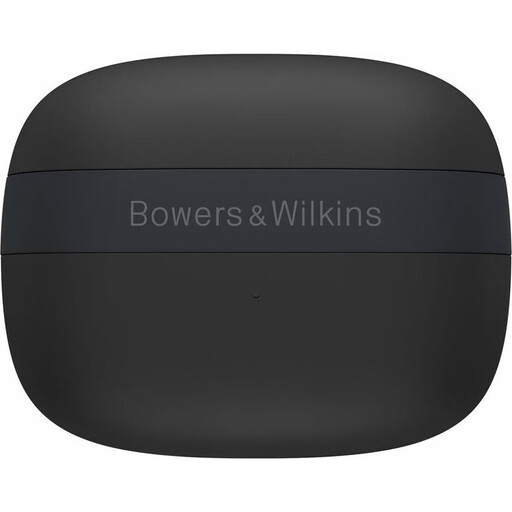
A closed-back true wireless option with ANC. The product title lists 12 mm Bio-Cellulose drivers, Bluetooth 5.4 with Multipoint, aptX Adaptive, 24-bit wireless and up to 8 hours of battery life.
 No image available
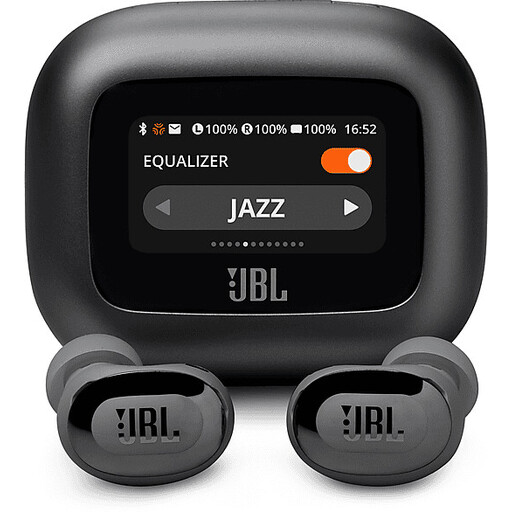
For wireless listening with noise cancellation; the product is also described as having wireless charging and a Smart Case.
 No image available
An option for wireless listening with ANC; if you want to stay approachable in a shared room, check how to pause playback and hear your surroundings on your own device.
It won’t reliably block out every conversation. Sony Germany explains that speech changes in pitch and pattern, so it may still be audible. Try the fit and listening mode with realistic room noise rather than turning up the volume.
Try different ear tip sizes in each ear separately and listen to a familiar track at your preferred volume. Sony Germany notes that, on the WF-1000XM6, a gap that’s too large between the ear and ear tip can affect ANC performance.
Follow the care instructions for your particular model. For the WF models concerned, Sony Germany recommends, among other things, cleaning dirty charging contacts with a soft cloth or cotton bud.
According to information from the EU, when you buy from a trader you’re generally entitled to a statutory guarantee of at least two years from the date you receive the goods. Distance purchases generally come with a 14-day right to cancel; under certain conditions, § 312g BGB provides an exception for unsealed goods that aren’t suitable for return for health or hygiene reasons. This doesn’t mean that all headphones are automatically excluded: check the specific conditions.
The World Health Organization recommends considering volume and listening time together, taking breaks and not simply turning up the volume to drown out background noise. Its example of 80 dB for up to 40 hours a week is a guide to sound exposure, not a guaranteed safe setting for a particular headphone model.