Listeners analysing grooves on train journeys
You want to pick out the kick, snare and hi-hat at a sensible volume, and find the right balance of isolation and sound tuning.


First, choose ear tips that fit comfortably and create a good seal. Then decide whether you prefer a more neutral sound for distinguishing the different parts of the drum kit, or more bass to bring out the kick drum. Depending on the model, wired in-ear monitors offer passive isolation and replaceable cables. If steady train noise is your main concern, an ANC in-ear could be a suitable alternative, although voices and announcements may still be audible.
You want to pick out the kick, snare and hi-hat at a sensible volume, and find the right balance of isolation and sound tuning.
Comfortable ear tips and a secure fit matter to you. If you use your headphones frequently, a replaceable cable may also be important.
You want to weigh up the passive isolation of a wired monitor against a wireless ANC in-ear, particularly when the noise is steady and consistent.
| What you need | What to check before buying | Who is it most important for? |
|---|---|---|
| Isolation at a sensible volume | Check the tip sizes and make sure both earbuds fit snugly; manufacturers' figures are no guarantee of the level of isolation you will get. | If you want to reduce train noise without drowning it out by turning up the volume, a good seal is your priority. Around 29% of consumers put isolation first. |
| Drum detail and bass tuning | Compare the stated sound tuning and, if possible, listen with audio you know well. | If you want to distinguish the kick, snare and hi-hat, consider how neutral you want the sound to be and how prominent you want the kick to sound. Around 29% of consumers prioritise groove and sound. |
| A comfortable fit for the whole journey | Consider the tip materials and sizes, as well as how ear hooks fit; don't force a painful fit. | On longer journeys, a fit that is too tight or loose can make listening uncomfortable. A secure, comfortable fit is what matters most to you. Around 24% of consumers prioritise fit during extended use. |
| Connections and replaceable parts | Check the connection on your playback device and the exact cable connector used by the model. | If you want to connect a wired model or replace its cable, the specific connector must be compatible. Around 18% of consumers prioritise connectivity and maintenance. |
Manufacturers use different types of figures, and the actual level of isolation also depends on how the ear tips fit.
First, check which tips fit and whether they sit comfortably and snugly in both ears. Don't choose based solely on the highest possible dB rating.
According to Sony, ANC is particularly effective against lower-frequency, steady background noise, although voices may still be audible. An ANC in-ear is not automatically the same as a wired in-ear monitor.
If steady train noise is your main concern, consider ANC as an alternative. If a particular monitor sound is important to you, assess that separately.
The ATH-E40 uses A2DC, while the SE215 is specified with MMCX. Detachable cables are therefore not automatically compatible with one another.
Before buying, note the exact model and connector details, and check that any replacement cable is explicitly compatible.
The wired SE215 combines passive isolation with a Fit Kit and a replaceable MMCX cable.
Etymotic describes the ER2SE as having a flat sound signature, while the ER2XR in the same range places more emphasis on bass.
The wired ATH-E40 comes with four sizes of silicone tips and an A2DC cable.
The wired IE 200 is an option if you want a sound signature the manufacturer describes as balanced, along with adjustable ear hooks.
The Pro X10 is an in-ear monitor with a compact housing and both silicone and foam tips.
This selection features wireless ANC in-ears as an alternative for train journeys when steady background noise is your main concern. They are not wired in-ear monitors.
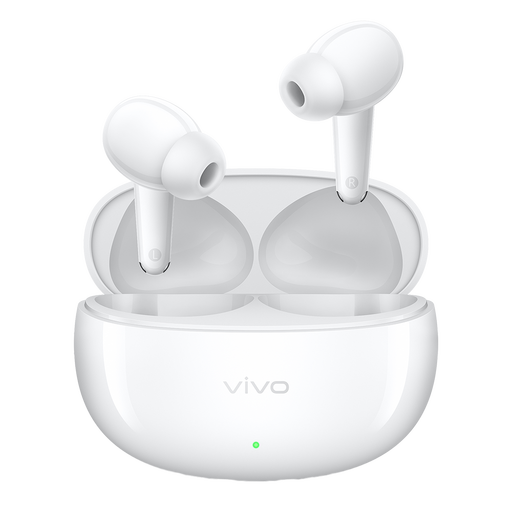 No image available
A wireless ANC alternative if you want to reduce train noise and try different ear tip sizes.
Product details list ANC up to 55 dB, 11 mm drivers, AAC, Bluetooth 6.1 and S, M and L ear tips. The charging case and recharging are part of everyday use.
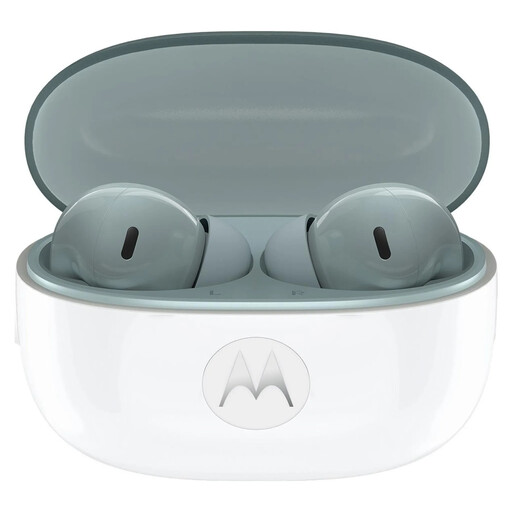 No image available
A wireless ANC option if you want to reduce train noise and switch between ANC and transparency mode.
The product description lists two drivers, ANC, a transparency mode, a bass boost mode and three pairs of ear tips. The charging case and recharging are part of wireless use.
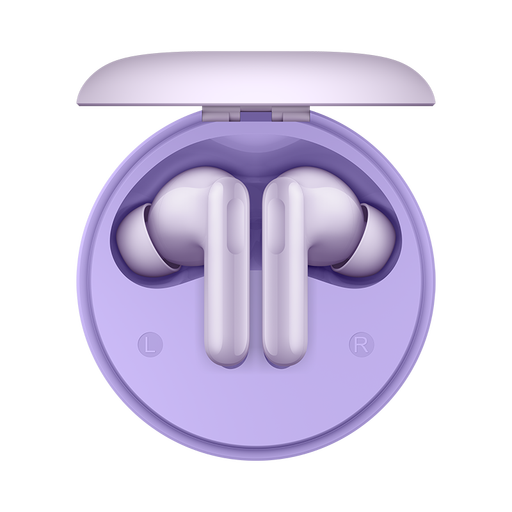 No image available
These wireless in-ears are a relevant ANC alternative if you want to reduce train noise while listening.
Product details list a 12.4 mm driver, ANC up to 49 dB and 42 hours of battery life.
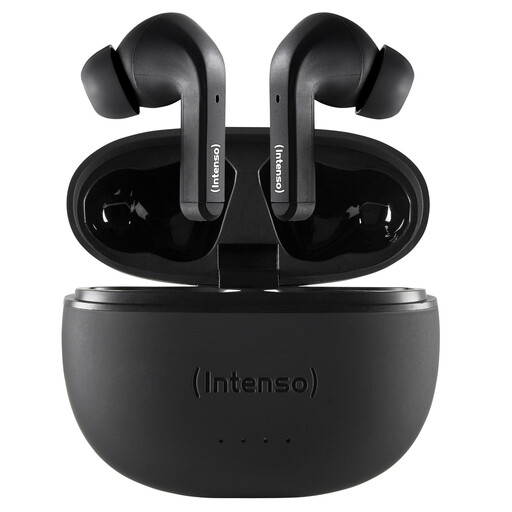 No image available
A wireless ANC option if you want to use ANC and transparency mode, and try different ear tip sizes.
Product details list Bluetooth 5.3, three ear tip sizes and a weight of 2.2 g per earbud. Regular charging and a charging case are part of everyday use.
 No image available
These wireless ANC in-ears could suit you if you want to reduce train noise and adjust the sound using an equaliser.
The product description lists a dual-driver system, ANC, an ambient mode and a 9-band equaliser. The charging case and recharging are part of everyday use.
The World Health Organization recommends keeping the volume low, using well-fitting headphones and taking listening breaks. As an example for adults, it cites 80 dB for no more than 40 hours a week. This is a guide to average exposure, not a guaranteed volume level for any particular headphones.
Try the supplied tip sizes and make sure they fit comfortably and snugly in both ears. Fit also affects how well they reduce ambient noise, so don't force a painful fit.
Deutsche Bahn explicitly says that loud music, including through headphones, is not welcome in the ICE quiet zone. Make sure other passengers cannot hear what you are listening to; this does not amount to a blanket ban on listening quietly.
For distance purchases in the EU, there is generally a 14-day withdrawal period from delivery, although exceptions and return costs depend on the specific circumstances. Your Europe also explains that faulty goods are covered by a legal guarantee of at least two years; this is different from a voluntary manufacturer's warranty.