An in-ear monitor is only suitable for listening to a backing track if its connection matches your playback device. If you also want to hear your own voice through a microphone, you’ll need a compatible microphone and monitoring setup. Don’t assume that audio playback is permitted on a coach: Section 14(2)(9) of the BOKraft prohibits passengers from using audio playback devices within the scope of the regulation, as listed by the Federal Ministry of Justice and the Federal Office of Justice on the Laws on the Internet website. Whether the regulation applies to your particular journey must be checked separately; wearing earphones doesn’t make audible singing silent.
Who are in-ear monitors suitable for?
Anyone practising considerately while travelling
If you want to practise with a backing vocal during your journey, distinguish between silent rehearsal and audible singing, and check the rules for your particular coach journey. Section 14 of the BOKraft sets out requirements for passengers on journeys within the scope of the regulation; whether it applies to your journey must be considered separately. (Federal Ministry of Justice and Federal Office of Justice, Laws on the Internet)
Singers who want to monitor their own voice
If you want to hear your microphone-fed voice alongside a backing track, you’ll need a suitable signal path as well as earphones. Focusrite describes direct monitoring on compatible audio interfaces as a way to hear the input signal and playback at the same time.
Listeners on longer journeys
If you mainly want to follow a track, look for ear tips that fit well and a connection that matches your playback device. Shure and Sennheiser list different ear tips for some of their monitoring models; the right fit will vary from person to person.
What should you look for when choosing?
First, decide whether you only want to listen to an existing track or mix in your microphone-fed voice as well. Separately, check whether audio playback is permitted on your particular coach journey.
| What you need |
What to check before buying |
Who it matters to most |
| Consideration and permitted use |
Follow the applicable travel rules and staff instructions. Section 14(2)(9) of the BOKraft prohibits the use of audio playback devices within its scope; the key question is whether it applies to your particular journey. |
If I want to be considerate and follow the rules during my journey, I won’t plan an audible rehearsal until I’ve checked whether playback is permitted; around 33% of consumers put consideration and permitted use first. |
| Hearing your own voice alongside the track |
Check that the specific device has a microphone input and headphone output, and can play back the input signal and backing track at the same time. |
If I want to hear my microphone-fed voice alongside the backing track, I need a suitable monitoring setup; around 27% of consumers prioritise hearing their own voice. |
| Fit and volume |
Check that the ear tips fit well and stay securely in place; a stated sound-isolation figure isn’t a personal measurement. Pause playback to hear announcements. |
On longer journeys, I want comfortable ear tips and a volume I can control easily; around 20% of consumers prioritise fit and a comfortable listening level. |
| Connections and replacement parts |
Check the playback device’s output, any adapter you need and the connector system used by the specific earphone model. |
If I want to connect the earphones to my device and replace parts if needed, I’ll check the connection and replacement cable; around 20% of consumers put this compatibility first. |
Common buying misconceptions
-
An in-ear monitor is a complete vocal monitoring system
The earphone plays back the signal sent to it, but it won’t automatically mix your voice with the backing track.
Before buying, trace the signal path from the microphone and playback device to the headphone output, and check the monitoring features of the specific device.
You may also need a compatible microphone or interface setup to hear your own voice.
-
Passive isolation makes singing silent
Earphones don’t make your voice inaudible to fellow passengers. A manufacturer’s sound-isolation figure also doesn’t confirm how well they’ll fit your ears or how much sound they’ll block on a coach.
If the rules on use haven’t been confirmed, don’t plan an audible rehearsal with a playback device. Check the fit at a moderate volume, and pause playback when you need to hear announcements.
-
Every detachable cable fits every in-ear monitor
Connector systems vary: Shure lists MMCX for the SE215, while Audio-Technica lists A2DC for the ATH-E70.
Compare the connector on the earphones with the replacement cable, and check whether your playback device’s output needs an adapter.
Key brands to consider
Shure
The SE215 is a wired monitoring earphone for users who need a 3.5 mm signal path.
- Shure lists a detachable MMCX cable and several ear tips for the SE215.
- The manufacturer’s stated isolation of up to 37 dB doesn’t guarantee a particular fit or level of noise reduction on a coach. Shure labels the model “Professional Use Only”.
Sennheiser
The IE 100 PRO is a monitoring model; the IE 100 PRO Wireless is a separate model.
- Sennheiser lists a slim housing and silicone and foam ear tips for the IE 100 PRO.
- Sennheiser states that the IE 100 PRO provides less than 26 dB of noise reduction. This manufacturer figure isn’t directly comparable with figures stated in different ways.
beyerdynamic
The DT 30 IE is a wired in-ear monitor with documented replacement parts.
- beyerdynamic lists a 1.4 m cable with MMCX and 3.5 mm connections, as well as replaceable parts, for this model.
- The manufacturer’s stated isolation of up to 39 dB doesn’t guarantee a particular level for every ear shape or on a coach.
Audio-Technica
The ATH-E70 is a monitoring model supplied with several ear tip sizes and a detachable cable.
- Audio-Technica lists four silicone ear tip sizes, a foam ear tip and A2DC connectors.
- The manufacturer’s description of precise mix evaluation isn’t an independent comparison test for backing vocals on a coach.
Fischer Amps
The FA 3E XB is an in-ear monitor with a replaceable cable; bear its described bass emphasis in mind when choosing earphones for vocals.
- The manufacturer’s data sheet lists three Balanced Armature drivers, a 3.5 mm plug, and silicone and foam ear tips.
- Fischer Amps describes the sound as bass-heavy and the model as particularly suitable for drums. That doesn’t mean it’s especially suited to evaluating backing vocals.
Joybuy products for wired listening
This selection includes wired earphones for listening to a backing track; the VoxorAI KM08 product title also mentions a sound card for real-time monitoring.
 No image available
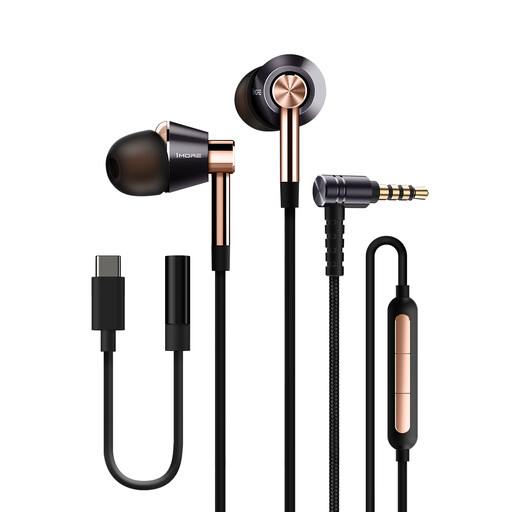
1MORE E1001 Triple Driver, wired, gold
For listening to a backing track through a compatible wired output. The product title mentions Triple Driver and an MEMS microphone.
Joybuy
 No image available
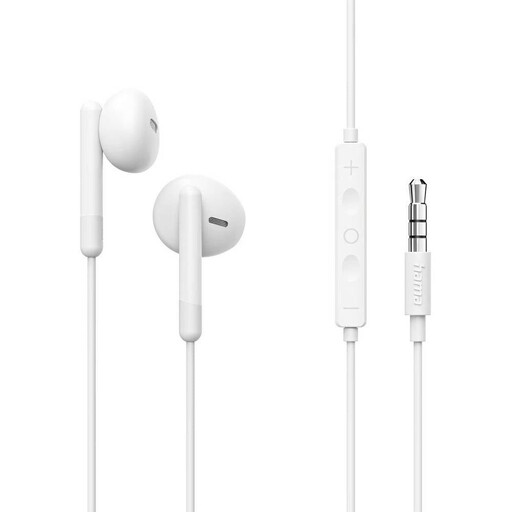
Noble wired earphones, 3.5 mm, white
For a playback device with a compatible 3.5 mm output. The product title also mentions a cable strain relief.
Joybuy
 No image available
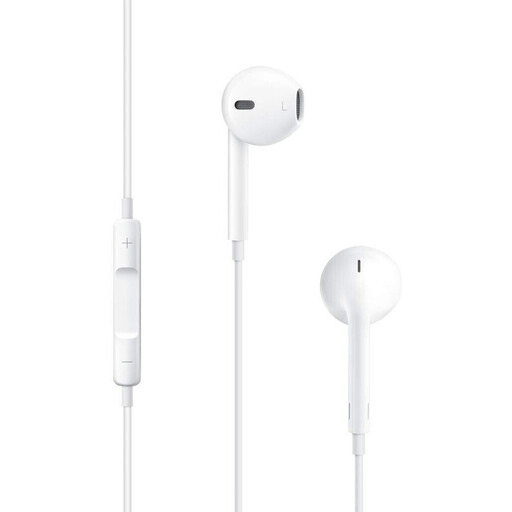
Apple EarPods with 3.5 mm jack
For devices with a compatible 3.5 mm headphone socket. The product name specifies EarPods with a 3.5 mm connection.
Joybuy
 No image available
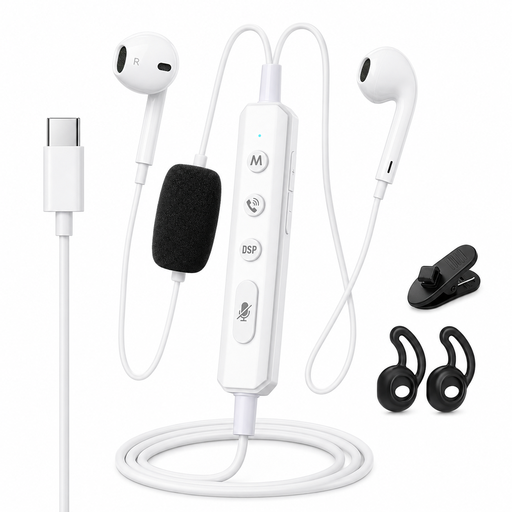
VoxorAI KM08 White, wired
For a wired connection. The product title mentions Type-C connectors and a sound card for real-time monitoring; check compatibility with your microphone and playback device separately. The product description calls the design half-in-ear.
Joybuy
 No image available
Sony MDR-EX110AP, Metallic Black
For a wired backing track through a compatible output. The product title mentions a microphone and smartphone controls.
Joybuy
Frequently asked questions
Can I play a backing track and sing along on a German coach?
Not as a general rule: Section 14(2)(9) of the BOKraft prohibits passengers from using audio playback devices within the scope of the regulation; Section 14(1) also requires passengers to be considerate of others and follow staff instructions. The Federal Ministry of Justice and the Federal Office of Justice list these provisions on the Laws on the Internet website. You’ll need to check separately whether the regulation applies to your particular journey and how your planned use should be treated. Earphones don’t make audible singing inaudible.
Can the in-ear monitor alone mix my voice with the backing track?
No. The earphone alone won’t mix your voice with the backing track. You’ll need a suitable microphone input and a monitoring function that routes both the input signal and playback to the headphone output. Focusrite describes this signal path for compatible interfaces with direct monitoring.
How should I manage volume and announcements?
Choose ear tips that fit well, keep the volume moderate and take listening breaks. The World Health Organization notes that volume, duration and frequency of exposure all affect the risk to your hearing. Pause playback to hear announcements rather than relying on a particular sound-isolation figure.
Can opened in-ear headphones be excluded from the right to cancel?
It depends on the specific product and its seal. Section 312g of the German Civil Code (BGB) provides an exception for sealed goods that are unsuitable for return for health protection or hygiene reasons if the seal has been removed. This doesn’t mean that every unboxed pair of in-ear headphones is automatically excluded from the right to cancel.


