Commuters on noisy train journeys
If train noise is drowning out quieter passages, a well-fitting in-ear monitor can help improve isolation, rather than simply turning up the volume. How much outside noise is reduced also depends on the fit.


If train noise is drowning out your lecture recording, start with a well-fitting, comfortable in-ear monitor and keep the playback volume as low as possible. Then choose based on isolation, fit and connection. Ear tips that seal tightly can block announcements, so pause your recording to listen and remove your earphones if necessary.
If train noise is drowning out quieter passages, a well-fitting in-ear monitor can help improve isolation, rather than simply turning up the volume. How much outside noise is reduced also depends on the fit.
For longer journeys, ear tips and a design that feels comfortable while creating a good seal are important. A choice of sizes or materials gives you options, but cannot guarantee a comfortable fit for everyone.
If you want to stay alert for station or other announcements while listening, plan to take breaks and remove your earphones when needed. A tight passive seal may not let announcements through clearly.
| What you need | What to look for | Who it matters to |
|---|---|---|
| Understanding speech over train noise | Check the fit and choice of ear tips; treat noise-reduction figures as model-specific claims from the manufacturer. | If I want to understand quieter passages over the sound of the train, I’ll prioritise a good fit over turning up the volume. Around 33% of consumers put speech clarity first. |
| A comfortable, secure fit | Check the sizes and materials supplied, as well as whether suitable replacement tips are available. | For long recordings, I want ear tips that feel comfortable and don’t compromise the sound by failing to create a good seal. Around 27% of consumers prioritise long-term comfort. |
| Being able to hear announcements | Make sure the pause control is easy to reach; don’t assume that a snug in-ear fit will let announcements through. | If I want to stay alert for station or other announcements while travelling, I need to be able to pause playback quickly. Around 20% of consumers prioritise being able to hear announcements. |
| Connection and replacement parts | Check that the plug matches your playback device; confirm replacement cable compatibility for the exact model. | If I want to use wired in-ears or replace parts, the connection needs to work with my device. Around 20% of consumers prioritise the connection and replaceable parts. |
Shure states that the SE215 reduces noise by up to 37 dB; Etymotic gives an attenuation figure of 35–42 dB for the ER2SE. These manufacturer claims are not based on a standardised comparison test on a train, and do not establish which model is best for speech clarity.
Use the figures as a rough guide at most, and check whether the tips feel comfortable and create a good seal.
Wired models need a compatible audio output. Without a suitable connection, you won’t be able to plug them in directly.
Check the plug on the specific product against your playback device, and only look into an adapter if you need one.
FiiO notes that not every 0.78-mm 2-pin cable is compatible with the FH11.
Check replacement parts against the full model name and the manufacturer’s compatibility information.
A legal exception may apply to sealed goods that are unsuitable for return for health protection or hygiene reasons, if the seal has been removed after delivery. This does not automatically mean that every opened pair of in-ears is excluded.
Before opening the product, check the information provided for that specific item and its returns policy. Don’t assume either that all opened in-ears are excluded or that you can return them without restriction.
The SE215 is a wired option supplied with a choice of ear tips and a detachable MMCX cable.
The ER2SE is a wired option with passive isolation and a sound profile the manufacturer describes as flat.
The IE 200 is a wired in-ear monitor with a detachable cable and compatible foam tips.
The FH11 is a wired hybrid in-ear monitor with a detachable cable.
This selection includes wired in-ears with USB-C or 3.5-mm connections, as well as wireless in-ears. Check the connection details against your playback device, and consider whether you’ll still be able to hear announcements with the relevant noise-control features enabled.
 No image available
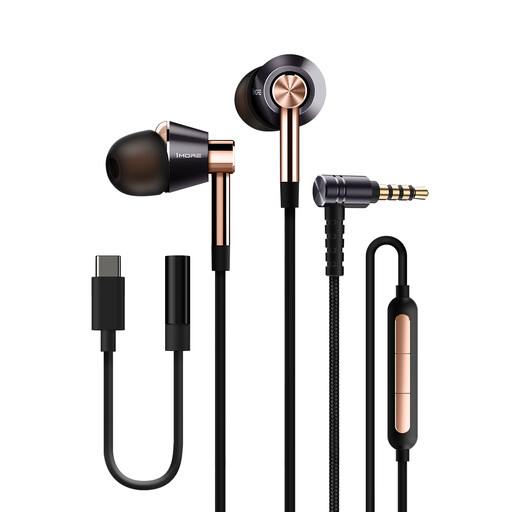
A wired option if you’d like to try different ear tips to find the right fit.
The product description says the box includes six sets of silicone ear tips and three sets of foam tips. It also mentions a noise-isolating design, a microphone and an in-line remote.
 No image available
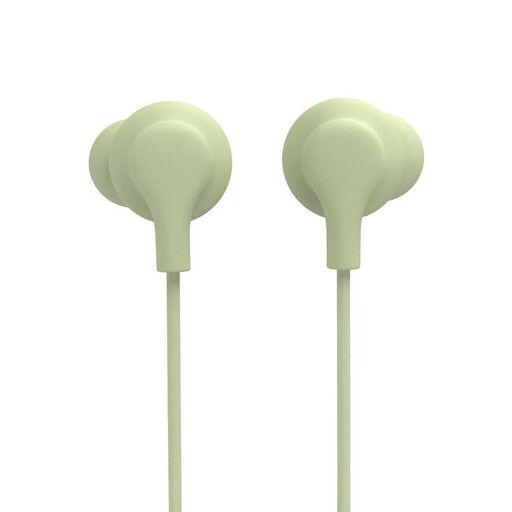
A wired option if your device has a compatible USB-C audio output.
The product details list a built-in microphone and an in-line remote. Before buying, check that your device supports audio over USB-C.
 No image available
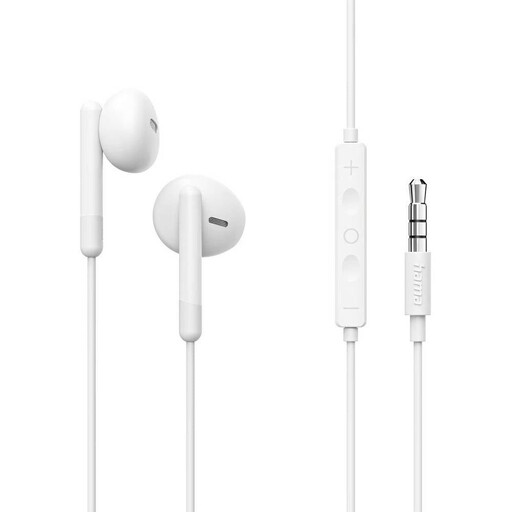
A wired option if your playback device has a compatible 3.5-mm headphone socket.
The product details list a built-in microphone and an in-line remote. A compatible headphone socket is required for a direct connection.
 No image available
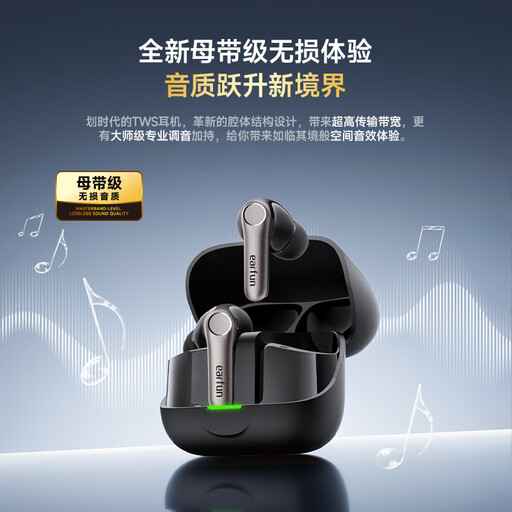
A wireless option if you want to use noise control on train journeys and try different sizes of ear tips.
Features listed include Bluetooth 6.0, adaptive ANC and five sizes, from XS to XL. Check that the wireless connection works with your playback device, and consider whether you’ll be able to hear announcements in good time with noise control enabled.
 No image available
A wired option if your device has a compatible USB-C audio output and you want to switch between the listed noise-control modes.
The product details list three noise-control modes, including Quiet Mode and Aware Mode, as well as silicone tips in three sizes and stability wings in two sizes. Check that your device supports USB-C audio.
No. Keep the volume as low as possible and look for headphones that fit well and reduce noise. The World Health Organization cites up to 40 hours per week at an average of 80 dB, and four hours at 90 dB. These figures describe sound exposure and are not a guaranteed safe setting for any particular device.
Before your journey, check that the ear tips and cable are secure, and store the earphones somewhere clean and dry. Etymotic recommends this care for its earphones; for other models, follow the relevant manufacturer’s instructions.
Distance purchases are generally covered by a right to cancel, usually within 14 days, as explained by the Verbraucherzentrale. Section 312g of the German Civil Code (BGB) provides an exception for certain sealed goods that are unsuitable for return for health or hygiene reasons if the seal has been removed after delivery; this does not automatically exclude every opened pair of in-ears. If a product is faulty, you have statutory rights against the seller; these are separate from any voluntary guarantee.
Deutsche Bahn says that loud music, including music played through headphones, and other noisy activities are not welcome in the ICE quiet carriage. This does not amount to a blanket ban on quietly listening to lecture recordings; make sure that sound leaking out does not disturb anyone.