If you want to listen to long lectures without stopping to recharge, and your device has a compatible audio connection, a well-fitting, passively isolating in-ear monitor could be a good choice. If train noise varies and you want to switch between isolation and awareness of your surroundings to hear announcements, consider wireless ANC in-ears with an ambient mode. Neither option is a substitute for pausing when important announcements are made.
Who are the different types of in-ears suited to?
Train travellers who focus on speech
If you want to make out place names and quieter passages despite train noise, look for a comfortable, secure fit rather than choosing solely on the basis of a sound profile advertised by the manufacturer. The World Health Organization recommends well-fitting or noise-reducing headphones so you don’t need to turn the volume up unnecessarily in a noisy environment. Shure also highlights the effect of fit.
Commuters who need to hear announcements
If you want to hear about stops and travel updates while listening to a lecture, an easily accessible pause function or ambient mode is an important feature to look for. Deutsche Bahn notes that listening at high volume, including through headphones, is not permitted in ICE quiet zones.
Listeners on longer journeys
If you’re travelling for a while, check that the ear tips feel comfortable and that the connection or battery life suits your playback device and journey. Shure and Sennheiser both describe ways to adjust the fit of their respective in-ear models.
What matters when choosing in-ears for train journeys?
Wired, passively isolating in-ears
A good choice if: you want to listen without recharging and your playback device has a suitable connection.
Things to consider: The fit affects passive isolation; cables can get in the way, and outside sounds such as announcements may be muffled.
Wireless ANC in-ears with ambient mode
A good choice if: you want to listen without a cable and switch to an ambient mode when needed.
Things to consider: You’ll need to charge the earbuds; an ambient mode doesn’t guarantee that every announcement will be clear.
| What matters |
What to look for when buying |
Who will value this? |
| Speech clarity amid train noise |
Check the available ear tip sizes and fit; don’t assume that an advertised noise-reduction figure guarantees clear speech on the train. |
If you want to make out quieter passages without turning the volume up too high, speech clarity amid train noise is key. Around 33% of consumers put this first. |
| Hearing announcements |
Check whether you can quickly pause playback or easily switch to an ambient mode. |
If you want to hear about stops and travel updates while listening to a lecture, a quick way to pause or switch modes is important. Around 27% of consumers prioritise being able to hear announcements. |
| Fit on longer journeys |
Try the different ear tip sizes supplied and look for a comfortable fit without unpleasant pressure. |
On longer journeys, you’ll want the ear tips to feel comfortable and not press on your ears. Around 20% of consumers prioritise comfort. |
| Connection and battery life |
Check the audio connection and whether you’ll need an adapter; for wireless models, check the battery life with ANC switched on. |
If you need a compatible connection or want to listen without stopping to recharge, compatibility with your device or battery life matters. Around 20% of consumers prioritise connection or battery life. |
Common misconceptions when buying
-
Assuming an advertised noise-reduction figure guarantees clear speech
Shure states that the SE215 offers up to 37 dB of isolation. The manufacturer also notes that the fit affects the seal, so this figure is not a guaranteed level of noise reduction on a train.
Try different ear tip sizes and listen at a moderate volume rather than assuming a figure guarantees clear speech on your particular journey.
-
Assuming ANC or passive isolation will let every announcement through
Isolating ear tips can muffle announcements. An ambient mode doesn’t guarantee that every announcement will be clear either.
Pause before stops and when important announcements are made; use an ambient mode as an additional option if needed.
-
Overlooking the connection, included adapters or ANC battery life
Wired models need a compatible audio connection or an adapter. For wireless models, the stated battery life depends on the operating mode, so figures are only meaningful when compared under similar conditions.
Check the exact model variant and what’s included for your device. For wireless models, make sure you compare battery life with ANC switched on.
Key brands at a glance
Shure
The SE215 is a wired, passively isolating in-ear monitor for listeners who want to consider different ear tips and a detachable cable.
- Shure lists a fit kit, a 3.5 mm connection and up to 37 dB of isolation. This figure doesn’t guarantee a particular level of noise reduction on a train.
- There’s no ANC or ambient mode for announcements; Shure notes that the fit affects the seal.
Sennheiser
The IE 200 is a wired in-ear monitor for listeners who want to listen without relying on an earbud battery and use a replaceable cable.
- Sennheiser lists different ear tips, adjustable ear hooks and a 3.5 mm plug.
- The IE 200 is described as having neither ANC nor controls; check that you can control playback using your device.
Sony
The WF-C710N and WF-1000XM5 are wireless models with ANC and an ambient mode for changing listening situations.
- Sony quotes up to 8.5 hours of music playback with noise cancelling switched on for the WF-C710N, and up to 8 hours for the WF-1000XM5.
- Both models need to be charged. The battery life figures don’t demonstrate how their ANC compares or how clearly announcements can be heard.
soundcore
The Liberty 4 Pro is a wireless ANC alternative. According to the manufacturer, you can adjust noise cancellation using the charging case.
- Anker, also known as soundcore, lists a touch bar on the charging case and a battery life of 10 hours per charge.
- The battery life figure doesn’t specify an ANC operating mode, so it can’t be directly compared with Sony’s figures for ANC switched on.
Meze Audio
ALBA is a wired in-ear monitor; it’s important to check the exact variant when buying.
- Meze Audio lists a 3.5 mm cable and four ear tip sizes.
- A USB-C adapter is listed for ALBA, but specifically not for ALBA S. Check what’s included with the exact variant you’re buying.
Joybuy products for listening to lectures on the train
This selection includes wired USB-C in-ears and wireless in-ears for listeners who want to switch between isolation and awareness of their surroundings. Check that each model is compatible with your device, and pause when important announcements are made.
 No image available
Bose Noise Cancelling Wired Earbuds (Black)
For you if you want to listen without relying on an earbud battery and switch to awareness of your surroundings when needed. Compatible USB-C devices only; check your playback device’s connection before buying.
View at Joybuy
 No image available
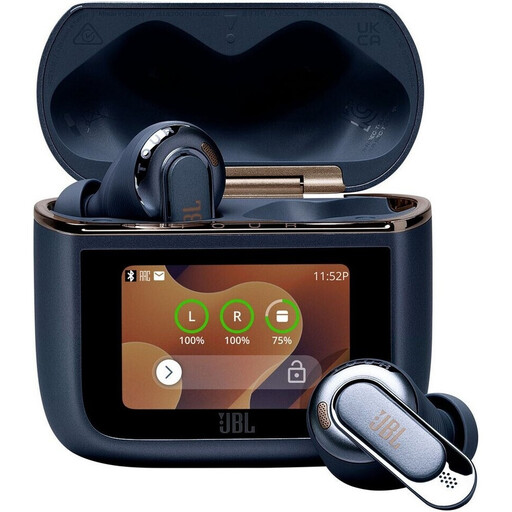
JBL TOUR PRO 3 (Blue)
For you if you want to listen wirelessly and switch between isolation and awareness of your surroundings when needed. Pause when important announcements are made, as an ambient mode doesn’t guarantee that every announcement will be clear.
View at Joybuy
 No image available
Samsung Galaxy Buds4 Pro (Black)
For you if you want to switch between noise cancellation and awareness of your surroundings. Check that the controls are easy for you to reach, and pause when important announcements are made.
View at Joybuy
 No image available
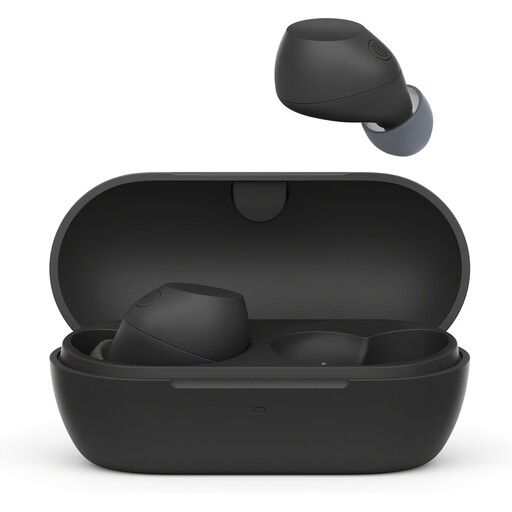
Sony WF-C710N (Black)
For you if you want to listen wirelessly and hear sounds around you when needed. Sony quotes up to 8.5 hours of music playback with noise cancelling switched on for the WF-C710N; pause when important announcements are made.
View at Joybuy
 No image available
Xiaomi Redmi Buds 6 Pro (Purple)
For you if you want to switch between isolation and awareness of your surroundings while listening. Check that the described transparency modes work for you, and pause when important announcements are made.
View at Joybuy
Frequently asked questions
How should I fit and care for ear tips for longer lectures?
Try the supplied sizes at a low volume to start with. For the SE215, Shure recommends a snug fit without inserting the earphone too deeply, and explains how to change the ear tips safely. Follow the instructions for other models.
How loud should I listen on the train?
The World Health Organization recommends keeping the volume low and using well-fitting or noise-reducing headphones rather than turning the volume up to drown out outside noise. Its example of 80 dB for up to 40 hours a week refers to average sound exposure, not a specific volume setting on your device.
Can I listen to a lecture through in-ears in an ICE quiet zone?
Deutsche Bahn says that listening at high volume, including through headphones, is not permitted in ICE quiet zones. Keep the volume low enough not to disturb others. This information applies to ICE quiet zones and is not a general rule for every train operator.
What happens if a product is faulty, and is a manufacturer’s guarantee the same thing?
For a new purchase from a business seller, you generally have a statutory right to claim for faulty goods from the seller for at least two years. A voluntary manufacturer’s guarantee does not replace these rights; its additional terms should be checked separately. The Verbraucherzentrale clearly distinguishes between statutory rights for faulty goods and a voluntary guarantee.
Can I always return in-ears bought online after trying them for fit?
For a distance purchase from a business, you generally have a 14-day right to cancel from the day you receive the goods. Section 312g of the German Civil Code (BGB) provides an exception for certain sealed goods that are unsuitable for return for health protection or hygiene reasons, if the seal has been removed. Whether this exception applies to a particular product cannot be determined from the term “in-ear” alone; check the product information before opening it.


