
Lieferung heute & morgen

Qualitätsgarantie

Willkommens-Angebote freischalten: KOSTENLOSE Lieferung | Bis zu 80 % RABATT | Kostenlose 30-Tage-JoyPlus-Testphase
App herunterladen
An inflatable travel pillow promises comfort on the go, whether you're travelling, camping, or need a spontaneous sleeping solution for guests. But the reality is often different: a pillow that loses air overnight, turns out to be bulkier than expected, or whose inflation becomes a test of patience. As a Joybuy Product Recommendation Officer, I'll help you recognise the common pitfalls and make an informed decision based on facts, not marketing promises.
Many products fail to meet basic requirements. Pay close attention to these three weak points to avoid disappointment:
To separate the wheat from the chaff, you should carefully examine three technical features. These determine durability, comfort, and real-world usability.
The material is the heart of any inflatable product. Budget models often use simple PVC (Polyvinyl Chloride), which can become stiff in the cold and crack at the welded seams. A significantly more robust alternative is fabric with a TPU (Thermoplastic Polyurethane) coating. This material is more flexible, abrasion-resistant, and resilient to temperature fluctuations. It's also often quieter, which is a major advantage for sleeping. A flocked surface provides a more pleasant feel against the skin and prevents slipping.
The method of inflation determines the convenience of use. There are essentially three systems:
Always pay attention to the manufacturer's stated packed dimensions and the total weight, including the transport bag. A good outdoor pillow or camping pillow for backpackers should be no larger than a small water bottle when packed and ideally weigh under 300 grams. For larger solutions like an air mattress for camping, the pack size and an efficient folding mechanism are crucial to make transport easier.
Based on these criteria, we have selected products for various usage scenarios.
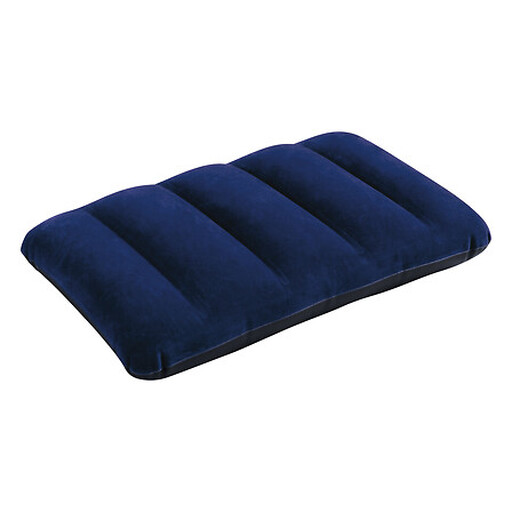
Why it's a good fit: Ideal for those who only occasionally need a pillow for train journeys, flights, or as an emergency guest pillow. The focus is on a minimal purchase price and an extremely small pack size.
The simple but proven safety valve is sufficiently airtight for occasional use. Thanks to its straightforward design, the pack size and weight specifications are realistic and not distorted by complex mechanisms.
Very low purchase price and a waterproof, flocked surface for basic comfort.
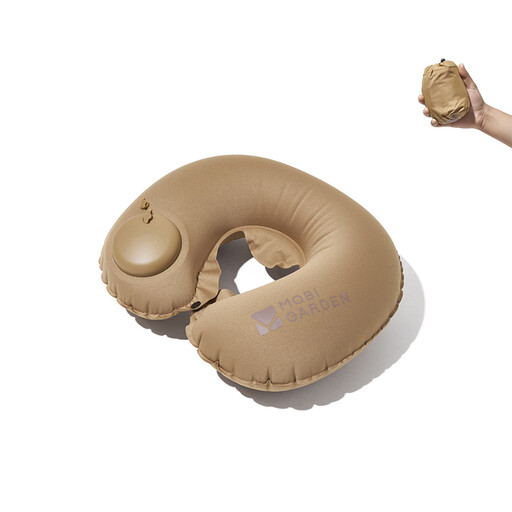
Why it's a good fit: Perfect for commuters and travellers who value speed, hygiene, and neck support. The U-shaped design works as an inflatable neck pillow and is ideal for sleeping upright on a plane, train, or for a break at the office.
The integrated press-to-inflate mechanism solves the problem of unhygienic and tedious inflation. The airtight TPU inner chamber is designed for durability and minimises the typical air loss during extended use.
Hygienic inflation by hand pressure in seconds; ergonomic U-shape for targeted neck support.
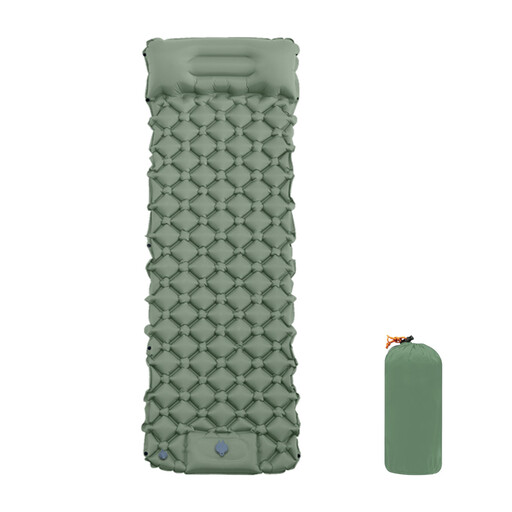
Why it's a good fit: This is more than just a pillow – it's a complete sleeping solution for campers. The 15 cm thickness compensates for uneven ground, while the integrated pillow and foot pump maximise outdoor comfort and convenience.
The integrated foot pump eliminates the need for external devices and solves the problem of strenuous inflation. The tear-resistant 50D nylon with TPU coating is designed for rugged outdoor use, preventing material fatigue and leaks.
Integrated foot pump for rapid inflation and significant thickness for excellent sleeping comfort on uneven ground.
We have compiled a complete, up-to-date list of products that fully meet these strict selection criteria and all applicable safety regulations.
Most inflatable pillows should only be wiped down with a damp cloth and mild soap. Avoid harsh detergents or machine washing, as this can damage the coating and seams. Before folding and storing, ensure the pillow is completely dry to prevent mould growth. Store it in a cool, dry place away from direct sunlight.
The lifespan heavily depends on the material quality, valve construction, and frequency of use. A high-quality pillow made of TPU-coated fabric can last for several years with proper care. Cheaper PVC models often show signs of wear after just one season, especially if they are frequently exposed to temperature fluctuations or mechanical stress.
A minimal loss of pressure over a long period (e.g., 24 hours) can be a physical phenomenon, especially with significant temperature changes. However, a well-made pillow should easily last through the night without significant air loss. If a pillow becomes noticeably softer within a few hours, it indicates a leaky valve or damage to the material. Always check that the valve is securely closed before use.