
Lieferung heute & morgen

Qualitätsgarantie

Willkommens-Angebote freischalten: KOSTENLOSE Lieferung | Bis zu 80 % RABATT | Kostenlose 30-Tage-JoyPlus-Testphase
App herunterladen
As a sea angler, you know that choosing the right lure often determines success or failure, especially when targeting large, deep-water predators. The Inchiku Jig has established itself as a particularly effective sea lure, setting it apart from conventional pilkers and jigs. Its two-part construction mimics an underwater hunting scene, enticing even wary fish to strike.
This article serves as a practical guide. It explains what to look for when making your selection and presents a range of models suitable for typical fishing conditions in European waters, from the Baltic Sea to Norway.
The effectiveness of an Inchiku jig depends on a few crucial factors. The key to a successful catch is correctly matching the weight, colour, and retrieval technique to the prevailing conditions.
The lure's weight must be sufficient to present the jig with control near the bottom, even in strong currents and deep water. A common rule of thumb is to calculate about 1 to 1.5 grams of weight per metre of water depth.
The choice of colour should be based on water clarity, depth, and the preferred prey of the target fish.
The separate "Octopus" or squid imitation is the centrepiece of the Inchiku jig. It pulses during the retrieve and on the drop, creating micro-vibrations that attract predatory fish. The combination of the wobbling jig body (the "hunted fish") and the pursuing octopus (the "hunter") creates a unique stimulus pattern.
Although the Inchiku jig is an excellent vertical jigging lure, its retrieval differs from that of a classic speed jig or a slow jig. The most successful technique is often a very slow retrieve.
Most strikes occur during the sinking phase, as the jig wobbles and the octopus pulses enticingly.
Based on the criteria mentioned, we have compiled a selection of models from the Ecooda Avanzato series. With their different weights, this series covers a wide range of applications.
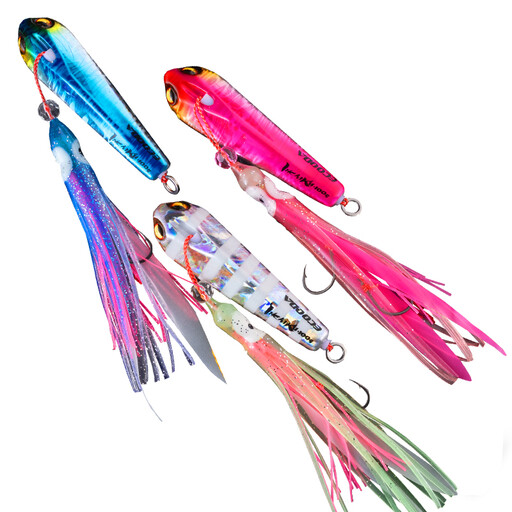
Why This Model Stands Out The Avanzato Jig has an asymmetrical body profile that gives it an irregular, fluttering action on the drop. The octopus part is connected to the main body via a flexible loop, which allows for a very lively and independent action.
Features
Who Is This Weight For? The Inchiku 100g is a versatile cod lure for medium depths. It is an excellent choice for boat fishing in the Baltic and North Seas for cod, coalfish, and pollack in water depths between 50 and 80 metres.
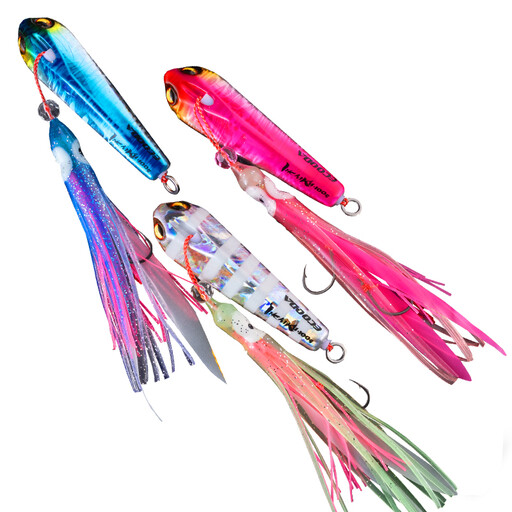
Why This Model Stands Out The lighter 60g version of the Avanzato retains all the key design features but allows for a more subtle presentation in shallower water. The lower weight ensures a slower sink rate, which can be the decisive advantage in some situations.
Features
Who Is This Weight For? This model is perfect for fishing in water depths up to 40 metres or in very light currents. It is excellent for targeting pollack, wrasse, and smaller cod near the coast or over shallower wrecks.
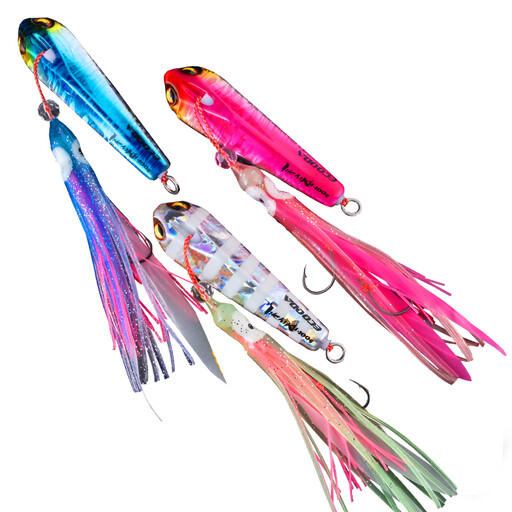
Why This Model Stands Out The 150g version is designed for demanding conditions. It allows you to maintain bottom contact and present the lure effectively even in depths of over 80 metres and with strong drift. The design ensures that the attractive action is maintained even with the higher weight.
Features
For whom is this weight suitable? This jig is the first choice for ambitious jigging in Norway or Iceland. It is designed to outsmart large cod, coalfish, ling, and even halibut in great water depths. Anyone looking to buy an Inchiku jig that can handle extreme conditions will find the right model here.
The models presented here cover many common sea angling scenarios. However, if you are looking for other weights, special colours, or a different type of sea lure such as a slow jig, you will find a wider selection for your specific requirements in our main category.
Discover our entire range of fishing jigs
The main difference lies in the construction and the resulting action. A slow jig is a one-piece metal lure shaped to flutter like a falling leaf as it sinks. An Inchiku jig consists of two parts: a metal body and a separate, soft octopus lure with hooks. Its action is less of a flutter and more of a pulse, which creates a different kind of stimulus.
For jigging in Norway, weights between 150g and 300g are a good starting point. The exact choice depends on the depth, the strength of the current, and the boat's drift speed. It's advisable to have a selection of different weights on hand to be able to react to changing conditions.
The classic retrieve is slow and methodical. Let the lure sink to the bottom. Then lift it with 2-3 slow, steady turns of the reel handle. Pause for a few seconds, allowing the lure to sink again on a tight line. Repeat this process. The strikes almost always come on the drop, as the lure wobbles.