
Lieferung heute & morgen

Qualitätsgarantie

Willkommens-Angebote freischalten: KOSTENLOSE Lieferung | Bis zu 80 % RABATT | Kostenlose 30-Tage-JoyPlus-Testphase
App herunterladen
An indoor climbing frame offers children a valuable opportunity to satisfy their natural urge to move, develop motor skills, and stay active even during bad weather. However, the market is vast, and not every model lives up to its promises. Before making a decision, it's crucial to understand the common pitfalls that can lead to a poor investment.
This guide highlights the crucial criteria for a safe and durable indoor play structure, helping you make an informed choice.
Many products on the market look appealing at first glance but reveal their weaknesses only through daily use. Pay close attention to these three points to avoid disappointment:
To distinguish high-quality options from the rest, you should carefully examine three technical aspects. These define the safety, durability, and play value of an indoor climbing frame.
The choice of material is fundamental to stability and safety. A high-quality indoor wooden play tower is typically made from solid wood such as beech or birch. Unlike MDF or particleboard, solid wood is significantly more robust, durable, and offers greater stability.
Look for the following features:
The structure must be able to withstand the weight and dynamic forces of a playing child.
A good indoor play structure grows with your child and encourages creativity. A Montessori climbing frame is often designed based on the principle of open-ended play.
Based on the criteria mentioned, we have identified some products that are suitable for different needs and age groups.
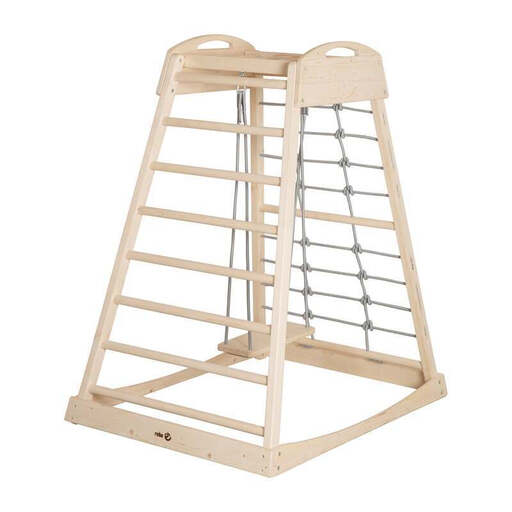
Why It's a Great Fit: Ideal for families looking for a complete and versatile play set. It combines climbing ropes, gymnastic rings, and a solid wood swing, comprehensively promoting motor development in line with the Montessori approach.
The solid natural wood construction ensures high stability. The diverse, interchangeable elements (swing, rings) prevent the problem of a lack of adaptability and offer long-lasting play appeal.
Multifunctional design with a swing, ropes, and rings. High load capacity of up to 70 kg, ensuring a long lifespan.
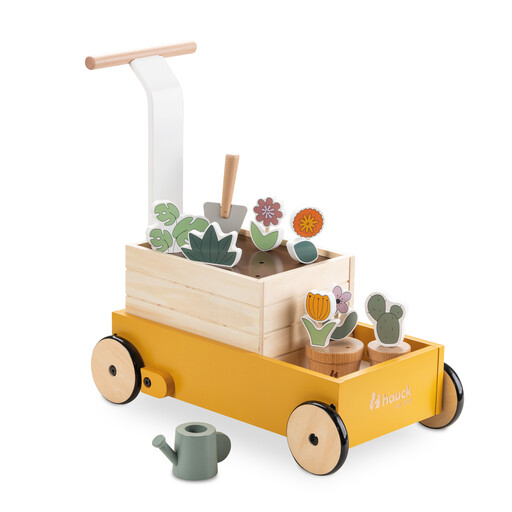
Why It's a Great Fit: A great alternative for younger children from 12 months who are not yet ready for a full-fledged climbing tower. It safely supports their first steps while also promoting fine motor skills through integrated play elements.
The braking system for adjusting wheel speed addresses the stability issue by preventing it from rolling away uncontrollably. Its construction from FSC-certified wood bypasses the pitfall of inferior materials.
2-in-1 function as a baby walker and activity centre. Adjustable wheel speed for increased safety during first steps.
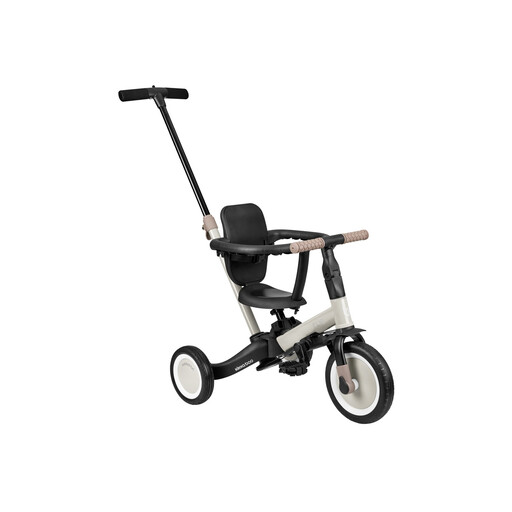
Why It's a Great Fit: For parents seeking a versatile indoor and outdoor activity toy that grows with their child over several years. It's an alternative to static climbing and promotes balance and coordination in a different way.
The 5-in-1 design ensures long-term use from ages 1 to 5, thus avoiding the pitfall of a lack of adaptability. The robust steel frame provides the necessary stability in every configuration.
Extremely adaptable 5-in-1 design that grows with the child. Suitable for use both indoors and outdoors.
If you'd like to compare more models that have been vetted for safety and educational value, you can find a comprehensive selection here.
1. From what age is a climbing frame for a child's room a good idea? A play gym for a child's room from age 2 is generally a good guideline. At this age, children have usually developed the basic motor skills to start climbing safely. It is important that the child can already walk and grip steadily. Use should always be supervised by an adult, especially initially and depending on the child's developmental stage.
2. How much space does an indoor play tower require? The space required depends on the specific model. As a rule of thumb, you should plan for a clear safety zone of at least 1.5 to 2 metres around the structure to prevent falls onto furniture or walls. Measure the available space in the child's room or play area accurately and compare it with the product dimensions plus the safety zone. A soft play mat underneath the structure is also recommended.
3. Does an indoor climbing frame need to be fixed to the wall? Many indoor climbing frames are designed as freestanding structures and do not require wall mounting if assembled correctly. However, for maximum stability, especially with very active children or on uneven floors, some manufacturers recommend additional anchoring to the wall. Always check the specific instructions and recommendations from the manufacturer in the provided manual.