
Lieferung heute & morgen

Qualitätsgarantie

Willkommens-Angebote freischalten: KOSTENLOSE Lieferung | Bis zu 80 % RABATT | Kostenlose 30-Tage-JoyPlus-Testphase
App herunterladen
An indoor climbing frame for children can support movement, balance and independent play in everyday life. However, climbing triangles, soft-play climbing sets and wooden climbing towers differ considerably in terms of recommended age, space requirements and safety considerations. If you focus only on colours, accessories or a lengthy product description, it is easy to overlook important details.
“From 24 months” or “from 3 months” describes the intended age range, but it does not automatically mean that the product is suitable for every situation. Depending on their motor skills, height and way of playing, children may move around with different levels of confidence. Direct supervision and a suitable environment remain essential, particularly with climbing towers, swings and taller structures.
Also look out for conflicting information. For example, a product may be described as suitable “from 24 months”, while the safety instructions state that it should only be used from 36 months. The manufacturer’s specific warnings are the decisive point.
A non-slip underside can improve grip on the floor. However, it does not automatically prevent a freestanding wooden frame from tipping over during dynamic movements. Climbing equipment needs an even, stable and sufficiently clear surface. With taller models, keep a safe distance from windows, radiators, stairs and furniture. A suitable play mat can provide additional cushioning, but it does not replace checking the stability of the structure.
A ball pool without balls, a climbing triangle without a slide board or a baby play arch without separately available attachments are not unusual exceptions. Before buying, check:
For babies from around 3 months, a low baby climbing arch or baby play arch with opportunities to reach, grip and explore is generally more suitable. A Pikler triangle, children’s climbing tower or more complex Montessori climbing frame is usually intended for older children. The information on the product page and in the instructions should always take priority.
The maximum load capacity is also important. It does not necessarily apply to every type of dynamic movement. Swings and vigorous climbing can create additional forces. The permitted weight must therefore not be exceeded. In nurseries and childminding settings, regular visual checks and clear rules on simultaneous use are also important.
With wooden models, check for rounded edges, secure connections and a stable base. For foam climbing blocks, practical criteria include a robust foam structure, concealed zips and secure connections. Removable, washable covers make it easier to maintain hygiene in family homes and educational settings.
The markings EN 71-1, EN 71-2 and EN 71-3 cover, among other things, mechanical and physical properties, flammability and the migration of certain elements. They are an important point to check, but do not replace inspections for damage, loose parts or improper use.
Measure the available area before ordering. A wooden climbing frame needs additional safety clearance around the structure. A soft-play climbing set is lower, but several blocks can take up a larger area of floor space. Modular foam elements are often easier to rearrange in smaller homes. By contrast, an indoor children’s play area in an institution requires a well-planned, permanently secured play space.
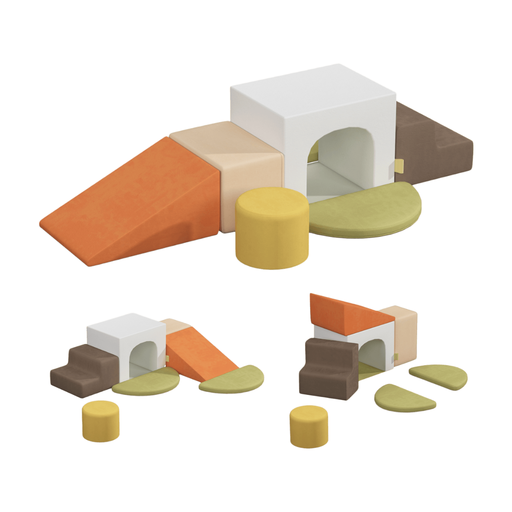
Why this product suits this profile: Seven soft blocks can be arranged flexibly for climbing, crawling and building in the home.
The product description specifies a non-slip underside, concealed zips and washable covers. The set is delivered ready assembled.
High-density polyurethane foam, seven elements and EN71-1, EN71-2 and EN71-3 according to the product information.
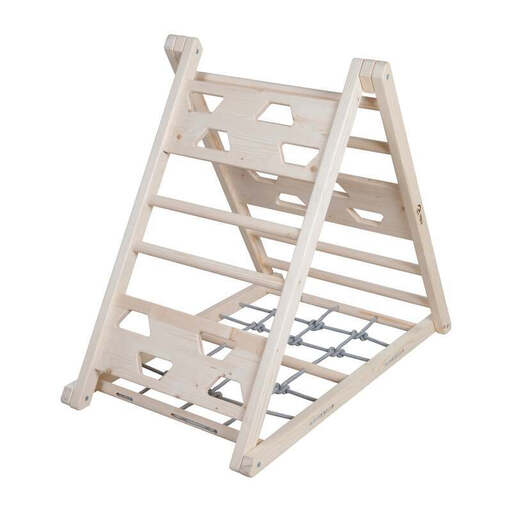
Why this product suits this profile: The three-sided wooden system features rungs, a climbing rope and grip surfaces for a range of movements.
The age and load information is clearly stated: from 24 months in the product name, with a warning against use by children under 36 months.
Dimensions of 85 × 63,5 × 97,5 cm, natural wood and a stated maximum load capacity of 50 kg.
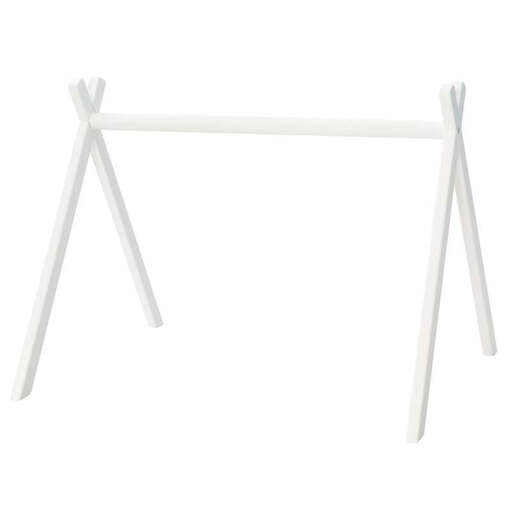
Why this product suits this profile: According to the product information, the low wooden play arch is suitable for babies from 3 months and encourages reaching, gripping and exploration.
The requirement for a flat surface, the need for supervision and checks for loose or damaged parts are all explicitly stated.
Dimensions of 52 × 70 × 50,5 cm, painted wood and wipe-clean surfaces.

Why this product suits this profile: The modular set combines climbing and crawling blocks with a ball-pool base, making it suitable for versatile indoor play areas.
Washable covers, non-slip undersides and concealed zips make everyday use easier. Balls are not included.
Modular design, high-density foam and EN71-1, EN71-2 and EN71-3 according to the product information.
We have put together a complete, regularly updated list of products that fully meet these strict selection criteria and the safety regulations applicable in the EU.
Wooden models should be assembled on an even surface and checked regularly for loose screws, damaged ropes or cracks. According to the product information, the roba Indoor Wooden Play Tower measures 127,5 × 83 × 110,5 cm and has a maximum load capacity of 70 kg. The model is fitted with climbing ropes, gymnastic rings and a removable wooden swing. At the same time, the manufacturer specifies direct supervision, use by one child at a time and a minimum age of 36 months.
Foam models are often delivered vacuum-packed. Before first use, they should be given the stated amount of time to expand. For the BanaSuper Soft Play Set, this is specified as 24 to 48 hours. Covers should be washed according to the care instructions and dried completely. Regardless of the material, the rule is the same: if there is any damage, loose connection or unusual wear, stop using the motor-skills toy.
For babies from around 3 months, a low baby play arch or baby climbing arch with opportunities to reach and grip may be more suitable. A climbing triangle or taller wooden frame is intended for older children. The age recommendation, warnings and direct supervision should always be considered together.
As well as the product’s external dimensions, you need to allow enough room for movement and falls. With a children’s climbing tower, windows, stairs, radiators and hard furniture should not be immediately adjacent. With soft-play elements, the required floor space depends on the particular arrangement.
The useful life depends on the material, level of use, care and the child’s growth. Check seams, zips, screws, ropes, rungs and foam regularly. An age or weight recommendation remains binding even when the product appears to be in good condition.