
Lieferung heute & morgen

Qualitätsgarantie

Willkommens-Angebote freischalten: KOSTENLOSE Lieferung | Bis zu 80 % RABATT | Kostenlose 30-Tage-JoyPlus-Testphase
App herunterladen
Indoor climbing toys for children can provide varied opportunities for physical activity in the bedroom, nursery or pre-school. At the same time, foam sets, Pikler triangles and indoor climbing frames for children differ considerably in terms of recommended age, space requirements and safety considerations.
Anyone focusing only on large product images or terms such as “Montessori” may overlook important details. Three common purchasing problems occur particularly often:
The right choice therefore depends less on the number of features than on clear product information and the intended area of use.
The age recommendation is a safety parameter, not merely a guideline. With climbing toys, you should also check whether direct supervision is required and whether only one child may play at a time.
For wooden products, maximum load capacity, the base area and assembly are also crucial. A high stated load capacity does not automatically mean that vigorous rocking or jumping is permitted without restrictions. The surface should be level and offer good grip. A play mat or carpet can provide additional protection in the impact area, but does not replace supervision.
The following information is useful for foam climbing blocks and XXL soft building blocks for children:
A reference to a standard does not make a toy risk-free. Before every use, check the seams, covers, connections and foam parts for damage.
With a Montessori climbing triangle or Pikler triangle, rounded wooden edges, secure screw connections and a stable base are particularly important. Terms such as “Montessori” or “Pikler” describe an educational concept, but are not a substitute for specific safety information.
Measure the intended play area, including a safety clearance from walls, windows, radiators and furniture. An indoor climbing frame for children requires more free space than a single crawling arch.
Removable and washable covers are practical for everyday family life. With a soft play set for babies and washable soft building blocks, you should also check whether only the block covers or the ball-pit insert can be machine-washed too.
Allow time for vacuum-packed foam parts to expand. According to the product information, the BanaSuper sets featured here require up to 24 or 48 hours respectively to regain their intended shape.
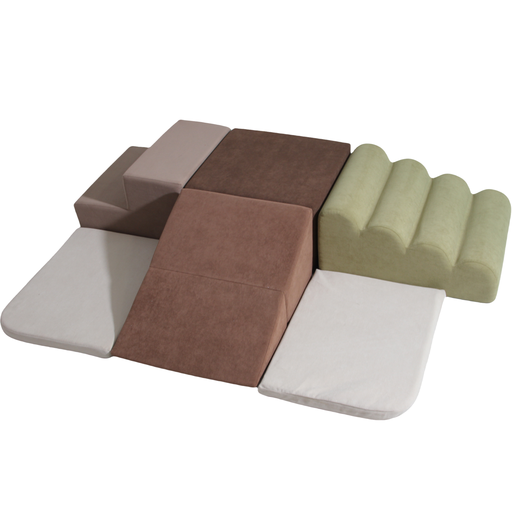
Why this product suits this profile: This 2-in-1 set combines climbing blocks with a ball-pit base, making it suitable for families looking for several play options in one product. Balls are not included.
The product contents clearly state that play balls must be purchased separately. Removable, machine-washable covers make cleaning easier.
A combination of foam climbing elements and a ball-pit base; non-slip undersides and concealed zips according to the product description.
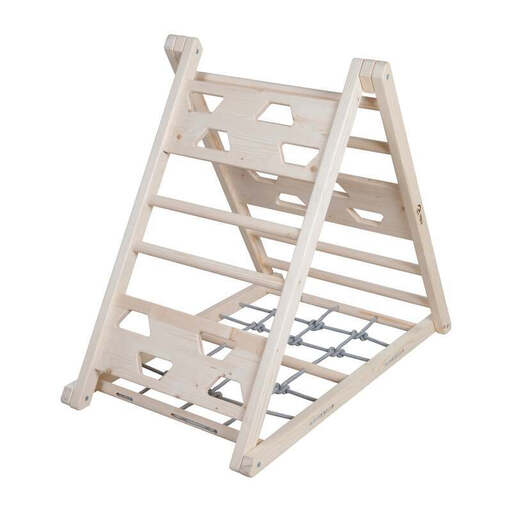
Why this product suits this profile: This wooden model features rungs, a climbing rope and grippable surfaces. It is aimed at families who prefer a compact, permanently assembled movement feature.
The product information states dimensions of 85 × 63.5 × 97.5 cm, a maximum load capacity of 50 kg and the need to check the screw connections regularly.
Three differently designed climbing sides; compatible with a roba slide and gym mat, available separately.
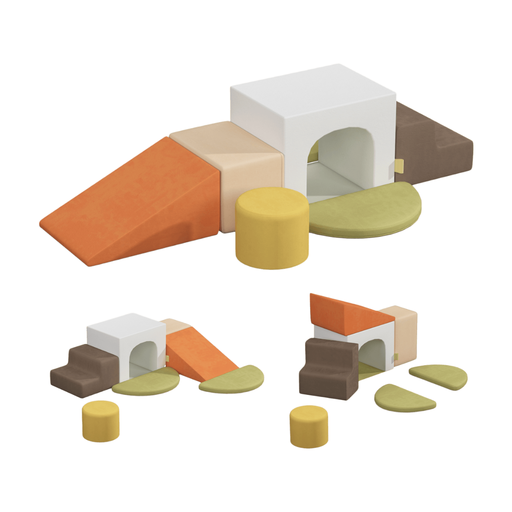
Why this product suits this profile: The seven foam elements can be used to create crawling and climbing toys, tunnels, obstacle courses and your own constructions.
According to the product information, the covers are removable and machine-washable. Hook-and-loop fastenings and a non-slip underside support flexible set-ups.
Seven elements for versatile play configurations; EN71-1, EN71-2 and EN71-3 are mentioned in the product description.
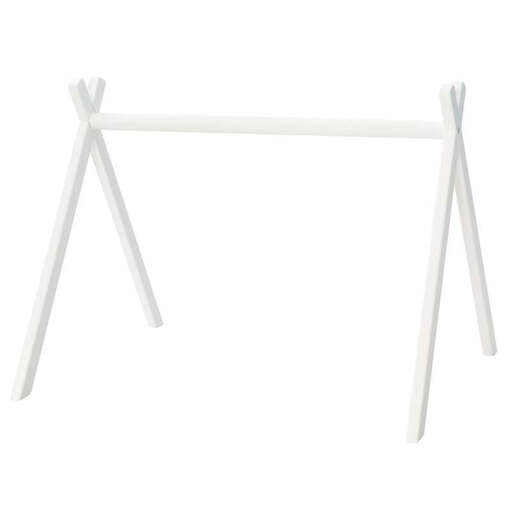
Why this product suits this profile: The play arch is intended for babies from 3 months and takes up comparatively little space at 52 × 70 × 50.5 cm.
This is a play arch rather than a climbing frame intended for unrestricted use. It must be used on a level surface and under supervision.
Wipe-clean painted wooden surfaces; suitable for grasping, touching and exploring.
We have put together a complete, regularly updated list of products that fully meet these strict selection criteria and the safety regulations applicable in the EU.
Before placing your order, we recommend this quick check:
That depends on the type of product. According to the product information, a play arch may be suitable from 3 months, while many climbing triangles and climbing towers are only offered from 24 months. The specific warnings remain decisive. Direct supervision is required wherever there is a risk of falling or tipping.
In addition to the product dimensions, you should allow extra free space around the equipment. Windows, radiators, stairs and furniture with sharp edges should not be immediately next to the play area. A level, soft surface is advisable for wooden climbing equipment.
Their service life depends on use, storage and care. Removable, washable covers can make regular cleaning easier. Foam parts should no longer be used if they have cracks, permanent deformation or loose connections.