
Lieferung heute & morgen

Qualitätsgarantie

Willkommens-Angebote freischalten: KOSTENLOSE Lieferung | Bis zu 80 % RABATT | Kostenlose 30-Tage-JoyPlus-Testphase
App herunterladen
Indoor climbing and movement toys for children can be a useful addition to a child’s bedroom, nursery or playroom. However, eye-catching product images and general promises do not automatically lead to the right buying decision. Clear information about age suitability, materials, stability, cleaning and the space available is what really matters.
The description “for toddlers” is not enough guidance. With climbing products, the specific age recommendation in the product description and safety labelling is what counts. A toy advertised for children aged 24 months and over may additionally exclude use by children under 36 months in its warnings. These details should be checked against each other before purchase.
XXL foam building blocks for children and soft play sets often look more compact in product photos than they are when assembled. Before buying, measure the footprint, movement area and storage space required. Even a soft play system needs sufficient clearance from radiators, windows, stairs and furniture edges.
A statement such as “certified” does not replace checking the specific standard details. For foam building blocks, for example, EN71-1, EN71-2 and EN71-3 are relevant parts of European toy safety requirements. Buyers should also look for non-slip undersides, concealed zips, stable connections and regular checks of the materials.
For babies and younger toddlers, lower elements such as a baby play gym or soft, freely positionable blocks are generally more suitable. A Pikler triangle or indoor climbing frame places greater demands on balance and supervision. The age recommendation is only a starting point: developmental stage, mobility and surroundings must also be taken into account.
For settings such as nurseries and day-care centres, group size, cleaning intervals and simultaneous use by several children are also important. If a product is intended for just one child, this should be taken into account in the daily routine.
With a soft play set, parents and childcare providers should pay attention to the composition. High-density foam can provide a shape-retaining base; however, the precise firmness and shape stability depend on the individual product. Removable, machine-washable covers make everyday hygiene easier.
The product information should clearly state whether the set is designed in accordance with EN71-1, EN71-2 and EN71-3 and the Toy Safety Directive 2009/48/EC. Such information relates to defined safety requirements and should not be confused with medical or therapeutic claims.
Wooden products such as a children’s climbing triangle require a level, stable surface and generally need to be assembled. A play mat or rug can make the surface softer, but it does not replace supervision. Screws, ropes, rings, hook-and-loop fasteners and cover zips should be checked regularly.
Foam sets are sometimes delivered vacuum-packed. Depending on the product, the blocks need around 24 to 48 hours to regain their intended shape. Only then should you assess whether all the elements have fully expanded. With a children’s ball pit, it is also important to check whether balls are included in the delivery. For the set described, they are expressly sold separately.
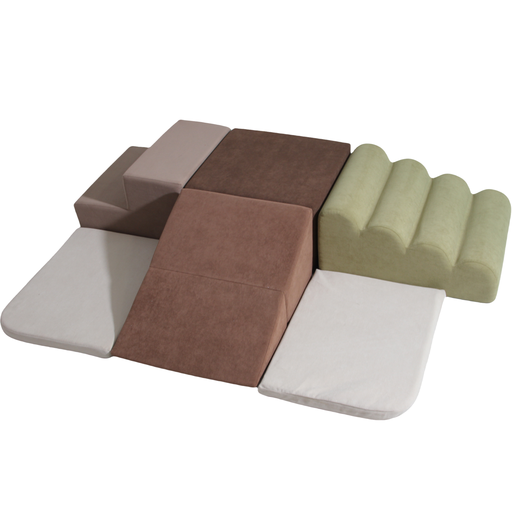
Why this product suits this profile: The 2-in-1 concept combines soft climbing and crawling elements with a ball-pit base. The balls are not included and must be purchased separately.
The product description mentions non-slip undersides, concealed zips and machine-washable covers. This makes key points to check before purchase clear and easy to verify.
Multiple ways to play, removable covers and delivery in compact packaging.
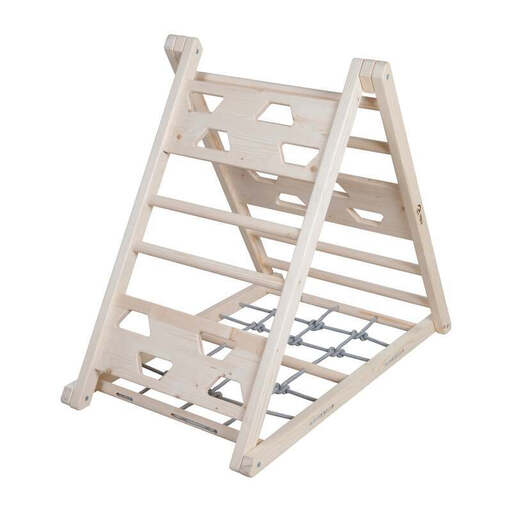
Why this product suits this profile: The wooden model offers three sides with rungs, a climbing rope and easy-to-grip surfaces. According to the product information, it is intended for children aged 24 months and over; the safety warning excludes use by children under 36 months.
The age guidance, maximum load of 50 kg and requirement for a level surface are specified. Nevertheless, the connections should be checked regularly.
Three different climbing surfaces, natural wood and compatibility with a separately available roba slide or gymnastics mat.
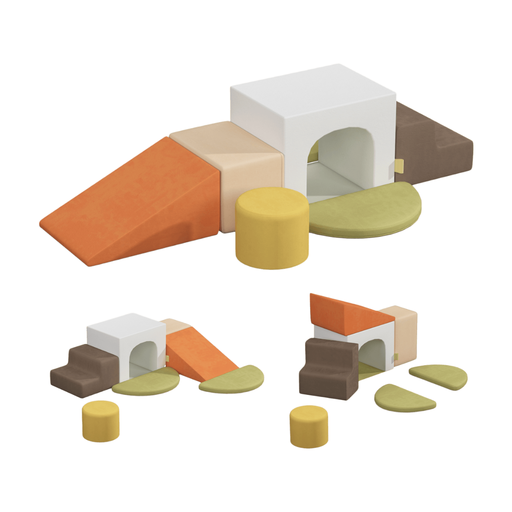
Why this product suits this profile: The seven foam elements can be combined to create crawling routes, obstacle courses or different constructions. The set is intended for homes, nurseries and playrooms.
The information lists EN71-1, EN71-2 and EN71-3, concealed zips, hook-and-loop fasteners and washable covers. After unpacking, allow up to 48 hours for the blocks to expand.
Seven combinable elements, a non-slip underside and removable covers for regular cleaning.
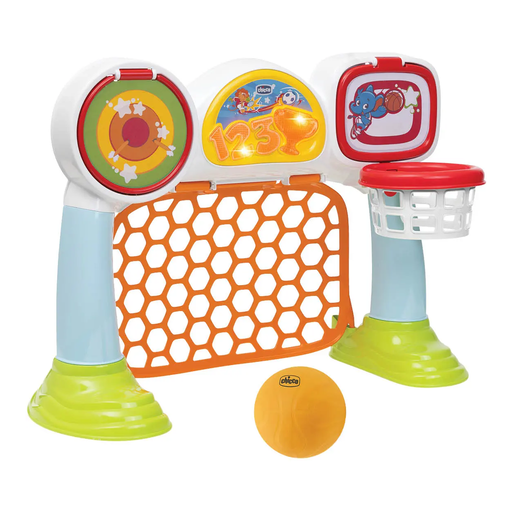
Why this product suits this profile: This electronic sports toy for children combines football, basketball and target throwing for children aged 2 to 5. It is suitable for families looking for guided movement games alongside climbing elements.
The product details specify the recommended age, an included soft plastic ball and battery operation using two AA batteries. Electronic parts must not be immersed in water.
Three play modes, sensors to detect successful hits and use indoors and outdoors according to the product description.
We have put together a complete, regularly updated list of products that fully meet these strict selection criteria and the safety regulations applicable in the EU.
A quick checklist is useful before placing your order:
Direct supervision should be particularly consistent for children under three. Even soft materials cannot prevent every injury caused by missteps or falls. Damaged parts, loose seams, open fasteners or unstable connections should no longer be used.
This depends on the child’s developmental stage and the space available. Soft foam building blocks allow for low-level climbing, crawling and building. A climbing triangle or indoor climbing frame requires a level surface and constant supervision. The manufacturer’s information and warnings are decisive.
In addition to the set’s external dimensions, plan a clear area around it. To allow for climbing, crawling and sliding, the toy should not be placed directly next to windows, radiators, stairs or hard furniture. In homes with limited space, stackable or repositionable foam building blocks are often easier to incorporate into everyday life than a permanently assembled wooden play frame.
Removable textile covers should be washed according to the manufacturer’s instructions. Wooden surfaces can usually be cleaned with a dry or slightly damp cloth; harsh cleaning products may damage the surface. Electronic toys should only be wiped externally. Before every use, check connections, seams, ropes and surfaces for signs of damage.