
Lieferung heute & morgen

Qualitätsgarantie

Willkommens-Angebote freischalten: KOSTENLOSE Lieferung | Bis zu 80 % RABATT | Kostenlose 30-Tage-JoyPlus-Testphase
App herunterladen
Indoor LED lighting can brighten worktops, hallways, shelves and living spaces, while adding decorative touches at the same time. But the number of LEDs or the advertised range of colours isn’t all that matters. Many disappointing purchases are down to incorrect measurements, unclear power requirements or using a product somewhere it isn’t technically designed for.
A 5 m LED strip won’t necessarily fit behind every piece of furniture. Before you buy, measure the length you need and check whether you’ll need to account for bends, connectors or gaps. For self-adhesive LED strips, the surface needs to be clean, dry and smooth enough. Dust, grease or a rough wall can affect how well the strip sticks.
Depending on the model, a dimmable LED strip may be controlled by remote, switch, app or a separate dimmer. These systems aren’t necessarily compatible with one another. So check whether the control method you want is included. For an LED strip with remote control, make sure the distance between the receiver and the remote is suitable for where you plan to use it.
Some LED strips are specifically designed for dry indoor spaces only. For example, the IP20 rating indicates protection against solid foreign objects, but not against water. This type of strip is suitable for a living room, bedroom, hallway or home bar, but not for damp areas unless it’s specifically rated for that use. Also look for clear product markings, power supply details and the manufacturer’s instructions.
A 5050 SMD LED strip uses LED components of a particular size. However, the designation alone doesn’t tell you how bright the lighting will look in a room. You’ll also need to consider the number of LEDs per metre, power consumption and where you plan to install it.
A 5 m RGB LED strip can display colours such as red, green and blue, as well as mixed colours. For an even lighting effect, check how many LEDs there are per metre and whether the strip will be visible or concealed behind furniture for indirect lighting.
With 24 V systems, a power supply converts the mains voltage to the operating voltage required by the LED strip. Details such as 100–240 V AC input on the adapter and 24 V DC operating voltage should match the items included. Make sure there’s enough room for the power supply and connection cable. A cable that’s too short can make installation unnecessarily difficult.
Battery-powered options don’t need a fixed mains connection at the installation point. However, you’ll need to consider the battery compartment, battery replacement and the position of the motion sensor.
An LED strip with a motion sensor is particularly useful in hallways, on staircases, inside cupboards or as a night-time guide light. Check whether the sensor responds to movement alone or also detects ambient light. For remote controls, the available functions matter: colour selection, brightness levels, operating modes and switching on and off should all suit the way you plan to use the strip.
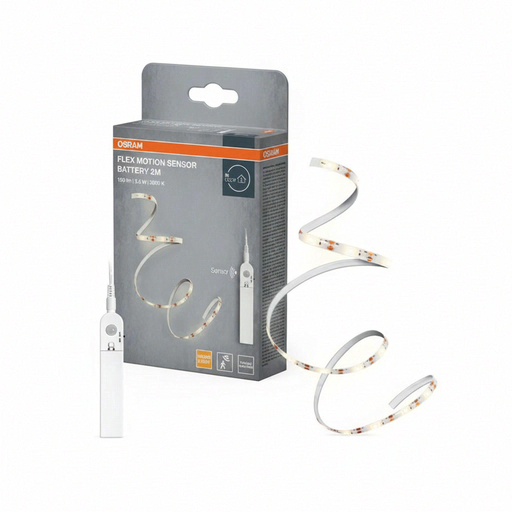
Why it suits this type of user: The 2 m OSRAM FLEX MOTION SENSOR BATTERY solution is designed to provide automatic lighting in places where you don’t want a permanent mains connection, such as a hallway or cupboard.
The motion sensor reduces the need to leave the light on continuously. Its stated 2 m length makes it easier to plan for shorter mounting areas.
2 m LED strip, white light and built-in motion sensor; battery-powered design.
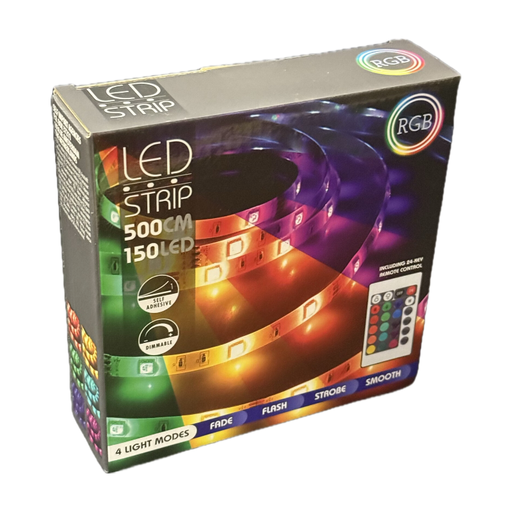
Why it suits this type of user: This set combines a 5 m RGB strip with an infrared remote control and power supply. It’s ideal for decorative LED lighting behind a TV, under shelves or along a bar.
The specifications state the length, LED type, operating voltage, protection rating and what’s included. With an IP20 rating, it’s clear that the strip is intended for dry indoor spaces.
5050 SMD with 150 LEDs over 5 m, RGB colours, dimmable brightness, 24 V adapter and infrared remote control.
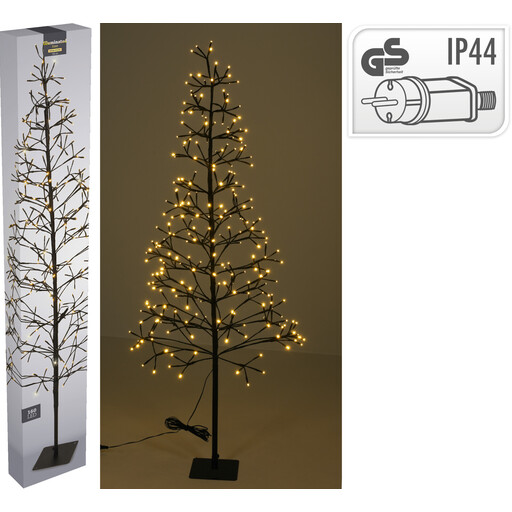
Why it suits this type of user: This 150 cm illuminated decorative tree is designed for households looking to add a freestanding festive New Year decoration to their living room, hallway or window.
Its fixed height and stated total of 280 integrated LED lights make it easier to plan where to place it. Before buying, check the available floor space, stability and access to a power socket.
150 cm tall, 280 integrated LEDs, wooden structure and designed as decorative indoor lighting.
We’ve put together a complete, regularly updated list of products that meet these strict selection criteria and fully comply with the safety regulations in force in the EU.
Clean the surface before applying a self-adhesive LED strip. Only cut it at the marked points and avoid tight bends. Keep power supplies uncovered and don’t place textiles over them. For indoor LED string lights, follow the manufacturer’s guidance on power supply and where they can be used.
Running costs depend mainly on power consumption and how many hours the lights are used each day. For a rough estimate, use:
Power in watts × operating hours ÷ 1,000 = kilowatt hours
Multiply this figure by your current electricity rate. A dimmable LED strip may use less energy at a lower brightness, provided its technical design allows for this. Check the product data sheet for actual power consumption.
Lifespan depends on LED quality, heat dissipation, the power supply, operating time and ambient temperature. Any general figure won’t apply to every product. Check the lifespan stated by the manufacturer and avoid installing the lights somewhere heat can’t escape.
No. An RGB LED strip, such as a 24 V system, needs the correct power supply and may also need a controller. Never connect mains voltage directly to the LED strip. Before installation, check whether the adapter, remote control and connection components are included.
It’s particularly useful in hallways, cupboards, on stair landings or in other areas where you only need light when movement is detected. For kitchen worktops or continuous room lighting, a separately switched light bar may be more suitable. Key factors include the mounting height, detection range and available power supply.