
Lieferung heute & morgen

Qualitätsgarantie

Willkommens-Angebote freischalten: KOSTENLOSE Lieferung | Bis zu 80 % RABATT | Kostenlose 30-Tage-JoyPlus-Testphase
App herunterladen
Indoor LED lights should brighten your space, take up little room and suit the room they’re in. In practice, unclear product information, unsuitable sensors or awkward installation can often lead to the wrong purchase. So whether you’re looking for an LED motion-sensor light, an under-cabinet light for the kitchen or a dimmable floor lamp, don’t focus on design alone.
Wattage mainly indicates energy consumption, not the amount of light a product actually gives off. Lumens are a more useful measure when comparing brightness. A small cupboard light may be enough to help you find your way, while a floor lamp for reading or working will need to provide considerably more light.
If the lumen rating is missing, it’s harder to make an objective comparison. The number of LED chips alone doesn’t tell you much about how well a light will illuminate a space, either.
A colour temperature of around 2,800 to 3,200 Kelvin is generally described as warm white and can work well in a bedroom or living room. More neutral light, at around 4,500 to 5,000 Kelvin, is better suited to balanced task lighting. Cool white light at around 6,500 to 7,000 Kelvin can be used in cupboards, pantries or wherever you need work surfaces to be clearly visible.
A light with only one colour temperature is therefore less versatile. A rechargeable LED light with several colour temperatures makes it easier to adjust the lighting to suit the time of day and how you’re using the space.
Adhesive fixings are convenient, but they need a clean, dry and preferably smooth surface. They may not hold as well on dusty, rough or damp surfaces. With permanently installed lights, you’ll need to consider the connection, drilling distances and existing electrical installation.
For battery-powered lights, check how they charge, which USB power source is suitable and whether the battery will last long enough for your needs. Wireless cupboard lighting is flexible, but it needs to be recharged regularly.
Three details matter when choosing a light:
For an under-cabinet kitchen light, it’s important to illuminate the worktop evenly. In a hallway or wardrobe, an LED motion-sensor light may be enough, switching on only when it detects movement.
A PIR sensor responds to changes in the heat radiation from moving people. Its range and detection angle should suit the installation location. For the cupboard lights described here, the stated detection range is 3 to 5 metres.
A sensor night light shouldn’t stay on longer than necessary. Look for automatic shut-off, an adjustable lighting duration or several brightness settings. In living and work areas, stepless dimming is more convenient than a simple on/off switch.
Measure the space before you place your order. Slim lights are particularly well suited to the sides of cupboards, shelves or the space beneath wall cabinets. Dimensions such as 200 × 38 × 10 millimetres or 300 × 38 × 10 millimetres make it easier to plan where a light will fit.
For battery-powered lights, check the guidance on chargers, voltage and care. The USB lights mentioned here charge at DC 5 volts and 0.5 amps. Avoid water, high humidity, covering the sensor or making changes to the device yourself. For permanently installed lights, secure fitting and an undamaged power cable are also essential.
The recommendations below compare specific indoor LED lights by their intended use and features. The information is based on the details provided for each product.

Why it’s a good match: This two-pack offers a compact lighting solution for cupboards, shelves, hallways or smaller kitchen areas. Three colour temperatures and USB charging make it easy to use in different settings, without fixed wiring.
You’re not limited to a single colour temperature. According to the product information, the PIR sensor has a detection range of 3 to 5 metres.
21 integrated LEDs, an 800 mAh battery, USB charging and tool-free adhesive fitting.
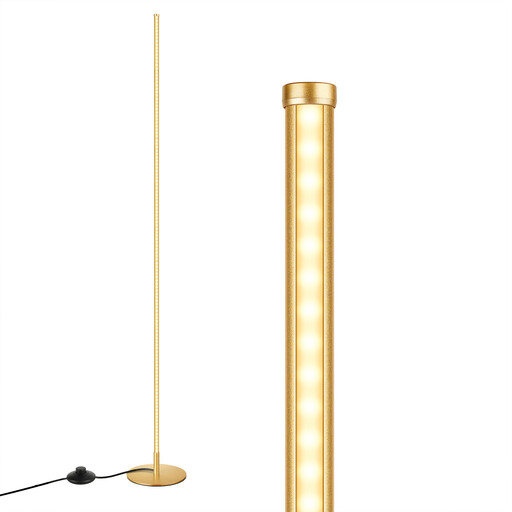
Why it’s a good match: This floor lamp is designed for living rooms, bedrooms and home offices. At 146 centimetres tall, its slim metal design fits neatly beside a sofa, desk or bed.
You’re not restricted to a fixed brightness. According to the product description, pressing and holding the foot switch lets you dim the light smoothly.
3000-Kelvin warm white light, a memory function, a foot switch and adjustable height.
Why it’s a good match: This longer version is designed for larger cupboard compartments, shelves and kitchen areas where a slim light needs to cover more space.
The dimensions of 300 × 38 × 10 millimetres make it easier to plan where the light will fit. Three colour temperatures mean you’re not stuck with one fixed shade of light.
41 LEDs, an 1100 mAh battery, a PIR sensor with a range of 3 to 5 metres and USB charging.
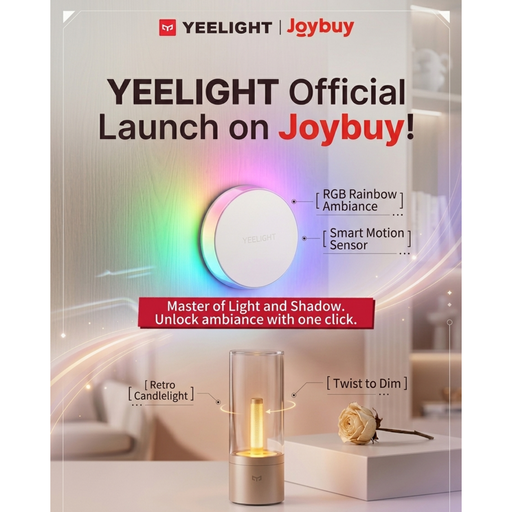
Why it’s a good match: This RGB mood light is designed for living rooms, bedrooms and gaming spaces. Its magnetic fitting and USB-C rechargeable battery make it easy to move and use where you need it.
You’re not limited to a single fixed colour. The product name specifies 11 preset effects and a motion sensor.
RGB colour options, magnetic fitting, a motion sensor and a USB-C charging port.
We’ve put together a complete, regularly updated list of products that meet these strict selection criteria and fully comply with the safety regulations in force in the EU.
Their actual lifespan depends on the LED module, electronics, heat dissipation, how long they’re used and the conditions they operate in. A general estimate won’t apply to every model. With integrated LEDs, the module may not be replaceable by the user, according to the product description. Check the warranty and returns information before you buy.
Running costs depend on the wattage, daily usage and electricity price. As a simple guide, use: power in kilowatts × operating hours × price per kilowatt-hour. For an accurate calculation, you’ll need the power consumption stated on the product. Battery-powered lights also have charging losses. These are usually small in a typical household, but they don’t disappear entirely.
Fit it where the sensor can detect people passing by, without being blocked by furniture, curtains or other objects. In a hallway, choose a position far enough away from doors and walls. In a kitchen or cupboard, make sure the light won’t come into contact with water or high humidity.