
Lieferung heute & morgen

Qualitätsgarantie

Willkommens-Angebote freischalten: KOSTENLOSE Lieferung | Bis zu 80 % RABATT | Kostenlose 30-Tage-JoyPlus-Testphase
App herunterladen
Indoor LED wall lighting can brighten hallways, stairs, bedrooms and living areas exactly where you need it. But there’s more to consider before you buy than just the design and light colour. The connection type, fitting dimensions, IP rating and controls all affect whether a light will work well in your home.
The label dimmable doesn’t automatically mean a light will work with every existing wall control. Some lights need a specific trailing-edge dimmer, while others can only be adjusted within a set range. If you’re adding a light to an existing setup, check that the light and dimmer are compatible.
An IP44 LED wall light is protected against solid objects above a certain size and splashing water from different directions. This makes it suitable for many indoor spaces and sheltered outdoor areas. However, it isn’t designed to withstand a direct jet of water or to be installed somewhere that stays damp.
Warm white light at around 2700 to 3000 Kelvin is often considered gentle and cosy. For practical LED hallway lighting or stair lighting, neutral white at 4000 Kelvin may be more suitable. Cool white light at 6500 Kelvin has a noticeably crisper feel. You should also consider lumens, wattage and room size together: low power consumption alone doesn’t tell you how bright a light will be.
Look out for the following specifications:
For example, a 12 W light with a colour temperature of 3000 Kelvin can provide decorative and practical wall lighting in a living room, bedroom or hallway. For finding your way around at night, an LED night light with a motion sensor and lower power consumption is often enough.
For recessed LED stair lights, the installation depth, diameter or cut-out size must match the existing wall box or mounting housing. The connection type matters too: a light connected directly to 230 V should only be installed by a suitably qualified person.
Surface-mounted models are often easier to retrofit during renovations. Recessed fittings sit more flush with the wall, but they need a suitable opening and enough space for the wiring.
For bedrooms, living rooms and dry hallways, an indoor light is usually sufficient. In bathrooms, sheltered entranceways or near potential sources of splashing water, choose the IP rating to suit the specific installation location.
Even with IP44, the light must not be submerged in water. Always follow the installation instructions and the manufacturer’s guidance.
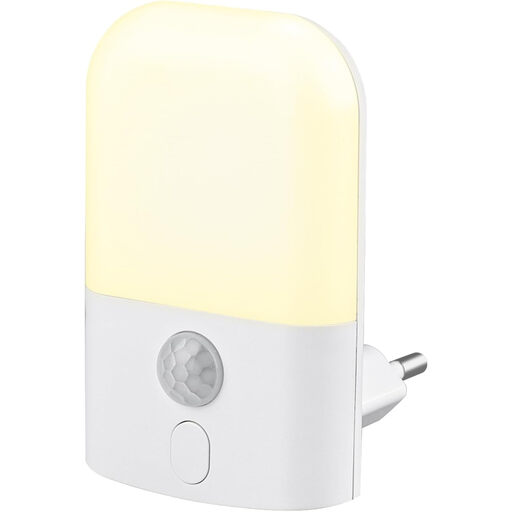
Why it suits this profile: This plug-in model is a straightforward way to add guiding light without fixed wall installation.
The product details list five brightness levels, a dusk and motion sensor, and automatic shut-off after 60 seconds without detected movement.
2700 Kelvin, 0.5 W power consumption and a detection range of up to 3 metres at 120 degrees, according to the product description.
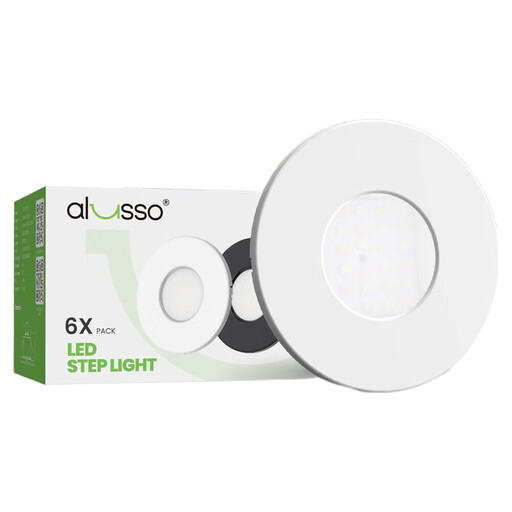
Why it suits this profile: These six recessed lights are designed for planned stair or hallway projects where a coordinated look is important.
The specifications list three colour temperatures, three power settings and a dimming range of 10 to 100 per cent. This lets you plan the light effect and brightness before installation.
86.2 mm diameter, approximately 30 mm installation depth, 220 lm and IP44, according to the product description; can be fitted using spring clips or screws.
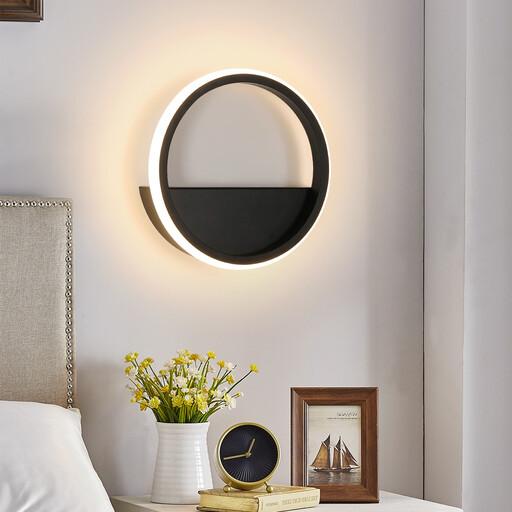
Why it suits this profile: This round aluminium wall light is designed for living rooms, bedrooms, halls and stairways where you want a permanently installed light source.
The product name gives specific figures for power consumption, colour temperature and diameter, rather than offering only a general design description.
12 W, 3000 K, a round design with a 20 cm diameter and an aluminium finish, according to the product details.
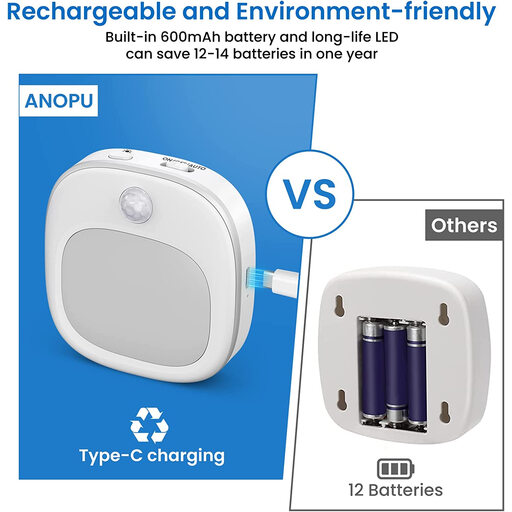
Why it suits this profile: The battery-powered design is a handy option for rented homes, cupboards, hallways or anywhere without an existing power connection.
The product name highlights five dimming levels, three colour temperatures and motion detection. Check the actual battery life before you buy.
Two lights, battery-powered installation, five brightness levels and three selectable colour temperatures, according to the product name.
We’ve put together a complete, regularly updated list of products that meet these strict selection criteria and fully comply with the safety regulations in force in the EU.
Consumption depends on the power rating and how long the light is on each day. A 0.5 W light used for two hours a day will, in theory, use significantly less energy than a 12 W model. To work out the running cost, multiply the power in kilowatts by the operating time and your electricity tariff.
They can switch on the light when movement is detected, making them particularly useful for finding your way at night. The key is to choose a suitable detection range, reliable dusk detection and a shut-off time that isn’t too short.
Lifespan depends on factors including heat dissipation, switching cycles, operating time and product quality. For permanently installed models, it’s also worth checking whether the LED module can be replaced. Stated operating hours are manufacturer figures, not a guarantee that every household will get the same lifespan.