
Lieferung heute & morgen

Qualitätsgarantie

Willkommens-Angebote freischalten: KOSTENLOSE Lieferung | Bis zu 80 % RABATT | Kostenlose 30-Tage-JoyPlus-Testphase
App herunterladen
Indoor lights should do more than complement your décor. They need to provide enough light, be safe to place or install where intended, and suit the way you use the room. A living room light has different requirements from an office light or a bedside reading light.
Three common pitfalls often lead to the wrong purchase:
The luminous flux in lumens shows how much light a fitting produces. Lower levels are often sufficient for a small table lamp or accent lighting. An office light or an LED floor lamp for a larger work area, on the other hand, needs to provide more light.
The colour temperature in kelvin affects how the light looks:
For a home office light, glare control and even light distribution are also important. A stated UGR value can help you assess whether a light is suitable for screen-based work. For example, the LEDVANCE COMACT Floor Lamp specifies UGR < 19 and 4,000 K, and is intended for individual and open-plan offices according to the product information.
A light with an integrated LED does not need a separate bulb. This makes installation simpler, but limits replacement options later on. With an E27 lamp, you can choose the bulb separately. This lets you adjust the brightness and colour temperature, and, with compatible products, the dimming function too.
Before buying, check:
Electrical connections for ceiling or wall lights should be made in line with the manufacturer’s instructions and applicable safety requirements. If you are unsure, contact a qualified electrician.
Choosing a dimmable floor lamp can make sense if you use a room in different ways. Indirect lighting directed upwards creates a different distribution of light from a reading head that points directly downwards. So check the adjustment options, cable length and base size.
A sensor light can switch on automatically in hallways or work areas. Check whether it uses a motion, presence or daylight sensor, and whether you can adjust its sensitivity and run-on time. Sensor functions are convenient, but they do not replace checking the actual installation and detection area.
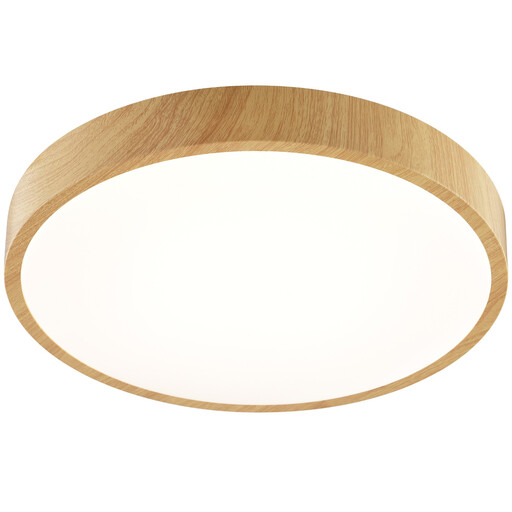
Why this product suits your needs: This LED ceiling light is designed for living rooms, bedrooms, hallways or dining areas, and does not need a separate bulb.
The stated 2,300 lm and 3,000 K make it easier to understand the light output than a wattage figure alone. According to the product information, the light is not dimmable.
24 W power consumption, 2,300 lm luminous flux and a diameter of 38.5 cm.
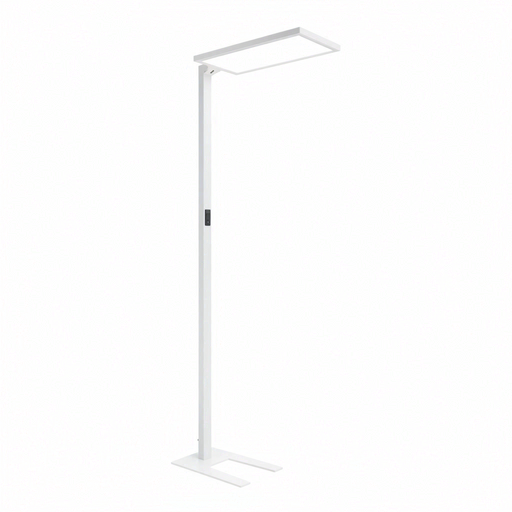
Why this product suits your needs: For a home office or office with a large desk, this LED floor lamp offers separately controlled direct and indirect lighting.
The product specifications state 12,600 lm, 4,000 K, UGR < 19 and a dimming function. Daylight and presence sensors are built in.
Direct luminous flux of up to 3,600 lm, indirect luminous flux of up to 9,000 lm, a touch panel and a stated L80/B10 lifespan of 75,000 hours.
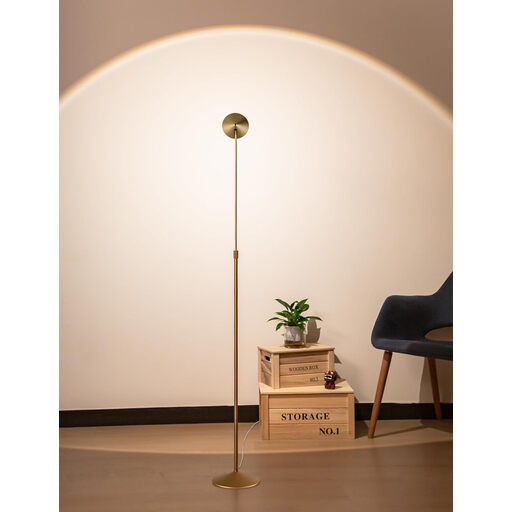
Why this product suits your needs: This height-adjustable floor lamp is designed for reading, crafts, sewing, bedrooms and office areas where you need to position the light flexibly.
The head swivels through 150° and the telescopic design lets you adjust the height, so you are not limited to a fixed light position. Choose between the three dimming levels using the touch control.
Integrated LED, height-adjustable design and three brightness levels.
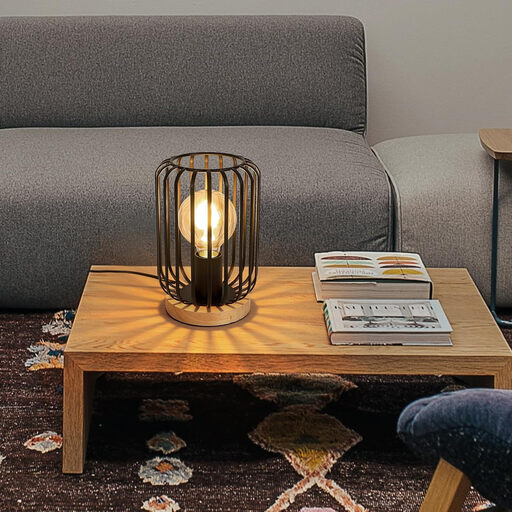
Why this product suits your needs: This table lamp combines a black metal body with a wooden base, making it a decorative light for a living room or bedroom.
The openwork shade makes the way the light falls easy to see. The product is supplied without a bulb, so you will need to choose a suitable E27 bulb rated up to 60 W.
E27 socket, push-button switch, and metal and wood components.
We’ve put together a complete, regularly updated list of products that meet these strict selection criteria and the safety regulations in force across the EU.
Even lighting, a suitable colour temperature and minimal glare are important for a workspace. Depending on the room, an office light or LED floor lamp with neutral white light of around 4,000 K may be a good choice. Position the light so that it does not shine directly onto your screen or into your eyes.
Running costs depend on the power consumption, how many hours the light is used each day and the cost of electricity. A simple calculation is: wattage ÷ 1,000 × hours of use × electricity price. For a realistic comparison, consider not just the purchase price, but also the stated power consumption and how often you expect to use the light.
Lifespan varies depending on the design, heat dissipation and use. For lights with integrated LEDs, the lifespan stated by the manufacturer is an important point of comparison. With E27 fittings, you can replace the bulb separately. Before buying, also check whether replacement bulbs are available and whether the light is suitable for the environment you plan to use it in.