
Lieferung heute & morgen

Qualitätsgarantie

Willkommens-Angebote freischalten: KOSTENLOSE Lieferung | Bis zu 80 % RABATT | Kostenlose 30-Tage-JoyPlus-Testphase
App herunterladen
An indoor LED light with a motion sensor is a practical solution for providing on-demand lighting in dark corners, hallways, and closets. It increases safety, prevents tripping at night, and helps you find your way without fumbling for a light switch. However, the market is flooded with models that vary wildly in quality and functionality. Many products quickly prove to be unreliable or impractical.
This guide highlights the most common pitfalls to avoid when buying and explains which technical features truly matter. This will enable you to make an informed decision and find a product that genuinely makes your daily life easier.
Many buyers get frustrated with products that don't live up to their promises. Pay close attention to these three weaknesses to avoid making a poor purchase:
To avoid the problems mentioned above, you should check three core technical parameters before buying. These largely determine the real-world usability and longevity of your new lighting.
The choice of power source depends directly on the location and frequency of use.
The quality of the sensor is critical for its function. Look for the following specifications:
The lighting's effect has a major impact on comfort and functionality.
Here are some recommendations tailored to different needs and use cases.
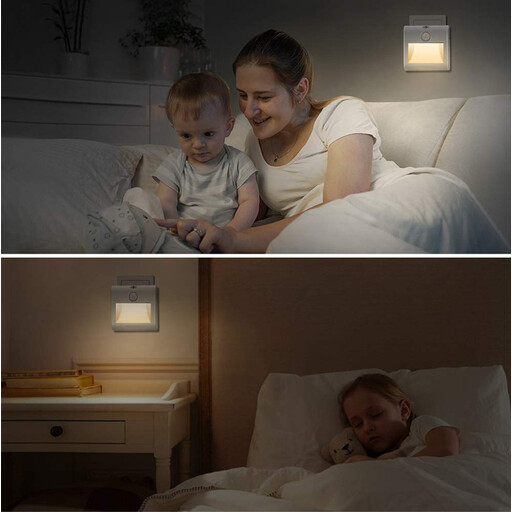
Why This Fits Their Persona: This 2-pack is a maintenance-free solution for hallways and bedrooms. Just plug it in and forget it. Ideal for families and seniors who want reliable, simple lighting without battery management.
As a plug-in model, it eliminates the problem of short battery life. The stepless touch dimming with a memory function prevents glaring light and adapts to individual needs.
Advantage: Maintenance-free continuous operation and adjustable brightness. Pros: Dimming function with memory effect, 2-pack for multiple rooms.

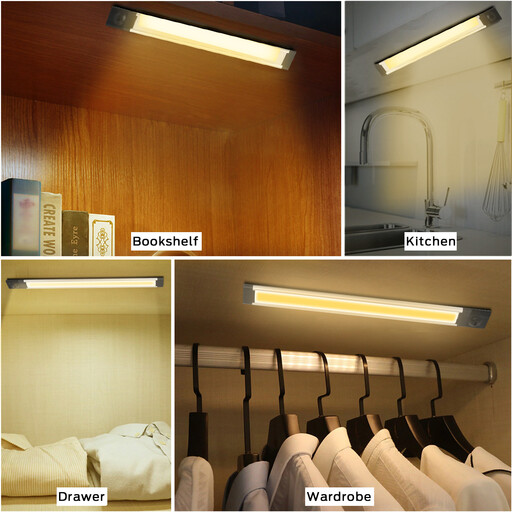
Why This Fits Their Persona: Perfect for renters and homeowners who need flexible lighting for closets, stairs, or the kitchen without drilling. The ultra-thin design is discreet and fits into tight spaces.
The 1100mAh battery offers a long runtime. Thanks to the three selectable colour temperatures, the light can be adapted to its specific purpose, thus avoiding the pitfall of unsuitable, rigid lighting.
Advantage: High flexibility due to battery operation and simple adhesive mounting. Pros: Three colour temperatures, USB rechargeable, ultra-thin profile.
Why This Fits Their Persona: For users who value high-quality materials, advanced features, and an appealing design. The gesture control and aluminium housing set this model apart from the crowd.
This model bypasses the trap of rigid light settings with stepless dimming via gesture control. The high-quality light guide plate ensures even, glare-free illumination.
Advantage: Intuitive operation and high light output (400 Lm). Pros: Gesture control, stepless dimming, aluminium housing, flexible mounting.
We've compiled a complete, up-to-date list of products that fully meet these strict selection criteria and UK safety regulations.
The battery life depends heavily on the battery capacity (measured in mAh), the brightness setting, and the frequency of use. With average use (about 5-8 activations per day), a model with a 1000-1500 mAh battery can last for several weeks to months before needing a recharge.
Yes, many modern models offer a dimming function. This can be stepless via touch control or in several preset levels. A dimmable guide light is highly recommended for finding a pleasant, non-disruptive brightness level for nighttime.
The ideal location depends on its purpose. For a wireless stair light, mounting it on the lower third of the wall is recommended to illuminate the steps properly. In cabinets, the light is best installed at the top front to light the contents from above. In hallways, the sensor should be aimed to detect movement from adjoining rooms early. Avoid mounting directly opposite heat sources (heaters) or windows, as this can cause false triggers.