
Lieferung heute & morgen

Qualitätsgarantie

Willkommens-Angebote freischalten: KOSTENLOSE Lieferung | Bis zu 80 % RABATT | Kostenlose 30-Tage-JoyPlus-Testphase
App herunterladen
The search for the right lamps for indoor and outdoor areas often starts with the design. But an appealing shape alone says little about everyday practicality, light quality or safety. If you decide based solely on colour and price, you may later find that the light is not dimmable, the colour temperature does not suit the room or the product does not have a sufficient IP rating for outdoor use.
As a Joybuy Product Recommendation Officer, I provide an objective overview of the most important product details. This makes it easier to distinguish marketing terms from verifiable features.
LED lamps usually consume little energy, but the specific details for watts, lumens and the energy efficiency class are what really matter. A light with a higher luminous flux may use more electricity than a smaller model. So do not compare wattage alone: also look at brightness in lumens and the stated energy consumption.
With integrated LED lamps, you should also check whether the LED module can be replaced. With some products, the entire light must be replaced if a fault develops. Lights with E27 or E14 sockets, on the other hand, allow you to choose and replace the bulb separately.
Warm white lighting at around 3000 Kelvin is often described as pleasant for living rooms, bedrooms and dining areas. For focused work or certain office tasks, a more neutral light colour may be more practical. Models with a CCT function allow you to choose between warm white and cooler colour temperatures.
The dimming function should also be described clearly. “Dimmable” may mean an integrated touch dimmer, stepped adjustment or compatibility with a suitable external dimmer. These systems are not always compatible with one another.
A light for a balcony, patio or garden needs a suitable IP rating. The IP44 designation indicates that the product is protected against solid foreign objects measuring 1 millimetre or more and against splashing water from various directions. It does not mean that the product is completely waterproof, nor does it replace the installation instructions.
Products with IP20 are generally intended for dry indoor spaces. An indoor wall light, pendant light or floor lamp must therefore not simply be used outdoors, even in a sheltered location.
First, identify the intended area of use:
Pay attention to the dimensions, cable length, footprint and switch position. A 179-centimetre-high arc lamp needs enough room for the arc and a stable surface to stand on.
The luminous flux in lumens describes how much visible light a lamp emits. Colour temperature is measured in Kelvin. 3000 K typically indicates warm white light, while temperatures up to 6500 K can provide noticeably cooler light.
For an integrated LED light, the following details are particularly relevant:
For sockets such as E27 or E14, you should also check the maximum permitted wattage. A higher-wattage bulb must not be used if, for example, the light is designed for a maximum of 40 watts.
Metal, aluminium, steel, concrete, plastic and paper all affect the weight, appearance and care requirements. With floor lamps, an adequately large and stable base is particularly important, alongside the stated material. Cables should be positioned so that they do not create a trip hazard.
Electrical work on permanently connected lights must only be carried out by appropriately qualified professionals. Before cleaning, changing a bulb or installing the light, disconnect it from the mains and allow it to cool completely.
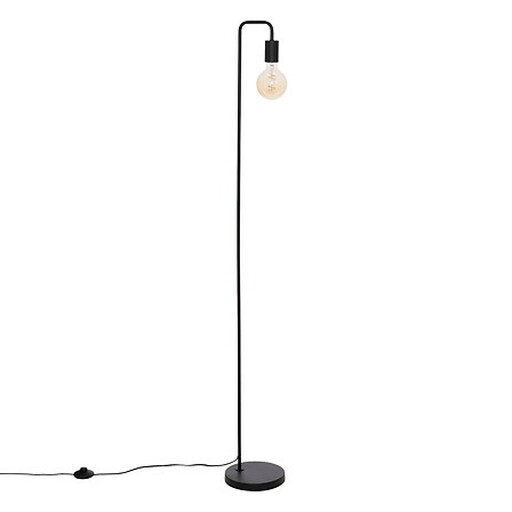
Why this product suits this profile: This 150 cm-high floor lamp is designed for living rooms, bedrooms or offices and uses an E27 socket with a maximum rating of 40 W. The bulb can be selected separately.
The product details expressly state that no bulb is included. This lets you choose the desired light colour instead of buying an unsuitable bulb with the lamp.
E27 socket, 180 cm cable and compact 21 × 20 cm footprint; designed for self-assembly.
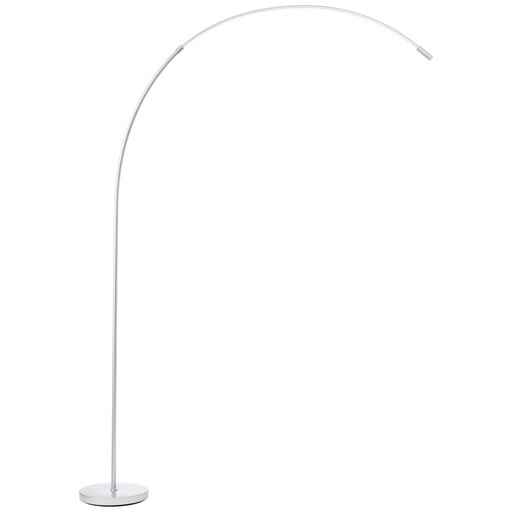
Why this product suits this profile: This arc lamp combines 14 W of power with a luminous flux of 1300 lm, a CCT range of 3000 to 6500 K and stepless touch dimming.
The light colour and brightness are clearly specified and can be adjusted directly on the light. The IP20 rating also makes clear that it is intended for dry indoor spaces.
1300 lm, integrated LED, CCT function, stepless dimming and 228 cm cable.
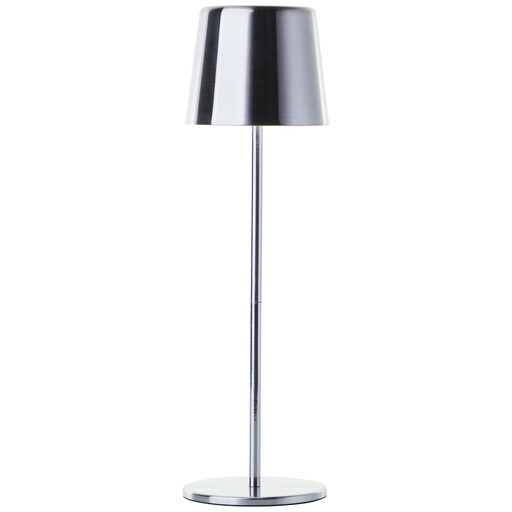
Why this product suits this profile: This rechargeable table lamp is designed to provide flexible lighting on balconies, patios, in gardens or indoors.
The IP44 rating is clearly specified. This makes it easier to distinguish the lamp from indoor-only lights, although it does not replace protection from persistent rain or standing water.
USB connection, rechargeable battery, 37 cm height, 3000–6500 K, 300 lm and stepless touch dimming.
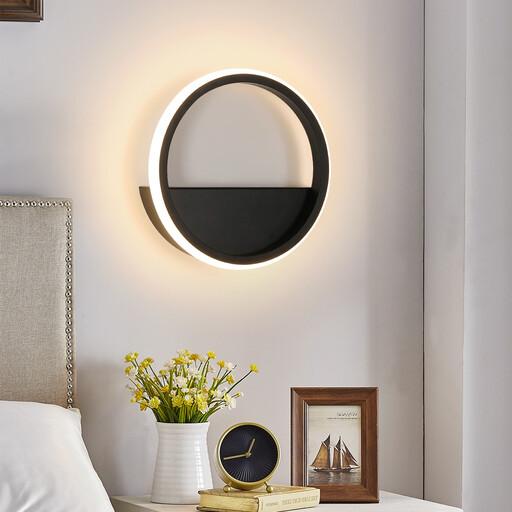
Why this product suits this profile: This round aluminium wall light, measuring 20 cm in diameter and providing 3000 K warm white lighting, is suitable for living rooms, bedrooms, hallways or stairwells.
The product name expressly states that it is for indoor use. This helps avoid confusing it with outdoor lamps rated IP44.
12 W power, aluminium housing, space-saving design and warm white light at 3000 K.
We have put together a complete, regularly updated list of products that fully meet these strict selection criteria and the safety regulations applicable in the EU.
Warm white light at around 2700 to 3000 Kelvin is often chosen for living rooms, bedrooms and dining areas. More neutral colour temperatures may be useful for desks, kitchen worktops or offices. CCT lights allow you to adjust the colour temperature, provided the relevant function is available.
The actual service life depends on the LED module, electronics, operating time, heat dissipation and usage. Check the manufacturer’s stated service life and find out whether the module can be replaced. With E27 or E14 lights, at least the bulb can be replaced separately.
Approximate electricity costs are calculated using power in kW × operating hours × electricity price. For example, a 10-W light operated for three hours a day uses 0.03 kWh per day. For a realistic comparison, you should also consider the brightness in lumens and the actual usage time.