
Lieferung heute & morgen

Qualitätsgarantie

Willkommens-Angebote freischalten: KOSTENLOSE Lieferung | Bis zu 80 % RABATT | Kostenlose 30-Tage-JoyPlus-Testphase
App herunterladen
Indoor and outdoor play equipment should encourage movement, imaginative play and time together – without taking over your living room, garden or cellar permanently. In practice, unclear dimensions, missing accessories or underestimated maintenance requirements can often lead to the wrong purchase.
1. The space needed is underestimated.
With a play tent or ball pit, it’s not just the folded dimensions that matter. Tunnels, entrances and room to move all need extra space. Outdoors, you should also allow a safe distance from walls, fences and garden furniture.
2. ‘Suitable for indoor and outdoor use’ doesn’t necessarily mean weatherproof.
Depending on how they’re made, textiles, mesh and inflatable materials can be affected by damp, UV exposure or being left outside for long periods. Before buying, check whether the product can only be used outdoors in dry weather and needs to be put away afterwards.
3. Accessories and ongoing costs are overlooked.
A ball pit may not come with balls, an inflatable bouncy castle needs a blower running throughout use, and a water slide requires an additional water connection. Cleaning, drying and storage space should also factor into your decision.
The age recommendation is a guide, but it doesn’t replace adult supervision. You should also check the maximum weight limit, the permitted number of children and the size of the play area. If several children will be using it, consider their combined weight and how they’ll move around. A product with a weight limit of 135 kg isn’t automatically suitable for any number of children if the manufacturer specifies a maximum of three.
For climbing toys, children’s slides and larger playhouses, the surface should be level, non-slip and clear of hard obstacles. Low entrances, easy-to-reach handholds and open, clearly visible play areas are practical for younger children.
For plastic products, smooth, burr-free surfaces, sturdy joints and a wide base are useful points to check. When comparing products, details such as HDPE, PVC Oxford fabric or polyester can be helpful, but they don’t replace checking the quality of the actual construction.
Look for:
Any certification should relate to the specific product. General safety claims in advertising are no substitute for technical information.
For a children’s playhouse or a sandpit with a canopy, the space it occupies permanently is important. A pop-up play tent can usually be stored more compactly, but it still needs enough room when set up. Before buying, check:
The recommendations below group different designs according to typical family needs. The details are based on the product information available for each item.
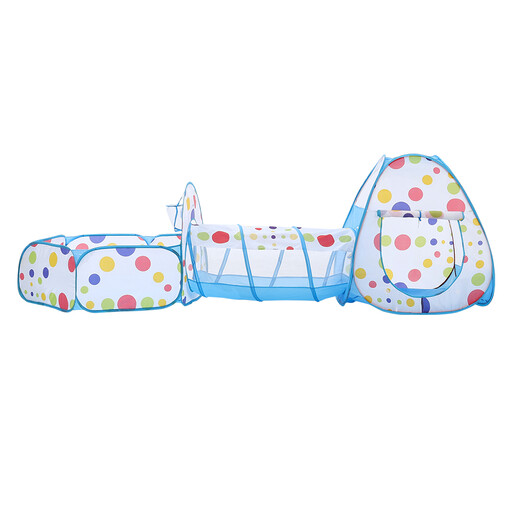
Why this product suits this profile: The pop-up design is made for quick assembly and compact storage. It’s a good option for families looking to combine indoor play equipment for children with a portable solution.
The foldable design cuts down on assembly and storage. Before buying, though, check whether balls are included and how much floor space the tent needs when set up.
A pop-up design, tunnel and ball pit in one compact play tent; designed for indoor and outdoor use.
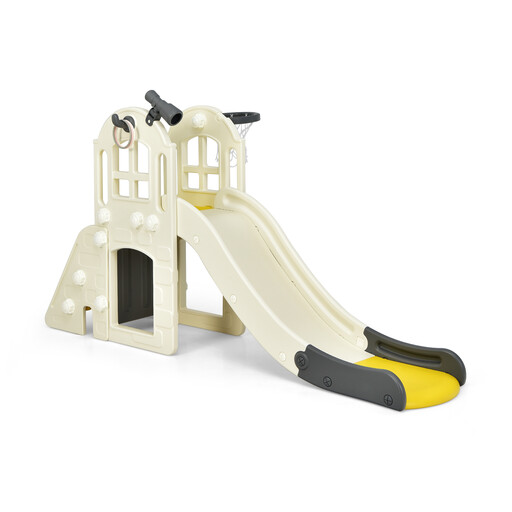
Why this product suits this profile: Families with plenty of space get several play stations in one set-up: a slide, climbing wall, tunnel, basketball hoop, ring toss and telescope.
The product details state a platform weight limit of up to 60 kg, a three-step ladder and a wide triangular base. Check the surface and assembly before every use.
Made from HDPE according to the product details, with a smooth surface and six built-in activity areas for children aged 3 to 8.
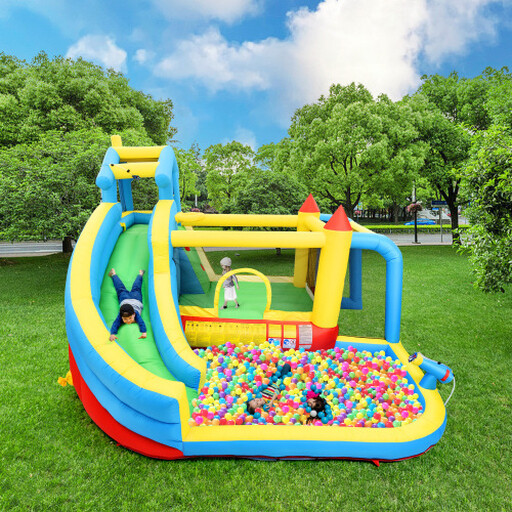
Why this product suits this profile: For families with a garden and children who play regularly, this bouncy castle combines a bouncing area, slide, water play area, football net and basketball game.
The product details state a maximum combined weight of 135 kg, a limit of three children and a blower that runs continuously. If you use it with water, it must be dried completely before storage.
Measures 364 × 315 × 239 cm when set up, includes a blower and can be used dry or with water.
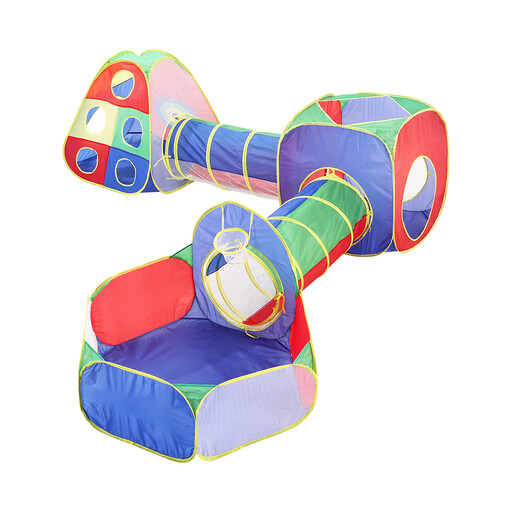
Why this product suits this profile: With two tunnels, two tents and a ball pit, this set creates a larger indoor and outdoor play area for children aged 3 to 6.
The 270 × 260 cm play area can be used as separate pieces or connected together. The product details say balls aren’t included, so remember to factor in this extra cost.
Five pieces that can be combined, polyester with mesh panels according to the product description, and two hook-and-loop balls for an extra throwing game.
We’ve put together a complete, regularly updated list of products that meet these strict selection criteria and fully comply with the safety regulations in force in the EU.
As well as the product’s dimensions, allow room for movement and safety. A children’s slide or climbing toy needs extra space at the bottom. For a play tent with a tunnel, measure the area needed for all the connected pieces. In the garden, allow space around fences, paths and furniture too.
Their lifespan depends on the material, UV exposure, how heavily they’re used, cleaning and storage. Use a bouncy castle only on a suitable surface, keep it away from sharp objects and make sure it’s completely dry before putting it away. The blower should only be used as instructed.
As well as the purchase price, you’ll need to factor in electricity for the blower and, where applicable, water and cleaning costs. The actual cost depends on the blower’s power consumption, how long it’s used and your local electricity and water rates. Before buying, compare the manufacturer’s information with how you plan to use it.