
Lieferung heute & morgen

Qualitätsgarantie

Willkommens-Angebote freischalten: KOSTENLOSE Lieferung | Bis zu 80 % RABATT | Kostenlose 30-Tage-JoyPlus-Testphase
App herunterladen
A carefully chosen indoor plant pot can transform a room and showcase your plants to their best advantage. But the selection is vast, and not every attractive design is practical. Many buyers only realise after some time that their new pot is causing more problems than joy. This guide will help you navigate the most common pitfalls and make an informed decision.
As your Joybuy Product Recommendation Officer, I've summarised the essential features that define a quality planter and will show you what to look for to avoid buyer's remorse.
To avoid these issues, you should check three core aspects before buying: material, size, and functionality.
The material affects not only the look but also the pot's weight, durability, and water regulation.
The right size is crucial for plant growth. A pot that's too small restricts the roots, while one that's too large can cause the soil to stay wet for too long. A rule of thumb is that the new pot should be about 2–4 cm larger in diameter than the current root ball.
A drainage hole is essential for pots where plants are planted directly. If you use a decorative cachepot without a hole, make sure to remove any excess water from it after watering.
Designing a modern planter today often means combining aesthetics with functionality. A large plant pot can act as a standalone design object in a room, while small plant pots arranged in groups create beautiful accents. Models with an integrated stand elevate the plant, which is not only visually appealing but also makes cleaning the floor easier and brings the plant closer to the light.
Here are some recommendations tailored to different needs and interior styles.

Why It's a Great Fit: The rectangular shape and matte black finish blend seamlessly into minimalist or industrial decor styles. It's ideal for windowsills, desks, or shelves where a clean design is desired.
This planter features two drainage holes and a matching, detachable saucer. This directly eliminates the risk of waterlogging and protects surfaces.
The combination of modern design and thoughtful water management makes this planter an equally stylish and practical solution for herbs or succulents.
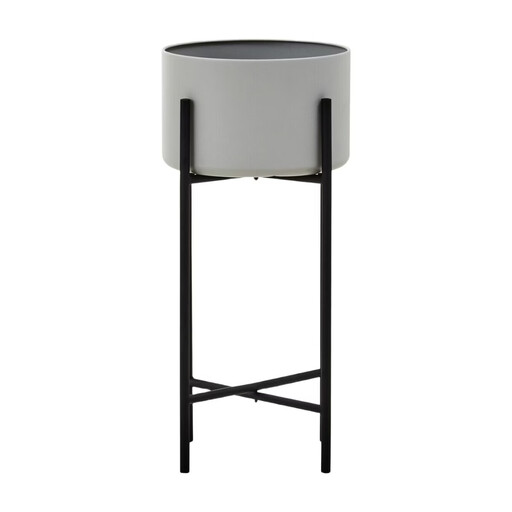
Why It's a Great Fit: This tall planter is perfect for elevating a large indoor planter to an appealing height. It functions as a piece of furniture and skilfully showcases large plants like a Monstera or a Bird of Paradise.
The iron frame with crossed legs is designed for stability. It avoids the typical "wobble trap" and provides a secure base even for heavy, large plants.
The elevated position improves light conditions for the plant and makes floor cleaning easier, as you don't have to bend down. Its minimalist design complements many interior styles.

Why It's a Great Fit: This set of ten mushroom-shaped glass vases is perfect for propagating cuttings or displaying single blooms. They are unique decorative pots for plants that create a playful and natural aesthetic when grouped together.
Since these vases are designed for hydroponics, the problem of lacking drainage is bypassed—the water itself is the growing medium. It's a deliberate choice for soil-free plant cultivation.
The set allows for creative and cohesive decoration. According to the manufacturer, it is made of highly transparent borosilicate glass, which offers a clear view of root development and is said to be more durable than ordinary glass.
We have compiled a complete, up-to-date list of products that fully meet these strict selection criteria and applicable regulations.
A good guideline is to choose a pot with a diameter 2 to 4 centimetres larger than the plant's root ball. This gives the roots enough room to grow without the soil staying wet for too long. For very fast-growing plants, a slightly larger pot may also be a good idea.
If you are planting directly into the pot, a drainage hole is crucial to prevent root rot. Alternatively, you can use a decorative cachepot without a hole. In this case, the plant remains in its original plastic nursery pot, which has holes. After watering, you must pour out any excess water that collects in the cachepot.
Glazed ceramic, glass, and metal are very low-maintenance. Their smooth surfaces can be easily wiped with a damp cloth and do not absorb moisture or dirt. Unglazed terracotta can develop limescale deposits or a patina over time, but this is also appreciated as an aesthetic feature.