
Lieferung heute & morgen

Qualitätsgarantie

Willkommens-Angebote freischalten: KOSTENLOSE Lieferung | Bis zu 80 % RABATT | Kostenlose 30-Tage-JoyPlus-Testphase
App herunterladen
Choosing an indoor security camera can quickly become overwhelming. Whether as a baby monitor with camera, for keeping an eye on pets, or for general home security, the market offers countless models. But not every camera lives up to its advertising promises. Many users invest in a device only to discover later that hidden costs or technical flaws severely limit its usefulness.
As a Joybuy Product Recommendation Officer, I analyse product data to provide you with an objective basis for your decision. This guide will show you the three most common pitfalls to avoid when buying and explain which technical features you should look for to make an informed choice.
Before you decide on a model, you should be aware of these common problems that often only become apparent after the purchase:
To avoid the problems mentioned above, you should pay attention to three central technical parameters in your selection. These are crucial in determining the performance and practical utility of your camera.
High resolution is essential for clear, detailed images. A 2K camera for home (resolution of approx. 2304 x 1296 pixels) offers a noticeable advantage over conventional 1080p models. It allows you to better recognise faces or zoom in on the image without it immediately becoming blurry.
Also, pay attention to the video compression format. The H.265 standard is important here. Compared to the older H.264 standard, H.265 reduces the file size by up to 50% for the same image quality. This means you can store twice as much video footage on a memory card or use less bandwidth when streaming over the internet.
A good IP camera with recording should offer flexible storage options.
A model that offers both options gives you the flexibility to choose the solution that's right for you.
Modern cameras go beyond simple motion detection. Models with AI-powered (Artificial Intelligence) person detection can distinguish between people, animals, and other movements. This drastically reduces the number of false alarms and ensures you are only notified of relevant events. For pet owners, there are special pet camera models that can also detect and track animals.
For complete surveillance of a room, a 360-degree indoor camera with a pan-tilt-zoom (PTZ) function is a sensible choice. Using the security camera with an app, you can remotely control the lens and thus view the entire room without any blind spots.
Based on the criteria mentioned above, we have identified some models that are suitable for different user profiles.
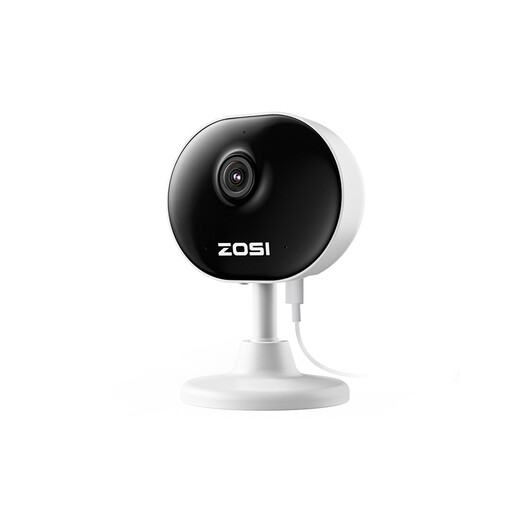
Why This Fits Their Persona: Ideal for users looking for a solid and discreet monitoring solution without recurring costs. Its compact design and easy setup make it perfect as a first security camera.
This model bypasses the subscription trap by focusing on local storage via a microSD card. You maintain full control over costs.
Very compact and lightweight design (85g) that can be placed discreetly in any room. Offers basic functions like motion detection and two-way audio.
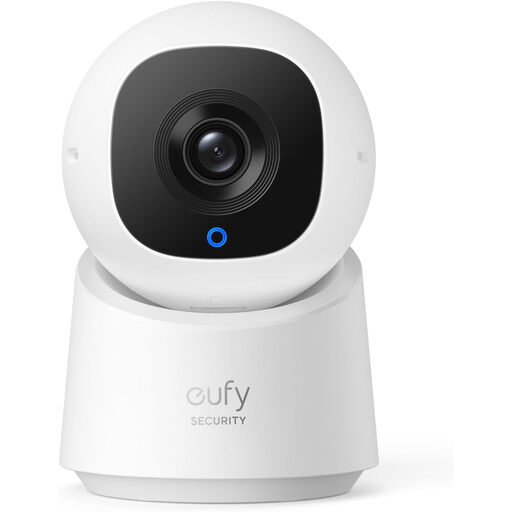
Why This Fits Their Persona: Perfect for families and pet owners who need complete room coverage and intelligent notifications. The combination of 2K resolution and AI tracking ensures that important moments are captured clearly.
The integrated AI person detection filters out irrelevant movements, preventing a flood of false alarms. It also emphasizes local storage with no monthly fees.
The 360° pan-and-tilt function allows for monitoring the entire room without blind spots. AI-powered tracking automatically keeps moving people in the frame.
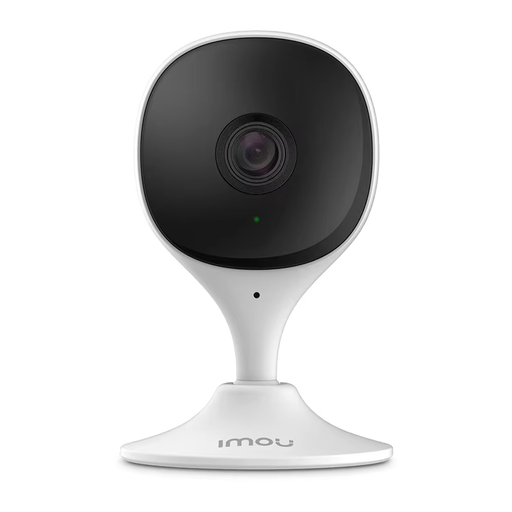
Why This Fits Their Persona: Specifically for parents seeking reliable monitoring for a nursery. The camera acts not only as a visual but also as an acoustic guardian, offering more than a conventional baby monitor.
The night vision is specified with a 10-meter range and clear 3MP resolution, which prevents blurry images. The AI person detection also reduces irrelevant motion alerts.
The intelligent sound detection sends alerts for unusual noises like a baby crying or glass breaking. This provides an additional layer of security beyond just video monitoring.
We have compiled a complete, up-to-date list of products that fully meet these strict selection criteria and local safety standards.
1. Does an indoor Wi-Fi camera always need an internet connection? An internet connection is required for initial setup, as well as for remote access to the live stream and notifications via the app. However, some models can record continuously to a local microSD card after setup, even without an active internet connection. The range of functions is then severely limited, though.
2. How secure is my footage on a camera with an app? The security of your data depends on several factors. Look for models that offer end-to-end encryption (E2EE). Always use a strong, unique password for your account and enable two-factor authentication (2FA) if available. Storing footage on a local microSD card gives you physical control over your recordings, but it does not protect them if the camera itself is stolen.
3. What is the difference between infrared night vision and colour night vision? Standard infrared night vision uses IR light, which is invisible to the human eye, to produce a clear black-and-white image even in complete darkness. Colour night vision either uses highly sensitive sensors to generate a colour image in low ambient light or activates small, integrated white-light LEDs. A colour image can be more helpful in identifying people or details.