
Lieferung heute & morgen

Qualitätsgarantie

Willkommens-Angebote freischalten: KOSTENLOSE Lieferung | Bis zu 80 % RABATT | Kostenlose 30-Tage-JoyPlus-Testphase
App herunterladen
Indoor toys should keep children occupied, encourage movement and be easy to put away after play. For families, nurseries and childcare settings, it’s not just about colours and play ideas. The right dimensions, clear material information, easy-care design and suitability for the children’s age are all important.
A children’s play tent can look compact in product photos. But a pop-up play tent with a tunnel, ball pit or several play elements needs considerably more space than the tent alone. Before buying, measure the entire play area, including entrances and exits. Remember to account for nearby furniture, radiators, sockets and sharp edges too.
Most pop-up products can be set up without tools. But when it comes to storage, the folded dimensions matter most. Check whether the product comes with a bag or strap, or has clear folding instructions. For a ball pit with a tunnel, also check whether balls are included. For example, the 5-in-1 set in the selection below does not include balls; only two hook-and-loop balls for a target game are listed.
The age guidance “for children aged 3 to 6” describes the intended age group, but it doesn’t cover every play situation. Children should be supervised during climbing, tunnel and active play. Before each use, check the seams, mesh panels, hook-and-loop fastenings and stability. For foam building blocks, zips and the condition of the covers should also be checked regularly.
Before you shop, note down three measurements:
The LIVINGANDHOME 5-in-1 play tent is described as covering a total area of 270 × 260 cm. It therefore needs a large, clear space in the home. According to the product description, the individual police play tent measures 115 × 75 × 70 cm and is designed for one or two children.
Polyester is commonly used for play tents. The quality of the construction, ventilation and ease of cleaning are all worth considering. Mesh windows can improve airflow and make it easier to keep an eye on children. Only rely on broad claims about being free from harmful substances when they’re clearly supported by the product information.
Removable, washable covers are useful for foam building blocks. According to the product information, the BanaSuper set has fabric covers with zips that can be machine-washed. After being vacuum-packed, the blocks are said to take 24 to 48 hours to fully expand.
Look for specific information about age suitability, materials, care and set-up. The BanaSuper foam block set is listed as meeting EN 71-1, EN 71-2, EN 71-3 and the Toy Safety Directive 2009/48/EC. Always check this information against the relevant product page and packaging.
For all products, use indoor toys on a flat, dry surface, stop using any damaged parts and make sure supervision is appropriate for the activity. If using toys in the garden, protect them from moisture and dry them thoroughly afterwards.
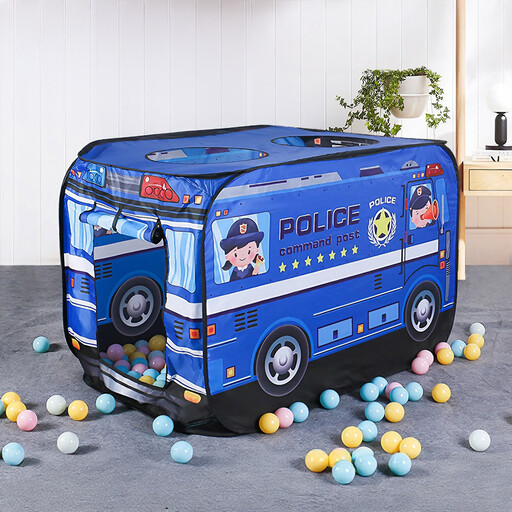
Why this product suits this profile: This standalone play tent needs less space than a multi-part play system and, according to the product description, is suitable for one or two children aged 3 to 6.
Its dimensions of 115 × 75 × 70 cm are clearly stated. The pop-up design means it can be set up without assembly and folded away afterwards.
Polyester construction, mesh panels, two roof openings and a rear entrance, according to the product description.
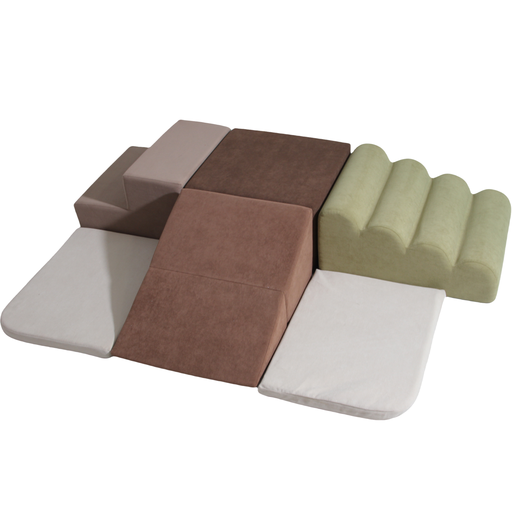
Why this product suits this profile: This six-piece set combines building, climbing, crawling and sliding, making it a versatile choice for imaginative play.
The product information specifies washable covers, concealed zips, hook-and-loop fastenings and non-slip bases on selected pieces.
According to the product description: high-density foam, fabric covers, EN71 information and compact vacuum packaging.
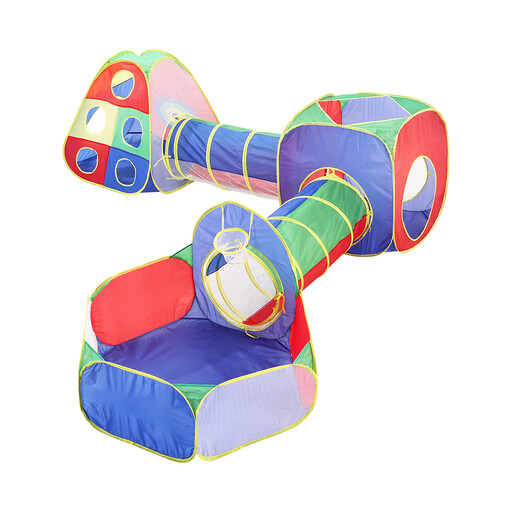
Why this product suits this profile: With two tunnels, two tents and a ball pit, this set is well suited to family groups, playrooms and childcare settings with plenty of clear floor space.
The overall dimensions of 270 × 260 cm are stated, so you can check whether you have enough room before buying. The balls are explicitly not included.
Five pieces that can be combined, mesh panels, a foldable design and, according to the product description, suitability for up to four or five children aged 3 to 6.
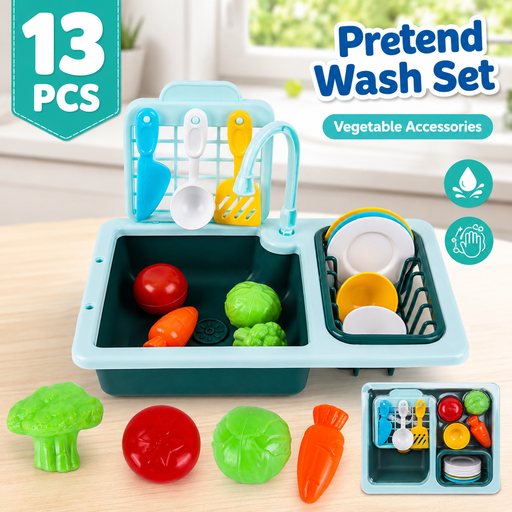
Why this product suits this profile: This 13-piece set adds an everyday scene involving washing, vegetables and accessories to your child’s toys at home.
The contents are described as a 13-piece washing set, so you can check that the expected items match the offer before buying.
Imaginative play with accessories, compact storage and versatile use for creative family activities.
We’ve put together a comprehensive, regularly updated list of products that meet these strict selection criteria and the safety regulations in force in the EU.
It depends on the type of product. A standalone play tent may need a footprint of around 115 × 75 cm. A play system with a tunnel and ball pit needs considerably more room. Allow extra space for movement in front of the entrances, as well as a safe distance from furniture.
There’s no general answer. Its lifespan depends on how often it’s used, how much wear it gets, how it’s stored and how well it’s cared for. Folding it carefully, storing it somewhere dry and checking the seams and mesh panels can all affect how long it lasts. Don’t leave a tent outdoors exposed to moisture or the elements for long periods.
Ongoing costs are usually low, beyond the purchase price. You may need to buy replacement balls, cleaning products or spare parts. Follow the care label for washable covers. For a ball pit, remember to budget for balls separately if they’re not included.