
Lieferung heute & morgen

Qualitätsgarantie

Willkommens-Angebote freischalten: KOSTENLOSE Lieferung | Bis zu 80 % RABATT | Kostenlose 30-Tage-JoyPlus-Testphase
App herunterladen
An indoor wall light can brighten a specific area, add definition to a dark wall or create decorative accents. In practice, however, poor purchases are often down to unclear technical details or unsuitable installation rather than the design itself.
Warm white light at around 3,000 Kelvin usually creates a cosy feel, but that alone tells you nothing about the actual brightness. Other relevant factors include wattage, light output in lumens and beam angle. A decorative light with a visible bulb may look appealing in a living room, but might not provide enough light to illuminate the whole room on its own.
With a wall light that has an E14 or E27 bulb holder, you’ll normally need to buy the bulb separately. Before ordering, check:
E27 bulb holders offer a wide choice of LED bulbs. E14 lights are often more compact in both shape and available brightness.
A black wall light with a wide shade may feel intrusive on a narrow hallway wall. In a bedroom, a wall light with a long arm mounted too low could get in the way of the bed or bedside table. Before buying, make sure the height, width, projection and mounting position suit the available wall space. With an adjustable wall light, also check that the light head can reach the area you want to illuminate.
An integrated LED wall light, such as the Pheashine light, has a built-in light source. This means there’s no bulb to fit and gives you a clearly defined colour temperature. According to the product details, the model referenced here has 12 watts, 3,000 Kelvin warm white light and a round aluminium body measuring 20 centimetres in diameter.
With an E14 or E27 bulb holder, the bulb is replaceable. This is useful if you want to change the brightness, colour temperature or bulb shape later. Check the stated maximum wattage, such as 25 watts for E14 or 40 watts for E27, and choose an LED bulb with a suitable wattage.
IP20 is commonly specified for dry indoor spaces. This rating is suitable for living rooms, bedrooms, studies and hallways, but doesn’t automatically make a light suitable for areas exposed to splashes. Don’t use a light without a specified IP rating in a damp bathroom area.
For a living room wall light, bedroom light or hallway light, the way the light is distributed is also important:
Metal is easy to care for and suits modern, industrial or minimalist interiors. Bamboo, paper, wood and fabric create a more decorative look, but need careful cleaning. For mains-powered lights, the installation method and cable routing are key. In Germany, work on a fixed electrical connection should be carried out by a qualified electrician. Before installation, always switch off the power supply and make sure it cannot be switched back on.
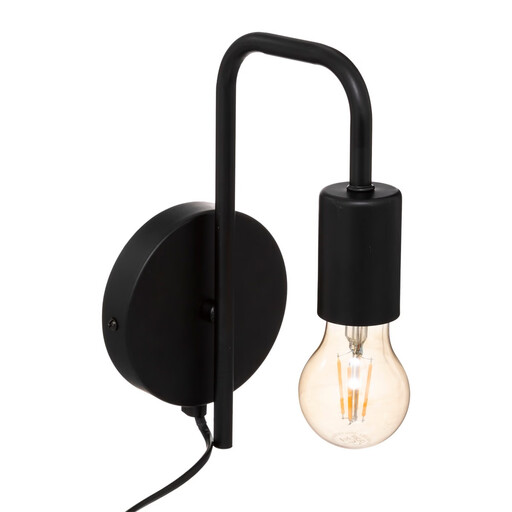
Why it suits this profile: This compact black metal light has an E27 bulb holder and a 180 cm cable. It’s designed for use in several indoor spaces, including kitchens, bedrooms and living rooms.
The replaceable E27 bulb means you won’t need to replace the whole light if you want to change the colour temperature later. The bulb is not included.
Black metal, 12 × 12 × 25 cm, maximum bulb wattage of 40 watts according to the product details, and downward-directed light.
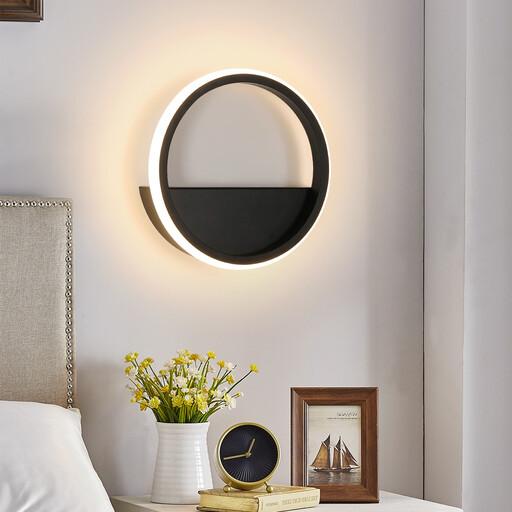
Why it suits this profile: This integrated LED wall light provides a defined colour temperature of 3,000 Kelvin and has a modern, rounded design.
The product details specify the wattage, colour temperature, material and diameter, making it easier to assess the brightness and size before installation.
12 watts, 3,000 Kelvin warm white light, aluminium and a diameter of 20 cm, according to the product description.
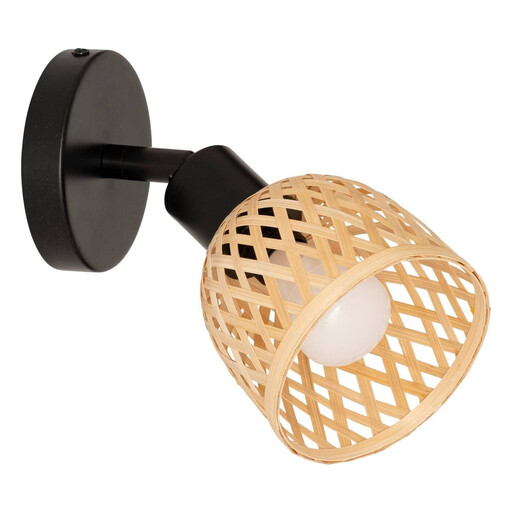
Why it suits this profile: The adjustable spotlight is suitable for sideboards, desks, wall decorations or smaller areas in living rooms and workspaces.
Its adjustable direction reduces the risk of the light missing the area you want to illuminate, even when the light is mounted in the right position.
E14 bulb holder, bamboo shade, 10 × 10 × 17.5 cm, maximum wattage of 25 watts and designed for indoor use.
We’ve put together a complete, regularly updated list of products that meet these strict selection criteria and fully comply with the safety regulations in force in the EU.
For a calm, cosy feel, warm white light at around 2,700 to 3,000 Kelvin is a popular choice. A slightly brighter light that can be directed where you need it may be useful for reading. Brightness, beam angle and mounting height are also important.
It depends on the height of the room, the shape of the light and the width of the passage. The light shouldn’t protrude at head height or get in the way of doors, pictures or furniture. In narrow hallways, flat designs or compact spotlights are usually more practical than wide shades.
The cost depends on the wattage, how long you use the light each day and your electricity tariff. A 12-watt light uses 0.012 kilowatt-hours for every hour it’s switched on. To work out an estimate, multiply this figure by the number of hours it’s used and the current price per kilowatt-hour.