
Lieferung heute & morgen

Qualitätsgarantie

Willkommens-Angebote freischalten: KOSTENLOSE Lieferung | Bis zu 80 % RABATT | Kostenlose 30-Tage-JoyPlus-Testphase
App herunterladen
The search for the right coated frying pan for an induction hob can quickly become overwhelming. The market is filled with promises of durability and perfect non-stick performance. However, not every product lives up to its advertising claims. Many buyers find that after a short time, the pan base warps or the coating loses its effectiveness. This guide will help you identify the crucial features and avoid common purchasing mistakes.
Before investing in a new pan, it's helpful to know the most frequent issues that lead to frustration in the kitchen.
To avoid the problems mentioned above, you should carefully examine three technical aspects before making a purchase. These largely determine the performance and lifespan of your new pan for induction.
A ferromagnetic base is essential for induction hobs. Look for what is known as an encapsulated sandwich base. This consists of multiple layers, typically an aluminium layer between two stainless steel layers. This construction not only ensures magnetic conductivity but also provides fast, even heat distribution and high dimensional stability. A thick, solidly constructed base is the best defence against warping.
The non-stick property is crucial for low-fat frying and healthy cooking. However, the materials differ significantly in their durability.
The right size depends on your household and your cooking habits.
Here are some recommendations tailored to different requirements and kitchens.
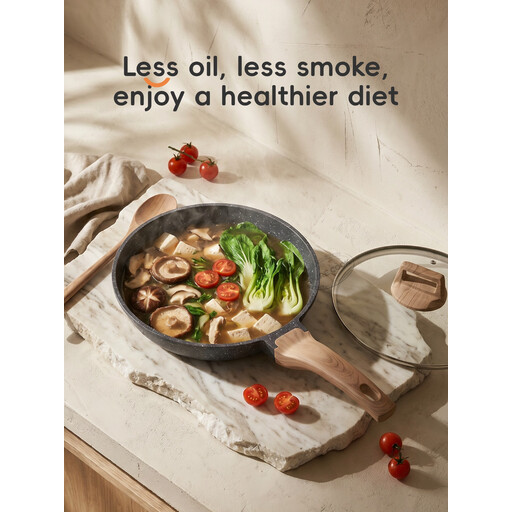
Why it's a great fit: Ideal for singles, couples, or as a secondary pan for small dishes. The lightweight aluminium pan heats up quickly, and the included glass lid expands its use from frying to light steaming. The wooden handle provides a comfortable grip.
The aluminium alloy body, combined with the induction base, is designed for stable and even heat conduction to minimise the warping common in budget-friendly pans.
Compact, lightweight, and includes a lid for versatile cooking applications at an accessible price point.
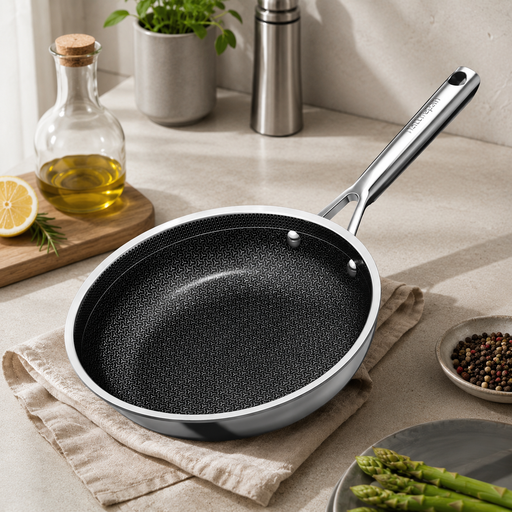
Why it's a great fit: For those who cook frequently and value durability and performance. The hybrid construction combines the heat distribution of stainless steel with the benefits of a non-stick surface, ideal for searing steaks at high heat.
The 5-ply construction with a stainless steel core ensures extreme dimensional stability. The laser-etched hexagonal pattern protects the underlying non-stick coating from direct contact with utensils, increasing scratch resistance.
High oven-safe temperature up to 260°C and a PFAS/PFOA/PTFE-free ceramic pan for health-conscious cooking at high temperatures.
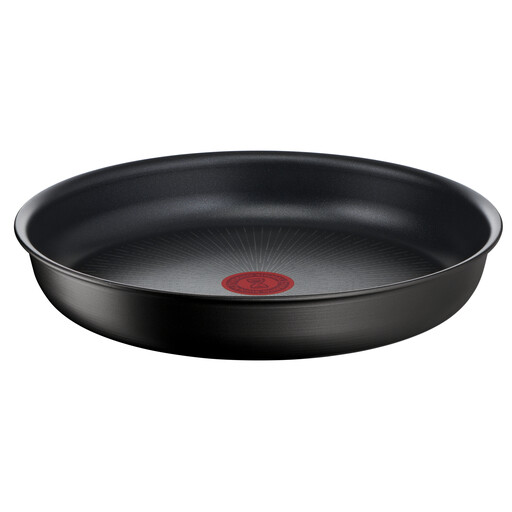
Why it's a great fit: The 28cm pan is ideal for family-sized portions. Its standout feature is the detachable handle, which allows for extremely space-efficient, stackable storage—perfect for kitchens with limited cabinet space.
The thick Thermo-Fusion base ensures shape retention and even heat distribution on induction hobs. According to the manufacturer, the highly durable titanium non-stick coating is designed for a longer lifespan.
Maximum flexibility: Go from the hob straight into the oven (up to 250°C without the handle) and enjoy extremely space-saving storage thanks to its stackable design.
We have compiled a complete, up-to-date list of products that fully meet these strict selection criteria and EU safety regulations.
1. How do I properly clean a non-stick pan to extend its lifespan? Allow the pan to cool completely after use to prevent thermal shock. Clean it by hand with warm water, a mild washing-up liquid, and a soft sponge. Avoid steel wool or abrasive scourers. Although many pans are labelled as dishwasher-safe, hand washing is gentler on the coating and significantly extends its life.
2. How can I tell if my old pan is suitable for induction? The easiest way is the magnet test. Hold a standard magnet to the bottom of the pan. If the magnet sticks firmly, the pan is induction-compatible. If it doesn't stick, or only very weakly, it will not work on an induction hob.