
Lieferung heute & morgen

Qualitätsgarantie

Willkommens-Angebote freischalten: KOSTENLOSE Lieferung | Bis zu 80 % RABATT | Kostenlose 30-Tage-JoyPlus-Testphase
App herunterladen
An induction hob places different demands on pots and pans than a gas or ceramic hob. Not all cookware heats evenly on it, and some product claims leave out important details. If you’re looking to buy induction-compatible cookware, you shouldn’t focus solely on the price or a coating.
For induction, a pot or pan needs a magnetic or ferromagnetic base. A simple magnet test on the outside can give you a rough idea. However, the manufacturer’s specific statement about hob compatibility is more reliable.
Even an induction-compatible base doesn’t automatically guarantee even heating. A multi-layer construction with an aluminium core can improve heat distribution, whereas a very thin base can encourage local temperature differences.
A coated pan, ceramic pan or non-stick pan needs to be used correctly. High temperatures, prolonged dry-heating and sharp-edged metal utensils can damage the surface. Claims like “scratch-resistant” or “extremely durable” shouldn’t be taken in isolation.
What matters are specific details about:
A large induction pot set may seem practical at first glance, but it can contain pieces you rarely use in daily life. For singles and couples, small pots with a capacity of around 1 to 2 litres are often more suitable. Families, on the other hand, usually need at least one larger pot and a pan with a diameter of 24 to 28 centimetres.
Before buying, it’s worth checking the actual contents. What matters isn’t just the number of pieces, but also the lids, handles, capacities and the possibility of space-saving storage.
A stainless steel pan without coating is resistant to kitchen utensils and is ideal for searing. However, food can stick more easily. A good approach is to heat the pan first, add oil and cook at a medium temperature.
Coated aluminium or stainless steel bodies make it easier to release delicate foods. With a ceramic pan, it’s often not solid ceramic but a ceramic coating on a metal body. This distinction should be clearly stated in the product description.
A multi-layer base, for example made of stainless steel and aluminium, can distribute heat more quickly. When buying induction-compatible pots and pans, you should also check whether gas, electric and ceramic hobs are supported.
Look out for the following details:
Dishwasher-safe cookware is convenient for everyday use, but coated surfaces can be more stressed by frequent cleaning. Gentle hand washing with a soft sponge is the more material-friendly option for many products.
With oven-safe cookware, there are often limitations: removable handles, lids or plastic parts may need to be taken off. The maximum temperature can also differ depending on whether the lid is used.

Why this product fits the profile: The compact sizes are designed for small portions and limited storage space. The set includes several pots and pans for everyday basic needs.
The contents and sizes are clearly stated. The cookware is stackable, making it suitable for small kitchens.
Cromargan stainless steel 18/10, induction compatibility, and dishwasher and oven suitability up to 250 °C according to product specifications.
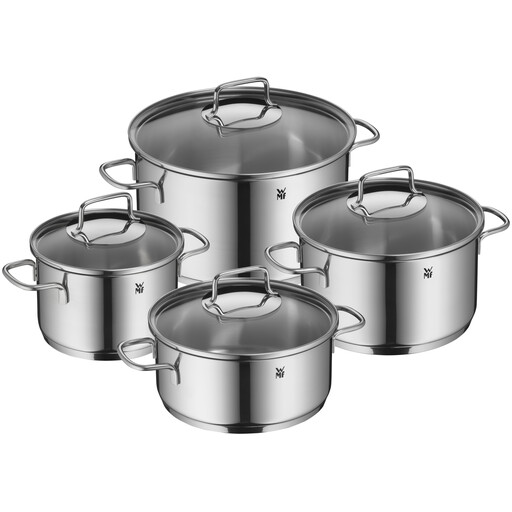
Why this product fits the profile: The uncoated stainless steel set covers several pot sizes and a pan. Glass lids allow you to keep an eye on your cooking.
The surface is explicitly stated as uncoated. Temperature limits for the pot and lid are given separately.
Cromargan stainless steel 18/10, TransTherm base, induction compatibility and dishwasher suitability according to the product description.
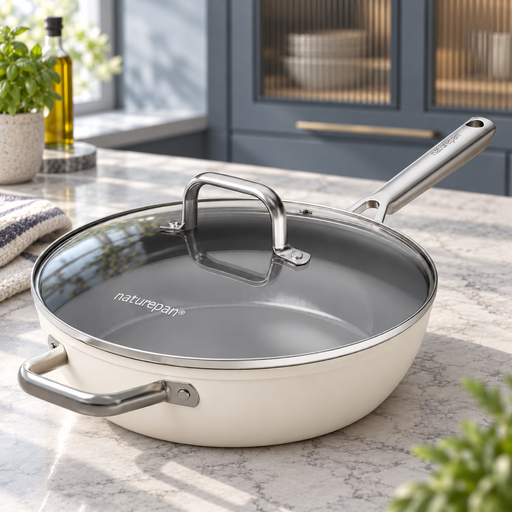
Why this product fits the profile: The deep shape and included lid are ideal for braised dishes, sauces and larger portions.
The ceramic coating is stated as a coating on an aluminium body. Temperature and care instructions are clearly described.
28 cm diameter, lid, induction compatibility and oven use up to 230 °C without lid according to product specifications.
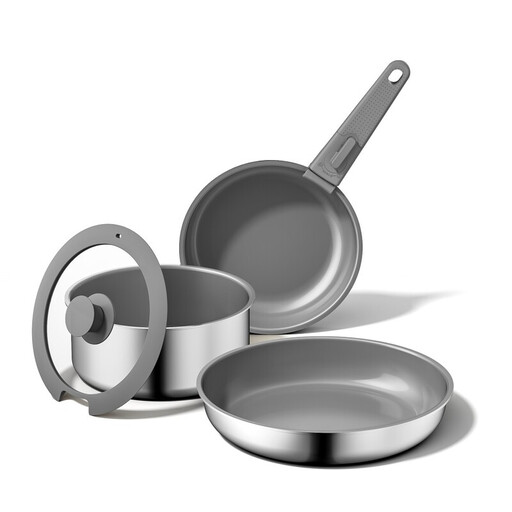
Why this product fits the profile: Removable handles and stackable bodies reduce the space needed. The set combines two pans, one pot and a lid.
The contents, maximum oven temperature and limitations for handles and accessories are explicitly listed.
20 cm and 26 cm pans, 3-litre pot, induction compatibility and space-saving storage thanks to the removable handle.
We’ve put together a complete, regularly updated list of products that fully meet these strict selection criteria and the safety regulations in force in the EU.
Look for the induction symbol or a clear statement from the manufacturer. A magnet test can provide an initial check for metal cookware. For daily use, the base construction and contact surface are also relevant.
That depends on the individual product. Stainless steel models are often oven-safe, while handles, lids or coatings may have their own temperature limits. Always check whether accessories need to be removed.
It’s not possible to give a fixed lifespan. It depends on heat, utensils, cleaning and frequency of use. Low to medium temperatures, gentle cleaning and avoiding metal tools can put less strain on the coating.